Get Full Government Meeting Transcripts, Videos, & Alerts Forever!
Get email alerts on the Agricultural Research Extension topic
No spam. Unsubscribe anytime.
University of Idaho dean outlines research, extension budget needs and new facilities; seeks continued state support
Summary
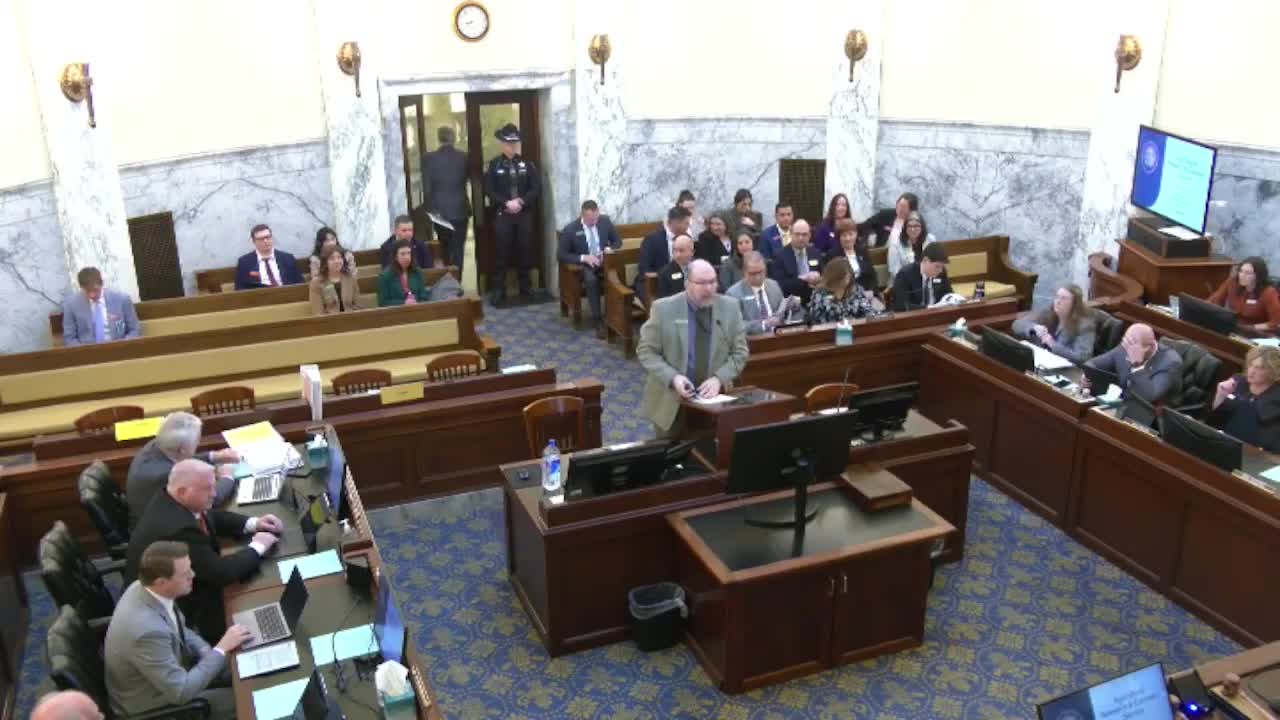
Dean Michael Perella and University of Idaho officials briefed the Joint Finance-Appropriations Committee on the Agricultural Research and Extension Service budget, citing research hires, facility maintenance requests and extension programs including adult digital literacy and a pending FCC grant application.
Kevin Campbell, budget and policy analyst with the Legislative Services Office, presented an overview of the base budget and FY2026 requests for the University of Idaho’s Agricultural Research and Extension Service.
Michael Perella, dean of the College of Agricultural and Life Sciences (CALS) and director of the Idaho Agricultural Experiment Station, told the committee he will retire in June after nine years as dean and thanked the legislature for support of new research facilities and faculty hires. He introduced key staff attending the hearing, including Madison Powell (interim associate dean for research), Dr. Barbara Petty (associate dean for extension and director of UI extension), Margarita Cardona (fiscal director) and Rachel Bickerton (government and external relations director).
The nut graph: Dean Perella and staff described investments in new research infrastructure and faculty as critical to supporting Idaho agriculture, highlighted priorities including viticulture and small-fruit research, and asked the committee to continue funding base operations and targeted positions while extension delivers digital-literacy and community programs across the state.
Campbell said the service maintains a presence in 42 of Idaho’s 44 counties and three recognized tribal communities and that the Idaho Agricultural Experiment Station operates 10 research and extension centers with access to more than 14,000 acres for research. He noted a current FTP count of 341.33 for the service and said personnel make up roughly 81% of the service’s expenditures.
For FY2026 the service requested $157,900 ongoing general fund support for a viticulture and small-fruit research faculty position to address grower needs in disease prevention, water management, pest management and post-harvest storage. The service also requested $250,100 to cover part of building maintenance costs at the Idaho Center for Agriculture, Food, and the Environment, a facility the service described as a collaboration with Idaho’s dairy industry.
Committee members questioned the scope and outcomes of extension work. Representative Handy asked whether research emphasis could shift from yield to nutritional value for crops; Perella said the college already supports nutrition and dietetics programs and noted work funded through a National Science Foundation grant that examines women’s health and nutrition. Representative Miller asked whether research is meeting crop-development, breeding and irrigation needs; Perella pointed to new facilities (including the Idaho Center for Plant and Soil Health in Parma) and ongoing breeding programs that support major industry partners.
Several legislators asked about adult computer literacy programs that had earlier been funded with ARPA dollars. Senator Rose and others pressed why those programs appear in the agricultural extension budget. Dr. Petty and Dean Perella explained that University of Idaho Extension’s statewide mission includes community and family support, and that extension has delivered computer-literacy training for rural communities and workforce training centers. Perella said extension delivered more than 450,000 face-to-face contacts with Idahoans and engaged 75,000 youth in 4-H programming last year.
Perella described an ongoing effort to address the digital divide: the college’s Western Center for Rural Development applied for a federal FCC grant that would bring approximately $13 million to a coordinated program linking two-year schools and four-year institutions and addressing digital literacy in rural communities. Perella described the grant award as not yet final and dependent on federal appropriations, but he characterized the proposal as a competitive national success.
On program evaluation, Perella said extension collects participant feedback after courses and measures reported impacts; he told the committee extension-estimated savings attributable to its programs totaled about $47 million in the most recent reporting year and offered to provide more detailed breakdowns.
The committee asked for clarity on ongoing vs. one-time costs that originated with ARPA and other federal sources; senators warned that federal one-time funding can create expectations for continued state support once federal funds expire. Perella and staff said they would continue phasing programs based on external funding and seek competitive federal grants to sustain successful efforts.
Ending: Dean Perella closed by urging continued support for personnel and facilities, noting improved retention after recent change-in-employee-compensation appropriations and saying the college’s national rankings and statewide extension contacts reflect strong value. The committee then moved to the next budget presentation.