Get Full Government Meeting Transcripts, Videos, & Alerts Forever!
Get email alerts on the Public Safety Jail topic
No spam. Unsubscribe anytime.
Clark County officials outline $85–$100 million plan for new jail, seek half‑percent sales tax levy
Summary
Clark County Administrator Jenny Hutchinson and Sheriff Clark told the Springfield City Commission the county jail is overcrowded and in poor condition and presented a plan — including a proposed half‑percent sales tax levy — to finance a new $85–$100 million, 450‑bed facility.
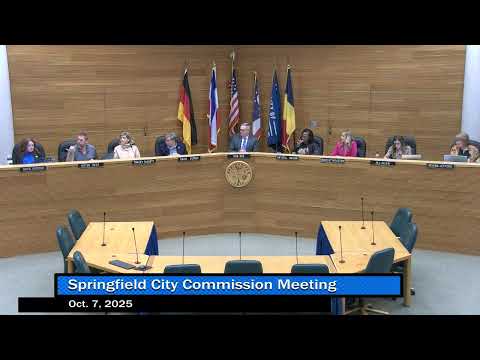
Clark County Administrator Jenny Hutchinson and Sheriff Clark briefed the Springfield City Commission in a pre‑meeting work session on the county’s assessment of the Parkland jail and a proposed plan to build a new public safety facility.
Hutchinson said the downtown jail, built in the late 1970s and opened around 1980, was designed to hold roughly 160–167 inmates but is regularly housing more than 200. A consultant study by DLZ recommends a new facility sized to house about 450 people to meet needs for the next 30 years. Hutchinson said immediate repairs to the present building — including a new roof, new locks and other upkeep — would cost “$3 million to $5 million,” and that renovating the existing structure would not resolve the overcrowding or the design limitations that she and the sheriff described.
The study the county has updated since 2017 also recommends a single‑story, pod‑style design with centralized sight lines for officer safety. Hutchinson said the county has identified a property south of Interstate 70 on State Route 72 that is about 30 acres, has been annexed into the city and would allow future expansion.
Sheriff Clark said the jail’s overcrowding creates safety and health problems for inmates and staff. “We are putting 204 individuals inside a facility that’s designed to hold a maximum of a 167,” he said, and he described daily fights, sanitary issues and frequent hospital trips tied to the overcrowding. Clark said the facility’s multi‑level layout prevents corrections officers from maintaining clear lines of sight and requires more staff than a modern pod design would.
Clark described the county’s preliminary cost estimate if the project were bid in 2026 as about $85 million to $100 million. Hutchinson said the county expects to use roughly $2 million from reserves, hopes to secure about $15 million from the state capital funds, and would seek the remaining financing through bonds repaid by a half‑percent county sales tax levy on the November ballot for a 20‑year term; the county would be able to end the levy early if bond obligations are paid off.
Commissioners from the city and representatives in the audience raised operational and policy questions. Commissioner Tackett described ride‑along experiences with the sheriff’s department and Springfield police and recounted an arrest made on the West End when officers had to release a person because the jail was full. Multiple speakers, including members of the city commission and public commentators, said the lack of jail capacity hampers local enforcement and the criminal justice system’s ability to hold people accountable for lower‑level crimes.
Hutchinson and Clark also highlighted non‑capacity problems in the current building: frequent plumbing failures that can flood offices below inmate housing, aging components for which replacement parts are difficult or impossible to source, and a lack of programming space for people with mental‑health or substance‑use needs. Clark said the jail underwent annual inspections under the Ohio regulatory framework and that several cited deficiencies were tied to the physical structure rather than policy.
Hutchinson said the county has toured recently built single‑story facilities in Warren, Greene and Coshocton counties to inform design choices. She and Clark said a modern facility would include rehabilitation and programming space and that the county is coordinating on how the police division’s space needs would be evaluated if the jail project moves forward. Hutchinson told the commission the county has posted project materials on the Clark County, Ohio website under a Hot Topics tab and will present information at smaller public events in New Carlisle and other locations.
No formal City Commission vote was taken on the presentation; Hutchinson and Clark were at the meeting to provide information and answer questions. Several commissioners urged public engagement and noted the funding decision — the sales‑tax levy — is under the county’s authority and would be decided by Clark County voters if put on the ballot.
The county provided several quantitative details at the briefing: a consultant estimate of a 450‑bed facility sized for the long term; an estimated construction cost of $85–$100 million if bid in 2026; a recommended site of roughly 30 acres south of I‑70 on State Route 72; county reserves of roughly $2 million and a hoped‑for $15 million state capital allocation, leaving a bond financing gap the county proposes to fill with a half‑percent sales tax levy for up to 20 years.
The presentation and the commissioners’ discussion emphasized three linked issues: immediate maintenance needs at the Parkland jail, long‑term capacity and design limitations that the county says cannot be solved by renovating the current building, and the plan to ask Clark County voters to approve a sales‑tax levy to finance bonds for a new facility. The county representatives said more detailed design and cost estimates will be developed if leadership decides to proceed to a formal financing and public‑information phase.