Get Full Government Meeting Transcripts, Videos, & Alerts Forever!
Get email alerts on the Workplace Safety topic
No spam. Unsubscribe anytime.
Committee approves streamlined logging safety rules after stakeholder review
Summary
A comprehensive update to Idaho’s logging safety rules was approved by the Senate Commerce Committee after DOPL reviewed and removed outdated or duplicative language; agency officials said the rules are descriptive and used as an in‑the‑field reference for loggers.
The Senate Commerce Committee approved a wide-ranging update of the Idaho Minimum Standards for Logging Safety rule chapter following a multi‑stage review by the Division of Occupational and Professional Licenses (DOPL) and broad stakeholder engagement.
Amy Lorenzo, bureau chief for DOPL’s Building, Construction and Real Estate Bureau, presented the changes and said the logging safety chapter is not a licensing program but serves as a practical, in-the-woods reference for logging operators. She told the committee the review was prompted by a zero‑based regulation process that included two negotiated-rulemaking meetings and six public hearings in Boise, Salmon, New Meadows, Moscow and two in Coeur d’Alene. Stakeholders included the Idaho Forest Group and associated logging contractors.
The department removed language it deemed outdated, duplicative or advisory rather than enforceable. Examples discussed in committee included deletion of granular references to life jackets and floating‑log operations that are rarely applicable to Idaho logging, removal of canopies section after adopting industry engineering standards for rollover protective structures, elimination of a now‑redundant wire‑labeling figure and deletion of a detailed operating-plan requirement because DOPL staff and industry concluded the plans produced limited value relative to the administrative burden.
Lorenzo said the logging safety program does not assess civil penalties and is funded in part through a partnership with the Idaho Industrial Commission; inspection work emphasizes collaboration and repeated field contacts and focuses enforcement action on imminent life‑safety hazards. Senator Guthrie asked about inspection frequency, enforcement “hammer” and whether DOPL levies fines; Lorenzo said inspectors conduct multiple contacts and follow-up inspections but the program’s leverage is removal of imminent hazards rather than routine civil penalties.
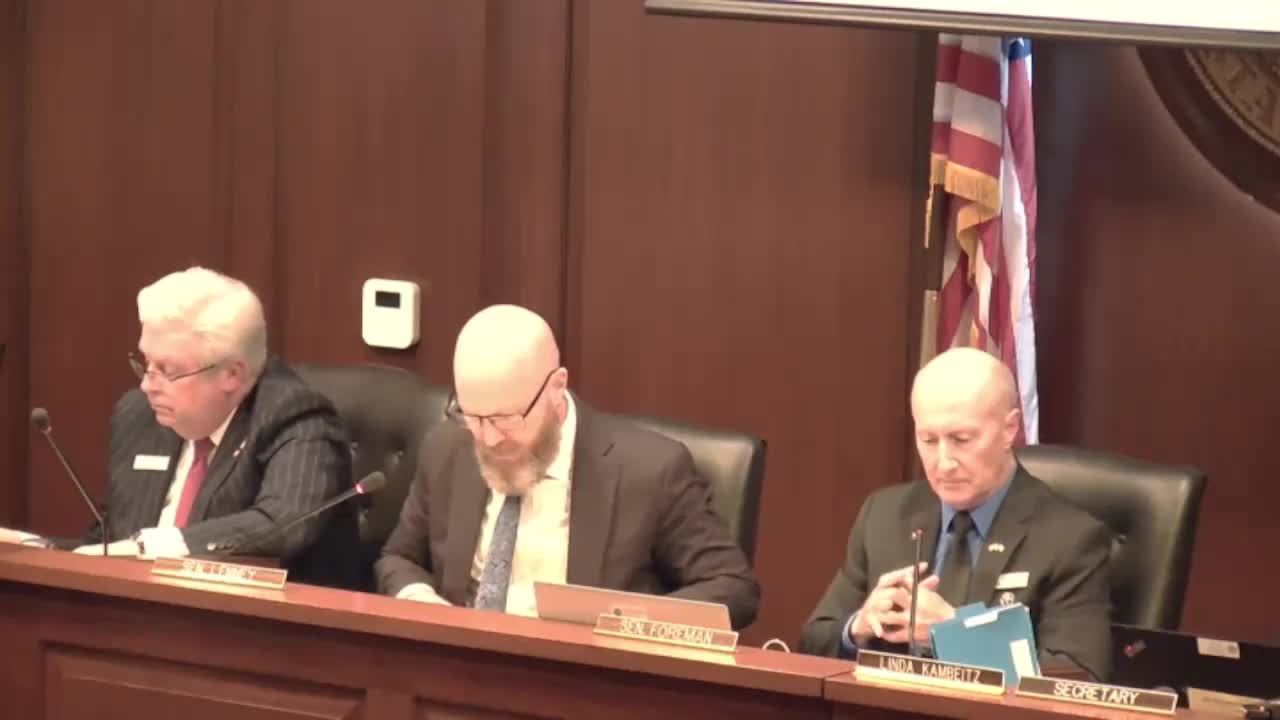
Senator Guthrie moved to approve the docket; Senator Lakey seconded. The committee approved the docket by voice vote.