Get Full Government Meeting Transcripts, Videos, & Alerts Forever!
Get email alerts on the Electric Vehicle Infrastructure topic
No spam. Unsubscribe anytime.
House panel advances bill barring local mandates for electric‑vehicle charging infrastructure
Summary
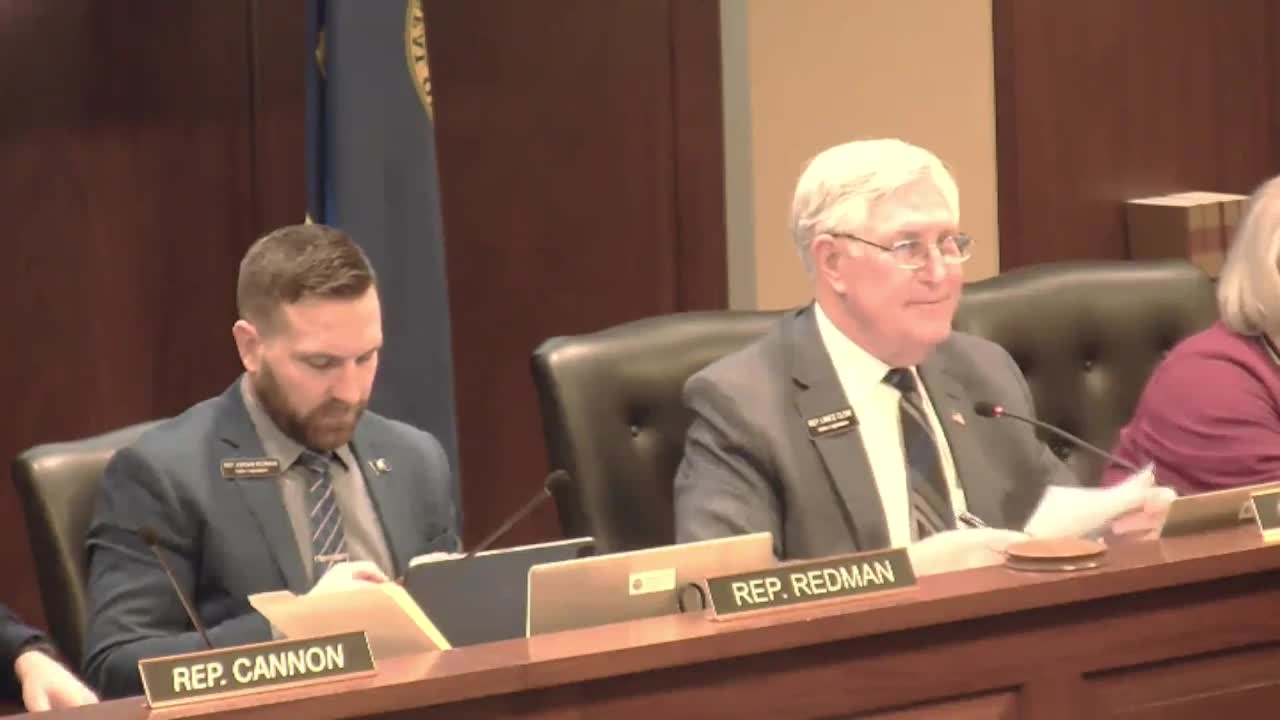
The House Business Committee voted 15–2 to send House Bill 86 to the floor. The bill would preempt local governments from requiring electric‑vehicle (EV) charging infrastructure or conduit as a condition of building permits, drawing testimony both for and against from city, county and conservation groups.
BOISE — The House Business Committee on Thursday voted to send House Bill 86 to the full House with a “do pass” recommendation after a divided debate over local control and future infrastructure costs.
House Bill 86, sponsored by State Representative Joe Palmer (R‑Meridian), would prohibit cities and counties from requiring EV charging equipment or conduit as a mandatory part of building permits. "I'm not against electric cars," Palmer said. "Businesses absolutely have the opportunity to do this. Government entities, whoever is over that government entity has the opportunity to do it in their local in their location. We're working at less than 10% of the vehicles here... We're not stopping anybody from being able to do it. We're just not forcing them anymore."
Supporters of local control and opponents of the bill argued that allowing municipalities to plan for EV infrastructure now saves money and prepares communities for rising EV adoption. Lisa Heck, a retired electrical and computer engineer from Boise who owns an EV, urged lawmakers to "keep planning and decision making regarding EV and conduit infrastructure in the hands of local officials," saying retrofitting for chargers can cost thousands of dollars compared with a few hundred dollars to install conduit during construction.
Representatives of municipal and conservation organizations testified against the bill. Lance Sayers, speaking for the Association of Idaho Cities, said the measure "ties our cities' hands and prevents them from making potentially necessary changes for their communities." Jonathan Oppenheimer, government relations director for the Idaho Conservation League, and Ryan McGoldrick of Conservation Voters of Idaho both described the proposal as a lost opportunity to retain local economic benefits from shifting transportation energy expenditures into Idaho.
Ada County Commissioner Tom Daley, speaking as vice chair of the Idaho Association of Counties' legislative committee, said Ada County supports the bill and raised a concrete example: a county jail remodeling project that the City of Boise initially proposed would require 133 EV sites in a secured parking area, later reduced to 31. Daley described that requirement as inappropriate for a restricted county facility and said counties need the authority to make local decisions.
Committee members pressed witnesses on cost and uncertainty. Representative Thompson, citing her husband's experience as an electrical contractor, said conduit and related infrastructure costs can be substantial on some projects and may be wasted if site plans change. Other members questioned whether forcing conduit installation would raise housing or business costs.
Representative Jason Harris moved the committee to send HB 86 to the floor with a "do pass" recommendation. The committee approved the motion on a roll‑call vote, 15 in favor and 2 opposed.
The bill will next be scheduled for floor consideration by the full House. The committee record contains both technical and policy arguments: proponents stressing local fiscal and safety prerogatives, opponents stressing long‑term planning, state economic opportunity and the lower cost of building conduit during construction.