Get Full Government Meeting Transcripts, Videos, & Alerts Forever!
Get email alerts on the K 12 Teacher Workforce topic
No spam. Unsubscribe anytime.
Teachers tell Senate committee student behavior, cellphone use and workload are driving burnout
Summary
Two public witnesses and dozens of teacher interviews presented to the Idaho Senate Education Committee described rising teacher burnout, worsening student behavior, widespread cellphone use in schools and a drop in people entering teacher preparation programs.
Hundreds of pages of testimony and interviews presented to the Idaho Senate Education Committee in Boise focused on teacher burnout, student conduct and the impact of ubiquitous classroom technology. Former classroom teacher Courtney Linker, who said she interviewed 73 teachers across 16 districts, and Meridian resident and former Los Angeles Unified School District teacher Lori Belaud urged lawmakers to change funding, discipline and staffing policies to keep teachers in the classroom.
Linker, who said she held 73 interviews to document conditions facing teachers, told the committee: "Last year's experience as a classroom teacher broke me. I felt broken mentally and physically." She said the interviews showed a sharp decline in people entering teacher-preparation programs and widespread stress and exhaustion among practicing teachers.
The committee heard specifics from Linker's research: 99 percent of the teachers she interviewed were state-certified; 47 percent described themselves as happy at work while 60 percent said they felt stressed or anxious; 55 percent said they felt overwhelmed. Linker said the sample included teachers from every grade level and 35 schools, and that the interviews showed teachers routinely perform dozens of noninstructional tasks in addition to classroom duties.
Lori Belaud, who taught more than 23 years in the Los Angeles Unified School District, emphasized discipline and parent accountability as central contributors to teacher burnout. "Teacher burnout is at an all time high threatening the quality of education for students," she said, adding that parents must reinforce behavioral expectations at home.
Both witnesses urged reducing nonteaching duties assigned to classroom teachers, expanding mental-health and behavior-intervention staff, and reexamining the role of personal devices in school. Linker recommended district limits on device use and cited examples from districts that removed cellphones and reported both behavioral and academic gains. She also called for clearer phonics training, better compensation for paraprofessionals and a reconsideration of testing and progress-monitoring practices that she said consume instructional time.
Committee members questioned Linker on methodology and remedies. Senator Nichols asked how she selected teachers; Linker said she used professional networks and intentionally interviewed educators across districts to capture variation. Senator Ward Engelking asked whether Linker experienced post-traumatic stress after classroom service; Linker said she had experienced triggering stress responses and that her break from teaching was in part to assess whether she could return to the classroom.
Linker provided policy suggestions she said emerged from her interviews: set secondary teachers' maximum caseloads at about 200 students, cap elementary class sizes near 30, increase counselors and behavior interventionists, expand compensation for paraprofessionals, and consider lowering the public retirement rule from a "rule of 90" to a "rule of 80" to retain experienced teachers. She also recommended ending or limiting unnecessary district-level tests that duplicate state requirements.
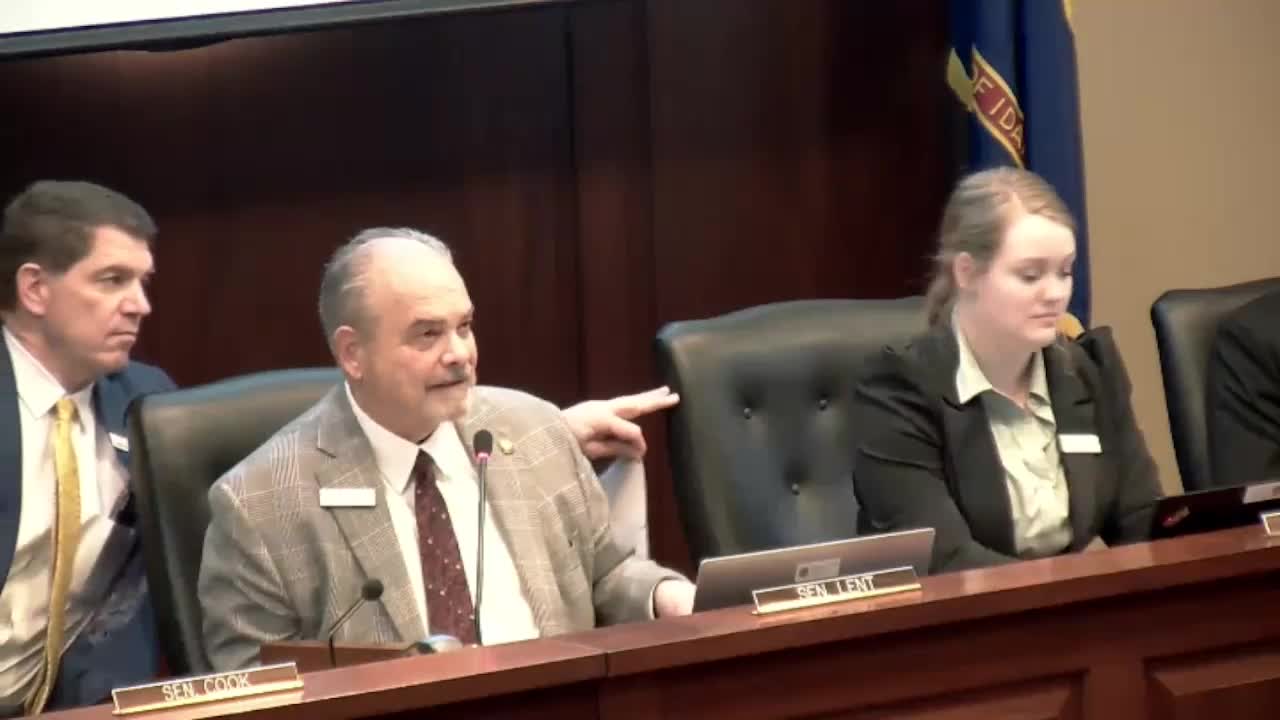
Chairman Lent closed the discussion by reminding members of the legislature's constitutional duty for public schools, quoting Article IX, Section 1 of the Idaho Constitution: "It shall be the duty of the legislature of Idaho to establish and maintain a general, uniform and thorough system of public free common schools." He said the committee faces consequential education votes this session and thanked the witnesses for candid testimony.
The testimony and committee questions were discussion only; no committee votes on programmatic policy were taken during the presentation.