Get Full Government Meeting Transcripts, Videos, & Alerts Forever!
Get email alerts on the Unemployment Insurance Funding topic
No spam. Unsubscribe anytime.
Department of Labor seeks dedicated-fund authority to maintain unemployment operations
Summary
The Idaho Department of Labor requested additional spending authority from dedicated unemployment funds to preserve staffing and operations as federal pandemic-era grant dollars decline.
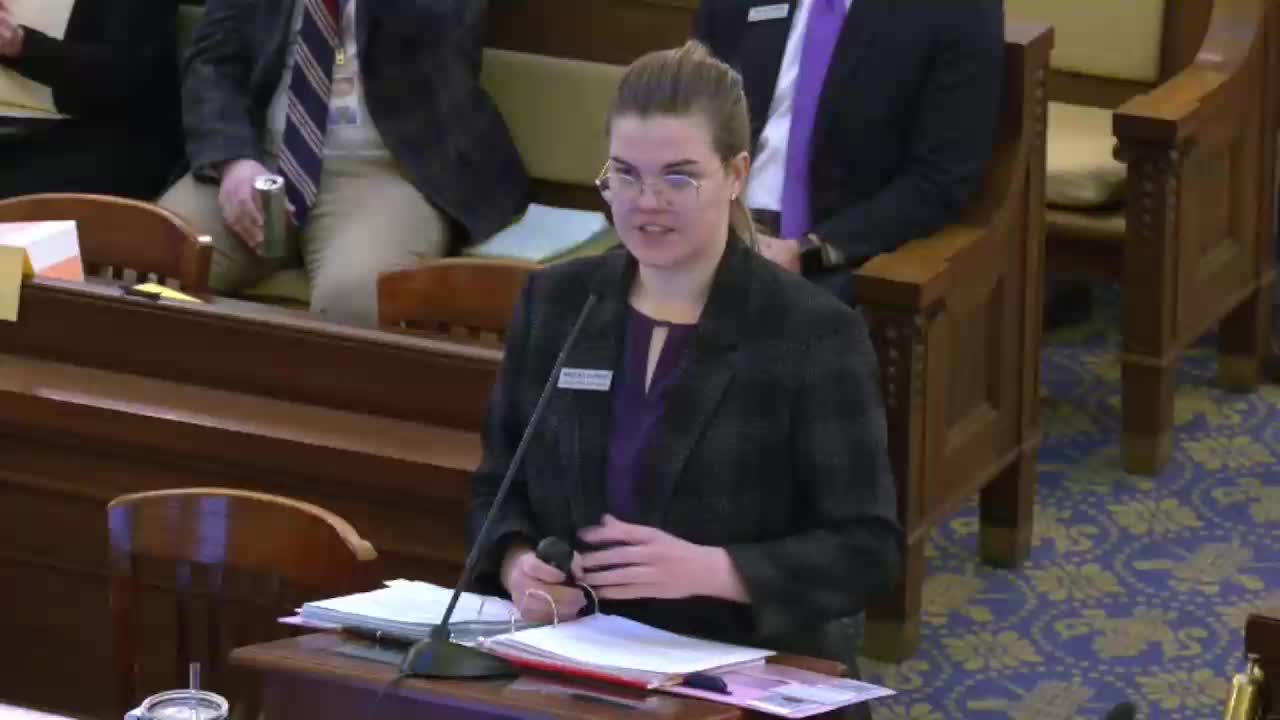
BOISE — The Idaho Department of Labor told the Joint Finance-Appropriations Committee on Oct. 23 it needs additional dedicated-fund spending authority to sustain unemployment insurance operations as federal grants shrink.
Director Janie Rivera said federal funding that bolstered the department during the pandemic has declined and that the department wants to use dedicated state funds to maintain core adjudication, claims and appeals operations. The department requested $7,330,000 in increased spending authority for unemployment-insurance operations and asked the committee to approve a $4,868,600 cash transfer between internal funds to correct a prior accounting transfer.
Why it matters: Committee members asked for clearer detail on how salary savings have been used, the size and sustainability of the unemployment trust fund, and how staffing would be adjusted if a future recession increases claims.
Rivera explained that unemployment insurance is a federal-state partnership and that the department’s federal grant funding drops when unemployment is low. During COVID-19, the department temporarily added staff to handle high claim volumes. Those federal grants have tapered, and the department now seeks to use dedicated administrative funds to cover existing staff positions rather than let operations lapse.
Trust fund and contingency options: Rivera said Idaho’s unemployment trust fund is currently solvent and, if needed in a severe downturn, the state could access federal loans or bonds to cover claim payouts — a route some states took during the pandemic. She summarized the statutory approach to employer tax-setting, which looks at historical high-benefit years to size the tax rate, and said Idaho’s current calculations aim to maintain additional reserves to reduce the likelihood of borrowing.
Cash-transfer and fund-balance questions: Dupree, the legislative analyst, explained the department proposed a $4.87 million cash transfer from the unemployment penalty-and-interest fund to the employment-security fund to correct an earlier overcounting. The transfer would reduce the receiving fund’s estimated ending balance by about $4 million under the fiscal-year-2026 estimate in the agency’s consolidated fund analysis.
Staffing and operations: Committee members pressed the department on how many positions are baseline versus how many are added for recession response. Rivera said she would provide specific staffing counts and historical fluctuations to the committee; she described two staffing categories — baseline positions needed continuously (including compliance and employer-accounting staff) and claim-adjudication staff that scale up during recessions.
Follow-up: The department agreed to supply detailed numbers on baseline staff and historic staffing fluctuations, a breakdown of how salary savings have been used, and a fuller explanation of the federal-grant calculations that determine annual funding levels.