Get Full Government Meeting Transcripts, Videos, & Alerts Forever!
Get email alerts on the Wildlife Depredation topic
No spam. Unsubscribe anytime.
Committee advances bill to create depredation appeals board for ranchers
Summary
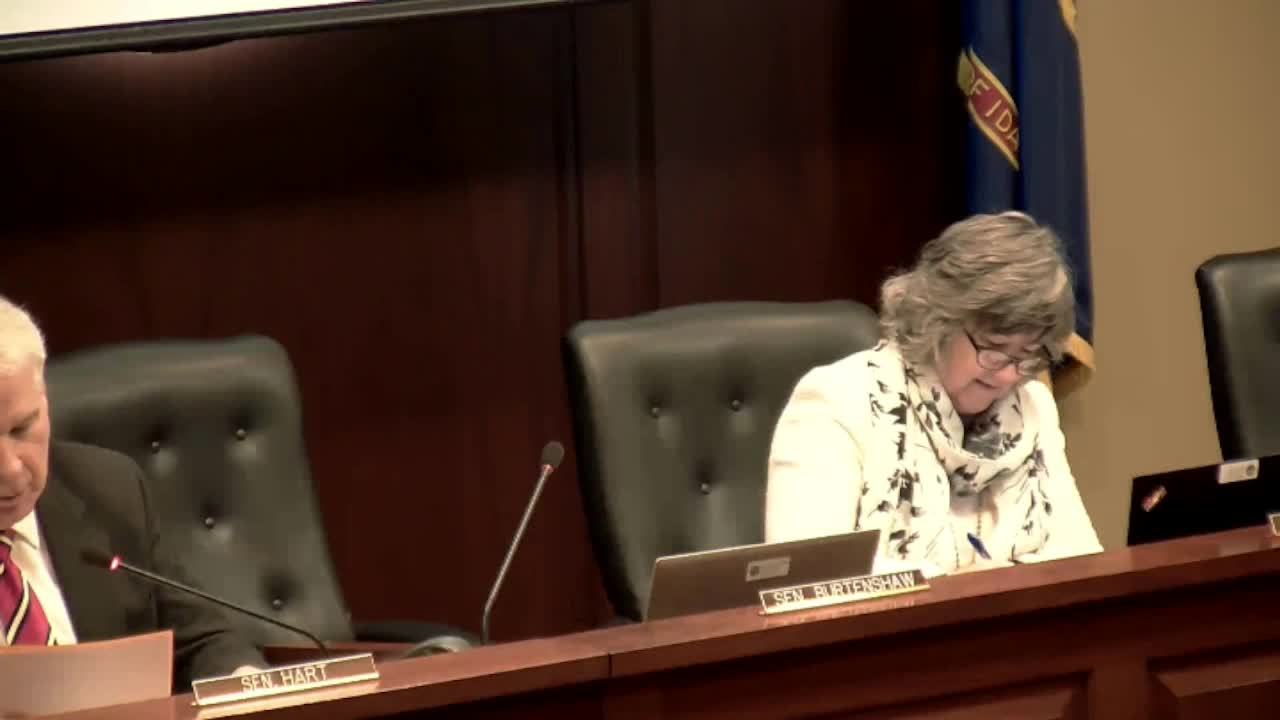
The Idaho Senate Natural Resources Committee on Thursday moved Senate Bill 10‑12 to the Senate floor with a do‑pass recommendation after testimony from ranchers and the Farm Bureau outlining gaps in how wildlife depredations are confirmed and reimbursed.
The Idaho Senate Natural Resources Committee on Thursday moved Senate Bill 10‑12 to the Senate floor with a do‑pass recommendation after testimony from ranchers and agricultural groups about livestock losses attributed to wolves, grizzly bears, black bears and mountain lions.
Supporters said the bill creates a three‑member depredation appeals board to review Wildlife Services’ determinations about whether a carcass was killed by a protected predator, and to give producers an alternate path to state and federal depredation funding when Wildlife Services does not confirm a kill.
The bill’s sponsor, Senator Burton Shaw, told the committee the board would provide producers an opportunity to appeal Wildlife Services’ findings and would include appointees representing agriculture, fish and game and a veterinarian. He said the board would review submitted documentary evidence; members could meet remotely and any hearing would be closed to protect producers’ location and identity, although the amounts disbursed would remain public.
Dexton Lake, representing the Idaho Farm Bureau Federation, said federal and state funding streams for depredation exist but access has been limited when Wildlife Services is the sole confirming authority. Lake told the committee the federal depredation grant cycles vary and the state appropriated $150,000 for reimbursements plus $75,000 for prevention in House Bill 592 last year — a combined $225,000 target specifically noted for wolves and grizzly bears. He said recent federal grant allotments have fluctuated and that the Office of Species Conservation has written in some recent grants that state‑authorized investigators may confirm depredations, creating an opening for the proposed board.
Multiple producers who testified — including Phil Davis of Cascade, Val Hammond of Fremont County, David Phillips, Scott Rigby and Royce Schwenfelder — described cases where they said Wildlife Services did not confirm kills despite evidence the producers felt indicated predator depredation. Phil Davis said that experienced local veterinarians and producers have observed trauma consistent with wolf depredation that was not confirmed by Wildlife Services in recent years.
Committee members pressed on how the appeals board would interact with federal funding. Senator Burton Shaw and witnesses said confirmed kills would still trigger federal funding; the board would help establish confirmations for state funding and for instances where federal confirmation is absent or delayed. Several senators clarified that the bill does not appropriate new recurring money; it uses existing state depredation funds and the committee heard that payments would be prorated if claims exceed available funds.
Concerns were raised about two topics. Senator Taylor said she supported the bill but expressed worry about spending public dollars and the appeals being handled in closed meetings. Other commenters asked how the board’s technical findings would relate to Wildlife Services’ determinations and whether a favorable finding from the appeals board would obligate federal agencies to change their position. Supporters said the appeals board is intended to be a state‑level review and that federal funding rules already allow some state‑authorized investigators in recent grant language.
After discussion the committee voted to send SB 10‑12 to the Senate floor with a do‑pass recommendation by voice vote. The motion passed on a voice vote with no roll‑call recorded in the transcript.
The bill’s backers asked the committee to consider the measure as a way to provide producers an alternative review when on‑the‑ground evidence is gone before an investigator can arrive and to improve access to both state and federal depredation reimbursements.
The committee record shows multiple producers and the Idaho Farm Bureau Federation testified in favor; no formal opposition appeared in the committee testimony.