Get Full Government Meeting Transcripts, Videos, & Alerts Forever!
Get email alerts on the Health Insurance Reserve topic
No spam. Unsubscribe anytime.
Committee deadlocked on FY2026 health insurance rate; motions fail, debate highlights reserve-risk tradeoffs
Summary
Two competing proposals for the FY2026 health insurance base rate failed to achieve the required majorities in both chambers. Debate focused on projected reserve balances, contract minimums, and the trade-off between lower premiums this year and potential higher increases next year.
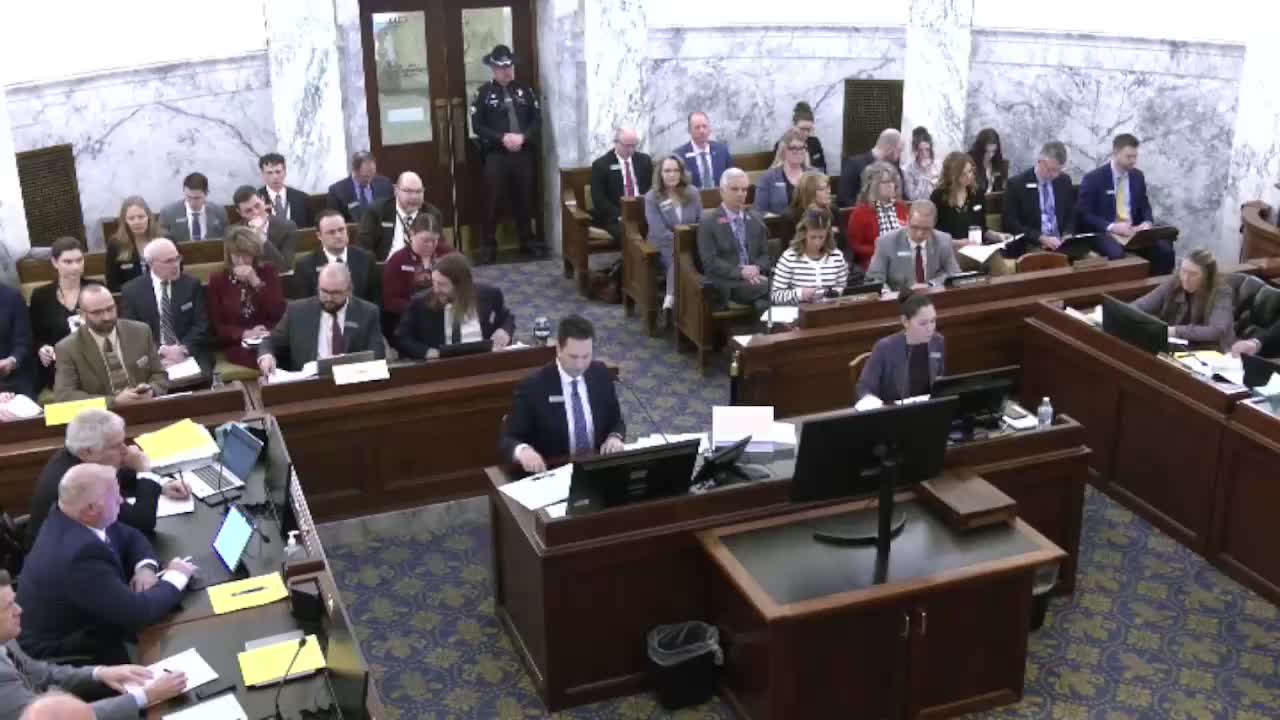
The Joint Finance and Appropriations Committee did not adopt a change to the state employee health insurance base for fiscal year 2026 after competing motions failed to win a majority in both chambers.
Two approaches were presented: the governor's recommendation to set the base health insurance amount for a full-time eligible position at $14,300 (an increase of $1,300) and the Economic Outlook/CEC committee recommendation to set the base at $13,960 (an increase of $960). Analysts told the committee the difference would affect reserve balances and the contractual contingency the state must maintain.
Division of Financial Management staff explained actuarial projections from Milliman showing that adopting the CEC recommendation ($13,960) would reduce the insurance reserve balance to approximately the statutory minimum of 10% ($51,600,000 by projection). The governor's recommendation would leave approximately an additional $10,000,000 cushion above that minimum (projected balance about $61,400,000 under the governor's recommendation). "If we fall below the 10% contingency reserve, then a risk charge can be assessed to the state," said Faith Knowlton, administrator for the division of insurance and internal support in the Department of Administration.
Committee votes: The CEC substitute motion (lower $13,960 amount) failed to secure the required majority across both chambers: the committee recorded a grand total of 9 ayes and 11 nays, so the house did not reach its threshold. The governor's original motion (higher $14,300 amount) also failed to receive a majority in both chambers; although the grand total was 13 ayes and 7 nays, the senate did not record the required majority, so the motion failed. As a result, no change to the base health insurance amount was approved at this session and the committee postponed the decision for a later time.
Why it matters: The base health insurance amount sets the stateemployee premium baseline and affects agency personnel budgets, the statemanaged insurance reserve and potential exposure to contractually imposed risk charges. Members debated whether to preserve a larger contingency cushion this year or accept a lower premium and draw down reserves closer to the contractual minimum, with speakers from DFM and the Office of Group Insurance describing the actuarial trade-offs.
Key details and figures: - CEC recommendation: $13,960 per eligible full-time position (increase of $960). Projected fund balance: approx. $51,600,000 (10% statutory minimum projection). - Governor's recommendation: $14,300 per eligible full-time position (increase of $1,300). Projected fund balance: approx. $61,400,000 (about $10,000,000 more cushion than the CEC figure). - Analysts cautioned that budgeting the lower amount this year could require a larger increase in a subsequent year to meet contractual contingency requirements.
What committee members said: Lawmakers expressed different risk tolerances. Representative Furnace, a CEC sponsor, argued the committee should avoid overfunding the reserve and favored the lower, committee-recommended figure. Others, including Senator Cook and Senator Ward Engelking, emphasized the need for more competitive compensation and cautioned that too-small an increase could undermine recruitment and retention, especially for high-skill positions.
Next steps: The committee postponed the decision; staff and the committee signaled they will return to the issue later with additional materials. No implementation action was taken at this session.