Get Full Government Meeting Transcripts, Videos, & Alerts Forever!
Get email alerts on the Human Resources Background Checks topic
No spam. Unsubscribe anytime.
Nash County moves to implement state law requiring fingerprint checks for applicants working with children
Summary
The commissioners voted Sept. 22 to update county personnel policy to implement Session Law 2025‑16, which mandates fingerprint‑based criminal history checks for applicants offered positions that involve working with children; staff outlined implementation steps, estimated costs and operational questions.
NASH COUNTY, N.C. — Nash County will implement new state requirements for fingerprint‑based criminal history checks for applicants who will work with children after the Board of Commissioners approved policy changes Sept. 22.
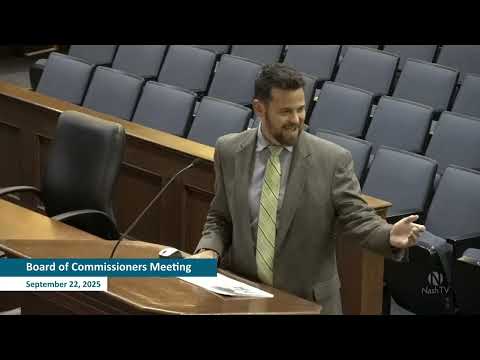
Human Resources Director Tim Kerrigan told the board the changes are required by “session law 20 25 dash 16,” effective Oct. 1, and that counties and cities must submit fingerprint‑based criminal history requests to the North Carolina State Bureau of Investigation for applicants offered positions that involve working with minors. “This action request addresses the recent changes enacted by session law 20 25 dash 16 to be effective this October 1,” Kerrigan said.
Kerrigan and commissioners discussed scope and timing. The new law’s phrase “in any capacity” raised questions about how broadly the county must apply checks — for example, whether occasional school visits, volunteers or vendors should be covered. Kerrigan said the county is not required to fingerprint all existing employees retroactively; the mandate applies to applicants offered qualifying positions beginning Oct. 1, though the board may elect to expand checks to current staff or volunteers.
Kerrigan estimated the SBI fingerprint fee at $38 per check and offered a preliminary estimate of roughly $3,000 for the remainder of fiscal 2026 for initial implementation work; he said the county’s current background vendors sometimes charge up to $65 for broader checks and that the SBI check may replace some vendor work but not necessarily all vendor services. He also described operational plans: fingerprinting will be performed by the sheriff’s office in a digital process that submits to SBI, and HR would receive the SBI report; staff are pursuing SBI training and certification to manage the process.
Commissioners raised concerns about turnaround time, staffing burden for the sheriff’s office, how results would be reported and whether the SBI returns an automatic yes/no decision or a report requiring county review. Kerrigan said the county can sign up with SBI, schedule fingerprinting appointments and consider options such as periodic random rechecks, targeted rechecks for transferring staff, or checking only defined positions initially. He proposed starting with required positions and revisiting the program as implementation experience accumulates.
The board approved the policy updates to implement the law and authorized staff to coordinate with the SBI, review position descriptions, provide training and identify funding for implementation.
Why this matters: the change affects hiring across multiple departments where employees or applicants work with minors (parks and recreation, social services, EMS, schools‑related assignments, and others). Commissioners flagged volunteer roles and contracted vendors as areas to consider for future policy refinement.
What’s next: HR will complete SBI registration and training, develop operational procedures with the county attorney and sheriff’s office, and report back to the board with additional implementation details and cost estimates.