Get Full Government Meeting Transcripts, Videos, & Alerts Forever!
Get email alerts on the Mortgage Trigger Leads topic
No spam. Unsubscribe anytime.
Committee advances bill requiring disclosure by mortgage solicitors using trigger leads
Summary
The House Business Committee voted Feb. 17 to advance House Bill 149 to the full House with a do-pass recommendation; the bill would require solicitation callers using mortgage "trigger leads" to disclose their status and the origin of their lead.
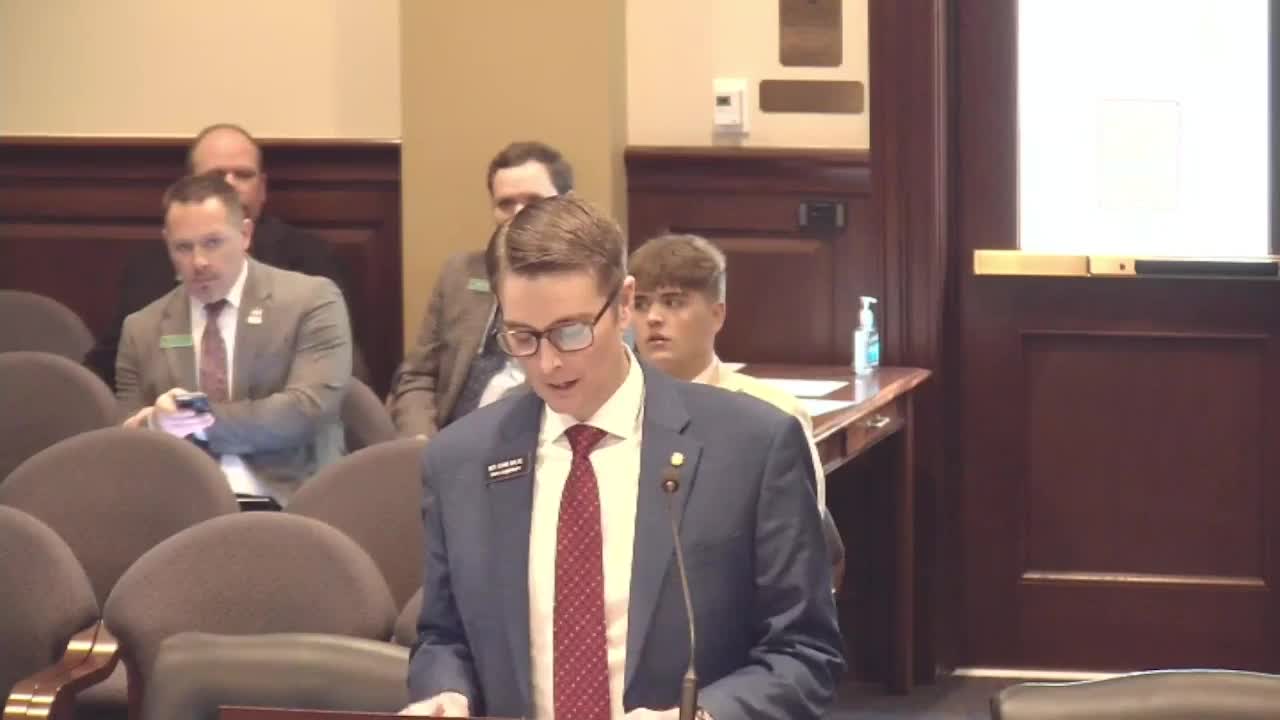
The House Business Committee voted Feb. 17 to send House Bill 149 to the full House with a do-pass recommendation. Sponsor Rep. Bruce described the bill as a measure to reduce consumer confusion when companies contact mortgage applicants using purchased "trigger leads."
Rep. Bruce told the committee that mortgage trigger leads are generated when a consumer applies for a mortgage and credit-reporting companies or other data brokers produce lists that are then sold to mortgage-solicitation companies. "When they call they have a good portion of your information ... it confuses not only folks in the elder state but also younger folks as well," Bruce said, describing calls that recipients can mistake for contact from their existing lender.
The bill would require that a caller who contacts a consumer using a mortgage trigger lead must identify that they are not the consumer's current lender and must disclose that the call resulted from a purchased mortgage lead. Rep. Bruce said the measure would not bar the sale of the leads but would require those disclosures at the outset of contact.
Members asked how the requirement would be enforced. Rep. Bruce said enforcement would proceed through the state's Consumer Protection Act, with consumers filing complaints with the state if callers failed to comply. Rep. Burch characterized the bill as a consumer-notification measure rather than a prohibition on data sales.
Rep. Bruce cited federal law context including the Fair Credit Reporting Act and said states including Connecticut, Rhode Island, Maine, Kansas, Kentucky and Wisconsin have enacted similar measures; he noted that Texas recently enacted a related law. He said the bill seeks to reduce confusion and potential harm from repeated credit inquiries or repeated applications that could affect consumers' credit profiles.
No members of the public testified in the hearing. Rep. Cannon moved to send HB 149 to the floor with a do-pass recommendation; the committee approved the motion by voice vote.
The bill now moves to the House floor. Committee members sought clarification on enforcement and whether calls are commonly recorded; the sponsor said some callers record conversations and that enforcement would depend on consumer complaints under the Consumer Protection Act.