Get Full Government Meeting Transcripts, Videos, & Alerts Forever!
Get email alerts on the Parks And Recreation topic
No spam. Unsubscribe anytime.
Idaho parks seek higher seasonal pay, program consolidation and marina replacements at Heyburn State Park
Summary
The Idaho Department of Parks and Recreation told the Joint Finance Committee it is requesting a program consolidation, targeted pay increases for seasonal staff and rangers, and capital work including replacement of two marinas at Heyburn State Park. The governor recommended the agency's requests in full.
The Idaho Department of Parks and Recreation on Thursday asked the Joint Finance Committee to approve a package of budget changes that would (1) consolidate management services and park operations into a single budget program, (2) raise seasonal employee pay and address ranger pay compression, and (3) fund capital projects including replacement of two marinas at Heyburn State Park.
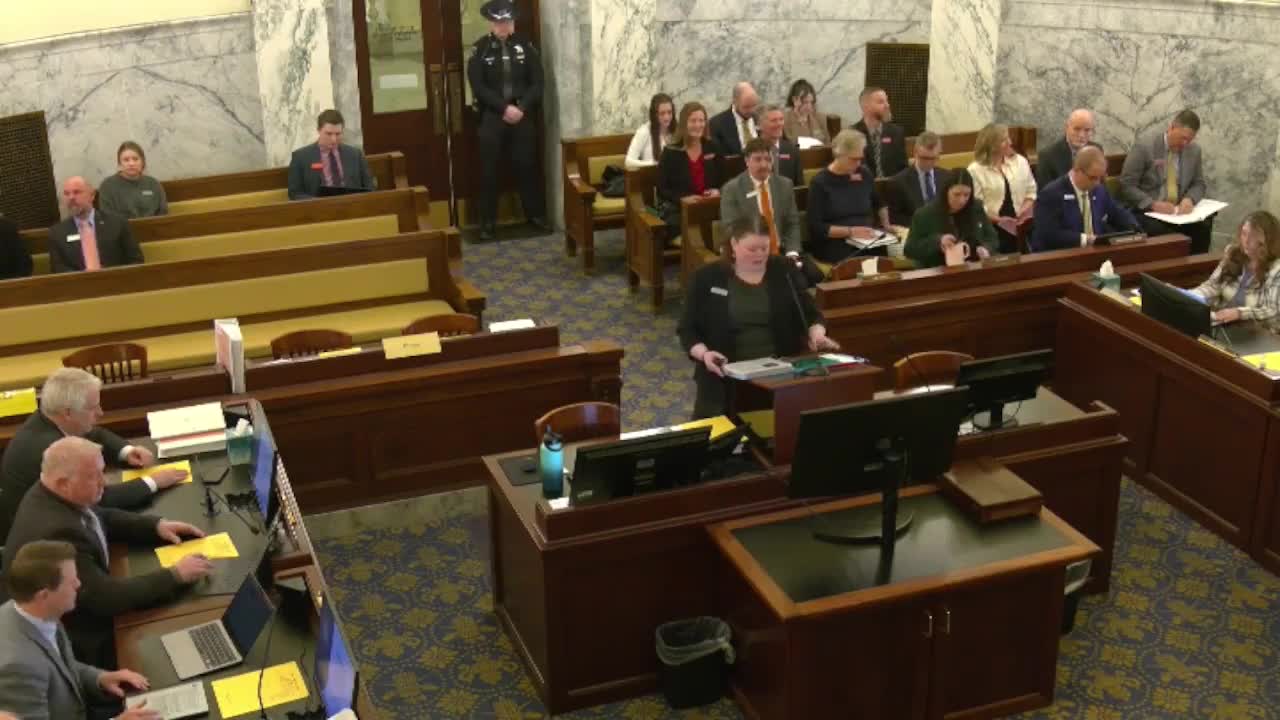
The requests were presented by Janet Jessup, a budget and policy analyst with legislative services, and by Director Susan Buxton, who spoke with committee members about the agency's staffing and capital needs. Jessup told the committee the agency is allocated about 190.8 full‑time positions and that capital development currently carries no ongoing FTP because capital outlay is funded as one‑time projects. She noted the governor's recommendation included the agency's full list of capital requests.
Why it matters: The proposals would affect park operations across Idaho, seasonal workers who staff parks each year, and local economies that rely on recreation. The consolidation and compensation changes are framed by the agency as operational fixes intended to make hiring and pay more consistent across remote and resort locations.
Director Susan Buxton said the consolidation of the management services and operations programs would be administrative, not a loss of transparency, and described it as "a ministerial request." She and staff said the change would not remove any authority to track revenues or expenditures but would simplify internal management.
On staffing and pay, the department requested a targeted increase to raise seasonal compensation from $12 per hour to $15 per hour, and separate targeted adjustments for ranger and other career positions to address pay compression. Buxton told the committee the agency has pursued multi‑year adjustments since 2020 to reduce compression and that many park managers and bureau chiefs are paid below comparable peer positions in other agencies. The department said it hires roughly 300 seasonal employees each year and works with more than 500 volunteers to operate parks; the human resources officer said managers currently have discretion to hire seasonals within the 12–15 range but that market conditions in resort areas increasingly require higher pay.
On equipment and specialized funds, Troy Elmore, the agency's operations administrator, described a planned purchase of a compact wheel loader to support snowmobile program grooming and parking‑lot clearing. He said the purchase would be paid from the snowmobile sticker fund and that the department supports about 27 county snowmobile programs statewide. "This is all paid for by that fund," Elmore said of the loader procurement.
On capital and deferred maintenance, Buxton described planned marina replacements at Heyburn State Park, which she said was deeded to the state in 1909 and is located outside Plummer on Lake Coeur d'Alene. Buxton said two large marinas — Rocky Point and Chatcolet — are due for replacement; the current docks are old and the replacements will allow the state to add slips. She said the Coeur d'Alene Tribe has provided planning support and had offered funding toward replacement, and that appropriations previously provided for deferred maintenance have funded work across the system. The committee asked the agency to provide a more detailed list of deferred maintenance projects and spending timelines.
Committee members asked for more detail on the seasonal pay math and on how consolidation would affect program accounting. Several legislators pressed the agency on costs in resort markets and noted that a $15 floor may already be low in some communities. The agency's HR officer and director acknowledged variation across locations and said market pressures have pushed some hiring wages to $17 or higher in parts of the state.
The presentation also highlighted notable capital requests the agency submitted, including projects at Bear Lake (Fish Haven) and Lake Cascade; the governor's recommended budget included those requests in full. Buxton told members the agency had included the consolidation request and two targeted enhancements (seasonal pay and ranger pay tiers) among its 2026 requests.
The department closed by offering to provide the committee with the agency's deferred maintenance spreadsheet and ARPA/surplus project details. Committee members asked that document be circulated to members.
With no formal actions recorded in the transcript, the committee did not take a vote on these requests during the hearing.