Get Full Government Meeting Transcripts, Videos, & Alerts Forever!
Get email alerts on the Agriculture Invasive Species topic
No spam. Unsubscribe anytime.
Idaho Agriculture seeks funding for quagga-mussel response, investigator pay and vehicle replacements
Summary
The Department of Agriculture told the Joint Finance-Appropriations Committee it needs ongoing and one-time funds for quagga‑mussel response, investigator retention and replacement vehicles; the department highlighted staffing turnover among agricultural investigators and reliance on dedicated funds.
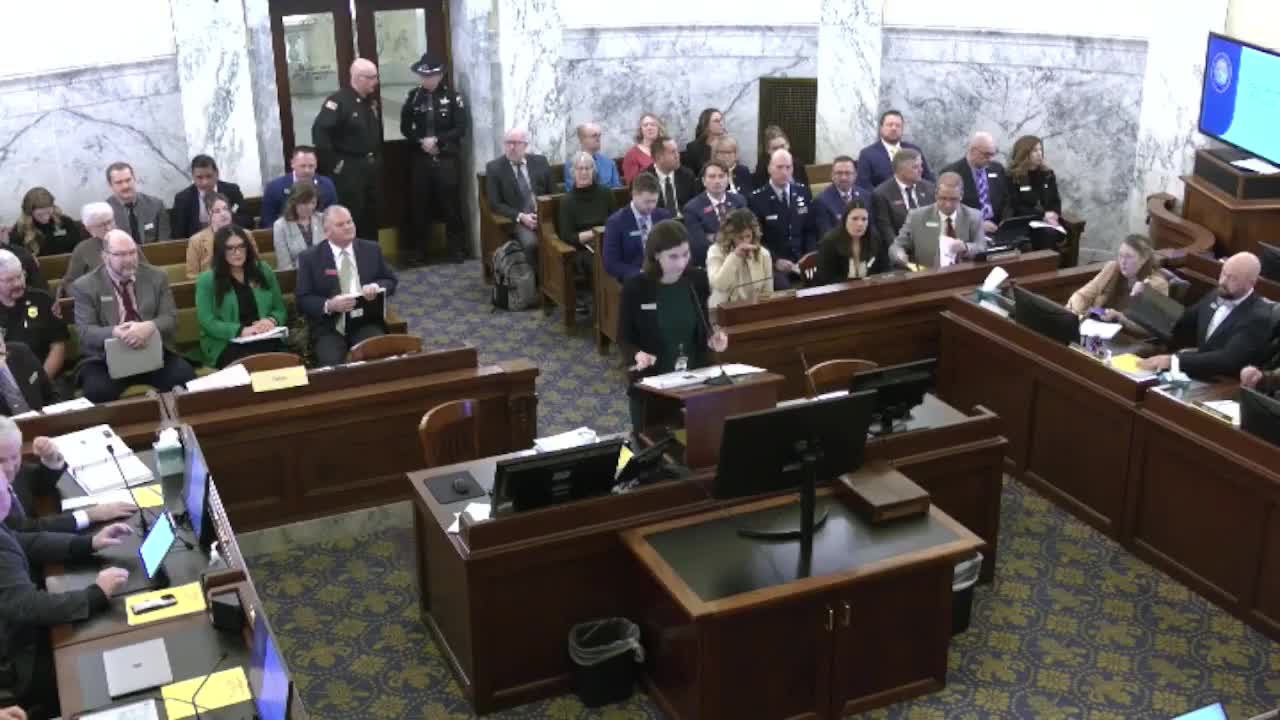
Idaho Department of Agriculture officials told the Joint Finance‑Appropriations Committee on Oct. 24 that the agency’s fiscal 2026 request centers on quagga‑mussel response, investigator pay and replacement equipment.
For the record, Frances Lippett, budget and policy analyst with the Legislative Services Office, reviewed the department’s appropriations history and fiscal‑year requests. Director Chanel Tewell of the Idaho State Department of Agriculture joined the presentation and took questions from committee members about quagga‑mussel sampling, staffing and vehicles.
The request includes a $5,000,000 general‑fund infusion for quagga‑mussel response that was approved in a prior session and an ongoing $1.5 million general‑fund appropriation for staffing and watercraft inspection stations. Lippett said the department’s invasive species fund is funded primarily by a watercraft sticker fee and that recent spending to operate check stations and respond to quagga mussels has drawn down fund balances.
The department said it doubled statewide water sampling and watercraft inspections last year and added three inspection stations. Director Chanel Tewell told the committee, “by every measure, that work has increased,” and said Idaho carried out a Snake River treatment in 2024 after earlier prevention efforts.
The department also requested ongoing funds to create a career ladder for agricultural investigators: $340,400 to establish a pay structure for 53 agricultural investigator senior positions, noting that 27 of those positions had been filled for less than two years. Tewell described investigators as “first responders” for complaints about animal care, pesticide drift and other agricultural issues and said investigators cover large rural districts.
Committee members pressed for specifics on vehicle replacements. Lippett said the department requested about $891,000 in one‑time funding for replacement items, including roughly $214,700 for information‑technology hardware and the remainder for vehicles. In response to Representative Mitchell’s question, Lippett said the department expects to replace about 17 vehicles — “most of which are pickup trucks and a couple of SUVs.”
Lippitt and Tewell reviewed other dedicated funds, including the pest control fund (which carried a $1.7 million balance related to Mormon‑cricket treatment and monitoring costs) and a new degradation of livestock and prevention fund that received $225,000 from the general fund to compensate livestock owners for losses from grizzly bears and wolves.
The analyst said the department typically expends 76% to 83% of appropriations; much of the unspent balance reflects appropriations to dedicated funds that do not always have matching fee revenue. Lippett also noted a FY2025 deficiency warrant request of $1,724,300 for exotic species response.
The department’s FY2026 enhancement package included the investigator pay structure, change‑in‑employee‑compensation requests for fresh fruit and vegetable inspectors, and one‑time requests for vehicle and IT replacements. Lippett said the governor recommended the requested enhancements with minor alignment changes.
Questions from the committee focused on the mix of fees and general fund support for quagga mussel response, the number and type of vehicles requested, and the retention challenges for investigators. Senator Wintrow asked whether the quagga response relied solely on sticker fees; Lippett confirmed the department received an ongoing $1.5 million general‑fund appropriation for staffing and check stations in FY2025.
The department did not propose new statutory changes in the committee hearing. No formal votes were recorded during the presentation.
The committee moved on after the presentation; staff said they would provide an itemized vehicle list and follow up on questions about grant and transfer items raised by committee members.
Ending notes: Committee members thanked the department for tightening enhancement requests and for the presentation; staff committed to providing the requested vehicle list and follow‑up on grants and transfers.