Get Full Government Meeting Transcripts, Videos, & Alerts Forever!
Get email alerts on the Education Finance topic
No spam. Unsubscribe anytime.
State Board outlines scholarship and grants budget; seeks software engineer and educator‑incentive funding
Summary
The Office of the State Board of Education’s Scholarships and Grants program asked the Joint Finance-Appropriations Committee for funding to support the rural and underserved educator incentive program and a software engineer to maintain scholarship application systems.
Kevin Campbell, budget and policy analyst with the Legislative Services Office, presented the Scholarships and Grants program, which is administered by the Office of the State Board of Education and includes five scholarships and grants: the Bridging and Underserved Educator Incentive Program, the Opportunity Scholarship, the Armed Forces and Public Safety Officer Scholarship, GEAR UP (Gaining Early Awareness and Readiness Undergraduate Program) scholarships, and the Idaho Work Study program.
Campbell noted that scholarship spending is timing‑sensitive because award cycles do not align exactly with the state fiscal year; 99.5% of the program’s spending is trustee and benefit payments and about 0.5% is personnel. For FY2026 the program requested $1,375,000 for the Bridging and Underserved Educator Incentive Program and $124,000 for a software engineer to maintain and secure databases and public user interfaces used by students and parents to apply for scholarships. The program also requested $1,200 to correct an error in the FY2025 CEC calculation.
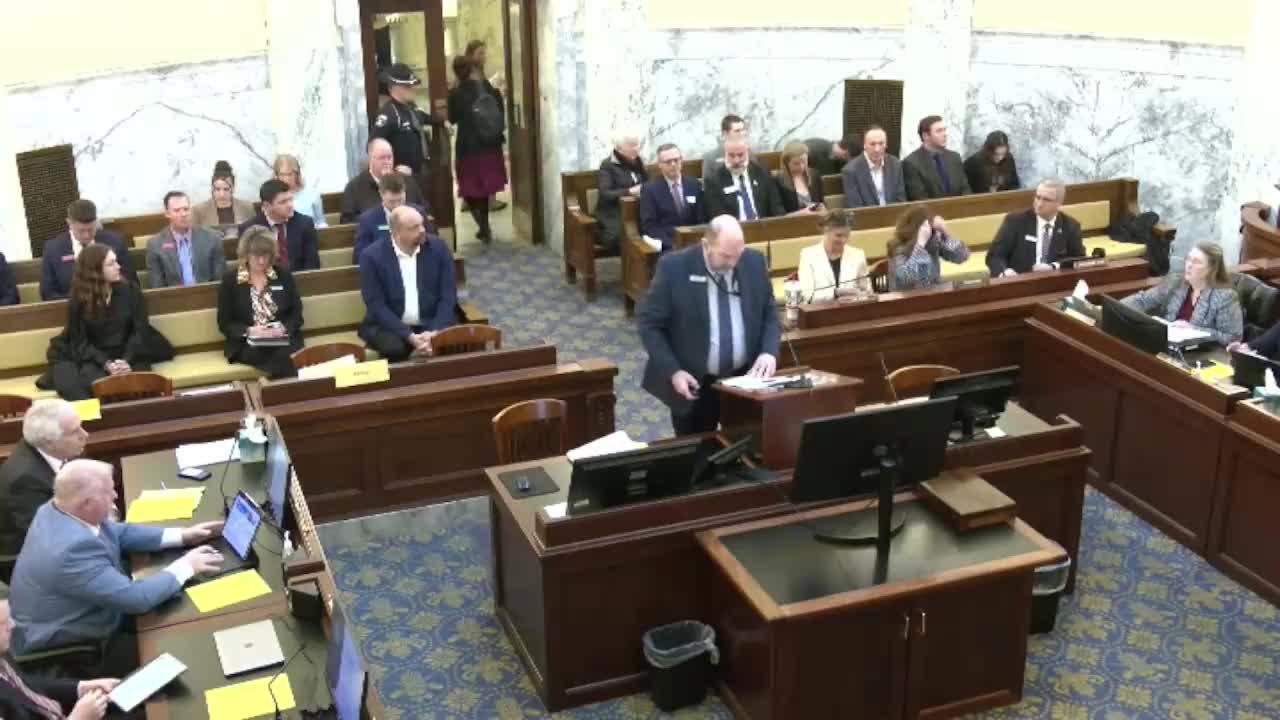
Josh Whitworth, Executive Director of the State Board of Education, told the committee staff in other parts of the board’s office also support program functions and that some operating load is borne in other budgets. Committee members asked for outcome data: where scholarship recipients are placed, whether rural teacher incentives are improving recruitment and retention, and metrics for student completion. Whitworth said the board will provide more detailed data on cohorts, district placements for rural and underserved incentive recipients, and retention outcomes.
Ending: the committee asked the board to produce follow‑up information on the educator incentive program’s district placements and retention, the software engineer vacancy and funding mechanics, and performance measures for the Opportunity Scholarship and related programs.