Get Full Government Meeting Transcripts, Videos, & Alerts Forever!
Get email alerts on the K 12 Education Budget topic
No spam. Unsubscribe anytime.
Idaho education budget hearing spotlights special‑education staffing, new assessment funding and career‑ready grant spending
Summary
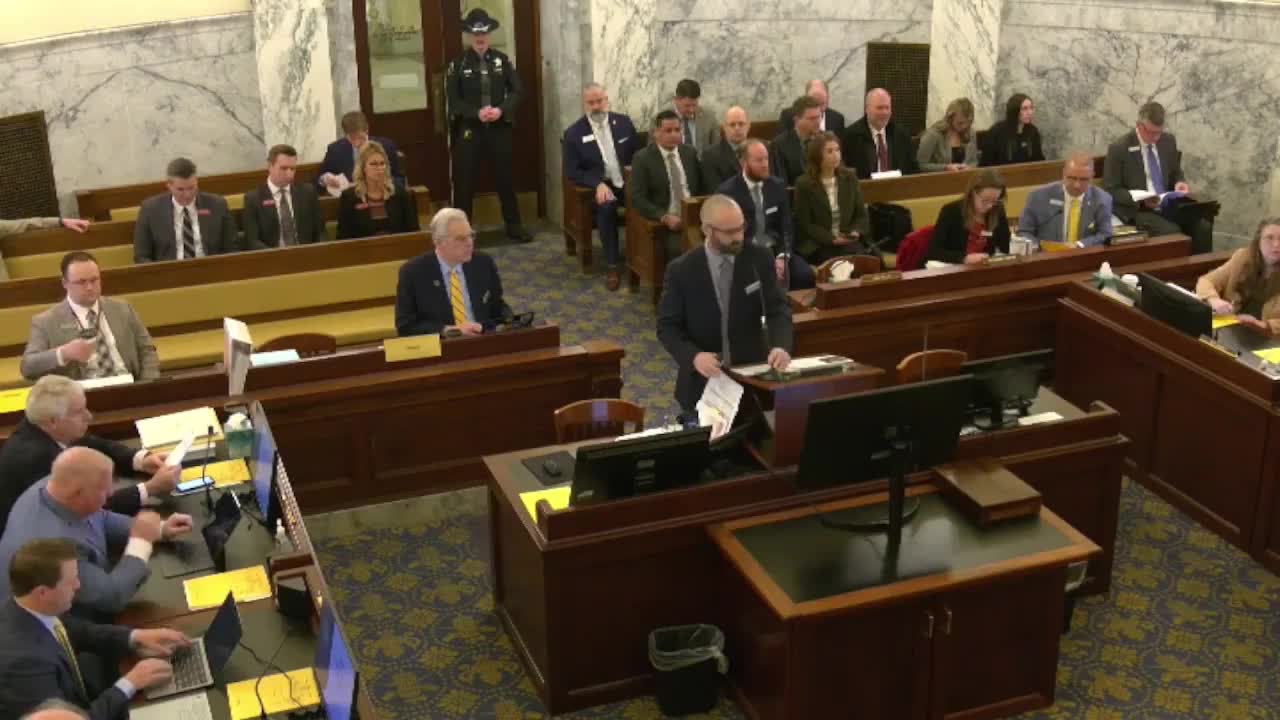
The Joint Finance-Appropriations Committee on Oct. 24 heard the Idaho State Department of Education outline its 2026 budget requests, including staffing for special‑education dispute resolution, a $2.7 million one‑time request to transition the statewide ISAT assessment platform, and continued oversight of the Career Ready Students grant program.
The Joint Finance-Appropriations Committee on Oct. 24 heard the Idaho State Department of Education outline its 2026 budget requests, including staffing for special‑education dispute resolution, a $2.7 million one‑time request to transition the statewide ISAT assessment platform, and continued oversight of the Career Ready Students grant program.
Budget analyst Jared Tetro, Deputy Division Manager, Budget and Policy Analysis Division, Legislative Services Office, told the committee the department’s current organization includes about 126.5 authorized full‑time equivalents and identified several dedicated funds that support program activity. He noted the driver training fund’s free fund balance grew from about $3.8 million in 2022 to an estimated $7.4 million in 2026. “If you look at the funds in rows a through k you’ll see fairly consistent numbers in each row but I’m just going to highlight just a couple,” Tetro said.
The department requested seven ongoing staffing enhancements for 2026, including a dispute resolution specialist intended to handle special‑education mediations and hearings, a charter school special‑education specialist, and a second Indian education coordinator. Superintendent Debbie Critchfield said the department has seen steep increases in parents seeking formal dispute resolution: “We’ve had a 65% increase in requests for mediation, 77% increase in just general complaints and a … 1,200% increase in hearings,” she told the committee, saying local staffing shortages and higher assessment requests are driving more matters to the state level.
Why it matters: the dispute‑resolution role is positioned to verify whether federal procedures were followed and, where necessary, require districts to re‑engage parents. Committee members pressed for data on how federal ESSER and CARES funds were spent and how career‑ready grant obligations were being managed so one‑time federal dollars do not create ongoing state funding gaps.
Career ready grants and other federal funds The department said $45 million in 2024 for Career and Technical Education (CTE) and related career‑ready programming has driven a spike in obligations; Tetro explained many grants are obligated by contract or reappropriation and therefore do not always show as available free balance. Superintendent Critchfield said the Career Ready Students program received more than $65 million in recent cycles, that 152 grant applications were submitted, and that 72 grants totaling about $62.7 million have been awarded and obligated. She said reimbursement is typically issued on receipt to avoid commingling state or district funds with award dollars.
Assessment and reporting requests The department requested $2.7 million in one‑time federal spending authority to transition to a new platform for the statewide ISAT assessment (grades 3–8 and once in high school) after the current contract expires. “This would be a one‑time federal fund spending authority to help transition to a new platform,” Gideon Tolman, the department’s chief financial officer, told the committee. Tolman said the department believes base funding would cover ongoing implementation costs but agreed to follow up with a detailed breakdown of pilot, procurement and licensing costs.
Tetro also described a one‑time supplemental tied to the Idaho Reading Indicator and the state performance report card. He referenced Title I‑A of the Elementary and Secondary Education Act of 1965 as the federal requirement that obligates a state report card to receive Title I funding.
School safety and other requests The department outlined an ongoing and a one‑time request related to the school bus camera fund created after last session’s House Bill 610, which amended fees and fines tied to illegal passing of stopped school buses. Tetro said the fund currently contains about $35,000; the committee heard how spending authority would be reconciled to actual cash balances and that any unspent appropriation would revert.
Other requests included $746,300 over four years for a Child Nutrition Technology Grant (largely for the MyIdahoCNP platform), $350,000 for a youth well‑being assessment being considered by the Millennium Fund Committee, and a $300,000 recommendation to support underperforming charter schools drawn from the public charter school authorizer fund. The committee asked for a breakdown of private‑school COVID (ARPA/CARES) support allocations and for details on how ESSER and other federal funds were used to avoid creating unsustainable ongoing obligations.
Committee follow‑up and transparency Committee members repeatedly requested more granular reports: which private schools received COVID aid and amounts; a project‑by‑project accounting of the $38 million variance shown for the Career Ready Students program; and a clearer reconciliation of driver‑education reimbursements versus fund balances. Jared Tetro and Superintendent Critchfield agreed to provide follow‑up materials and records to the committee.
The hearing included extensive Q&A on vacancies, use of one‑time federal carryforward dollars, and the department’s auditor position, which the committee approved in a prior year to verify district payment accuracy. The department said it currently had six open positions and was actively filling them.
Details and context: officials referenced Idaho Code provisions that define the State Board of Education and the superintendent’s role; the department cited federal law and program names (ESSA, Title I‑A) when describing reporting requirements tied to federal funding. The department asked the committee to consider the timing of federal transitions and the degree to which federal grants carry compliance obligations for the state.