
District reports NJSLA gains; ELA outpaces math but math shows pockets of growth
Get AI-powered insights, summaries, and transcripts
Subscribe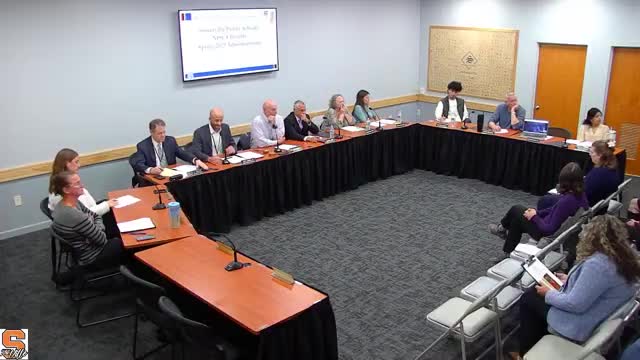
Summary
Director of curriculum Mary Kane presented NJSLA results showing district growth in ELA, math and science compared with 2023——2024 statewide progress; improvements were uneven across grades and subgroups, and administrators flagged changes in state testing that may complicate year-to-year comparisons.
Mary Kane, director of curriculum for Somerville Public School District, presented the district—s spring NJSLA (New Jersey Student Learning Assessment) results and described areas of progress and remaining challenges.
Kane said about 900 students in grades 3——9 took the math and ELA assessments; science was administered in grades 5, 8 and 11. Kane reported that 50——153% of students met or exceeded expectations in ELA, while roughly 34% met or exceeded in math districtwide. She highlighted year-over-year gains in several grades and said the district generally outpaced state average growth in 2025: "The ELA average growth was 7.3% for Somerville versus 0.9% for New Jersey," Kane reported, and in math the district averaged 7.8% growth versus 3.7% for the state.
Kane walked the board through grade-level comparisons: many elementary and middle grades showed measurable gains in both subjects, grade 9 ELA dipped slightly (a trend seen statewide), and algebra and geometry results varied with Algebra 2 reporting notable gains. Subgroup data showed mixed results: students with IEPs maintained progress and the district reported improvement for current multilingual learners and economically disadvantaged students in some grades; small populations such as students with 504 plans produced volatile percentages because a single student's result can materially shift rates.
Kane described district responses to the data: elementary early literacy screening and professional development, additional intervention lab periods at the middle school, new lab classes and after-school targeted supports at the high school, and ongoing data-team cycles at district, school and classroom levels to set goals and monitor progress.
Board members asked how the district will interpret next year—s results after the state—s planned field test of a new adaptive math and ELA assessment. Kane said the district is field testing the adaptive assessment in October and November; it will not produce scores for students but will inform the state. She cautioned that the adaptive test may not be strictly "apples to apples" with prior NJSLA results and emphasized continued reliance on local diagnostic and benchmark data for year-to-year monitoring.