Clark County sheriff outlines $100 million plan for new jail; half‑percent sales tax on ballot
Loading...
Summary
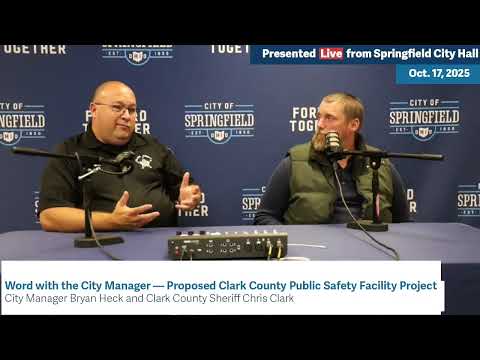
Sheriff Chris Clark said a proposed new Clark County public safety facility would replace the county jail because the current downtown building is out of compliance with Ohio minimum jail standards and routinely overcapacity.
Sheriff Chris Clark said a proposed new Clark County public safety facility would replace the county jail because the current downtown building is out of compliance with Ohio minimum jail standards and routinely overcapacity. He told Springfield City Manager Brian Heck that consultants estimate a 170,000–180,000 square‑foot facility with about 454 beds would cost roughly $100 million and that a half‑percent local sales tax on the upcoming ballot would generate about $10 million a year to help construct, operate and maintain the facility.
Why it matters: Clark County’s jail, built and opened around 1980, is legally recognized at about 167 beds while the sheriff said the facility’s average daily population recently has been about 200 inmates. Clark said that mismatch creates health, safety and staffing problems, limits access to rehabilitative programming and places strain on deputies and corrections staff. The proposal would aim both to bring the county into compliance with state standards and to provide space for classrooms and treatment that Clark described as critical to lowering recidivism.
Clark said the existing facility “was built as a 168‑bed jail” and that Ohio’s administrative rules set minimum jail standards that the current building cannot meet because of its layout and chronic overpopulation. “Today’s population was 197,” Clark said, summarizing recent counts, “so that’s 30 people over top of where we are supposed to be, according to the state of Ohio.” He added that overcrowding “causes tension, it causes frustration. Fights occur. It creates a health issue” when people must share showers, sinks and toilets beyond the ratios the state requires.
On rehabilitation, Clark said Clark County’s current recidivism rate is about 32.5 percent and that the jail has limited classroom and program space. “Currently, at the jail, we have space. We have two classrooms that might hold 15 people, 20 people… we do drug and alcohol therapy evaluations. Currently, we’re doing about 20 to 24 evaluations in the jail per week. We should be upwards of 40,” Clark said, arguing that more consistent in‑custody programming can reduce returns to the system.
Cost, funding and the ballot measure: Clark said consultant DLZ produced a sizing and cost estimate that yielded the roughly $100 million figure — including an estimated $77 million in hard construction costs and additional soft costs for design and permitting. He said the state has authorized counties to seek up to a half‑percent local sales tax for public safety facility purposes; in Clark County’s estimate, that half‑percent would produce about $10 million annually and can be used for construction, operation and repair of the new facility. Clark said the county submitted a grant application to the state that was denied and that officials will pursue other grants and possible state funding sources, including discussions about allocations from marijuana‑related revenues.
Location and land: Clark described a search for a site that balances access across the county and reduces security and public‑access problems he said exist downtown. He told Heck the county has negotiated an attempted purchase agreement for a privately owned, annexed parcel south of I‑70 of about 29.71 acres but emphasized the county has not closed. “You’ve entered a purchase agreement, which doesn’t mean that you will actually execute that purchase agreement,” City Manager Brian Heck said on the podcast; Clark confirmed due diligence is ongoing and the county is “a long way from actually purchasing the land.” Clark said the county sought at least a 10‑acre minimum and preferred about 20 acres to allow future expansion and avoid becoming landlocked.
Police division and co‑location: Heck asked about the Springfield Police Division’s location and whether the city police would move with the county. Clark and Heck said the city intends to keep police services centrally located downtown. Clark said that while co‑location would be desirable in some ways, the county’s operational needs and desire for quicker access to major thoroughfares informed the county’s site search.
Timing and next steps: Both men estimated the project — if approved and fully funded — would take several years, with Clark and Heck citing a likely multi‑year timeline (three to five years after approvals) for design and construction. Clark said the county can end the sales tax early if other funding becomes available. He encouraged residents to ask questions and consult clarkcountyohio.gov for details.
The podcast concluded with both men urging public engagement on the ballot question and confirming there are ongoing negotiations, consultant analyses and grant searches before any land purchase or construction begins.