Get Full Government Meeting Transcripts, Videos, & Alerts Forever!
Get email alerts on the Change In Employee Compensation topic
No spam. Unsubscribe anytime.
JFAC fails to approve any Change‑in‑Employee‑Compensation motion; CEC salary proposals sent back for revision
Summary
Committee members debated four CEC salary motions — flat dollar, flat dollar plus top‑up, merit‑based, and the governor’s 5% proposal — but could not reach a majority on any option and will revisit the issue at a later date.
The Joint Finance‑Appropriations Committee on Jan. 31 considered four alternate Change‑in‑Employee‑Compensation (CEC) proposals for fiscal 2026 but did not adopt any of them, leaving salary increases unresolved.
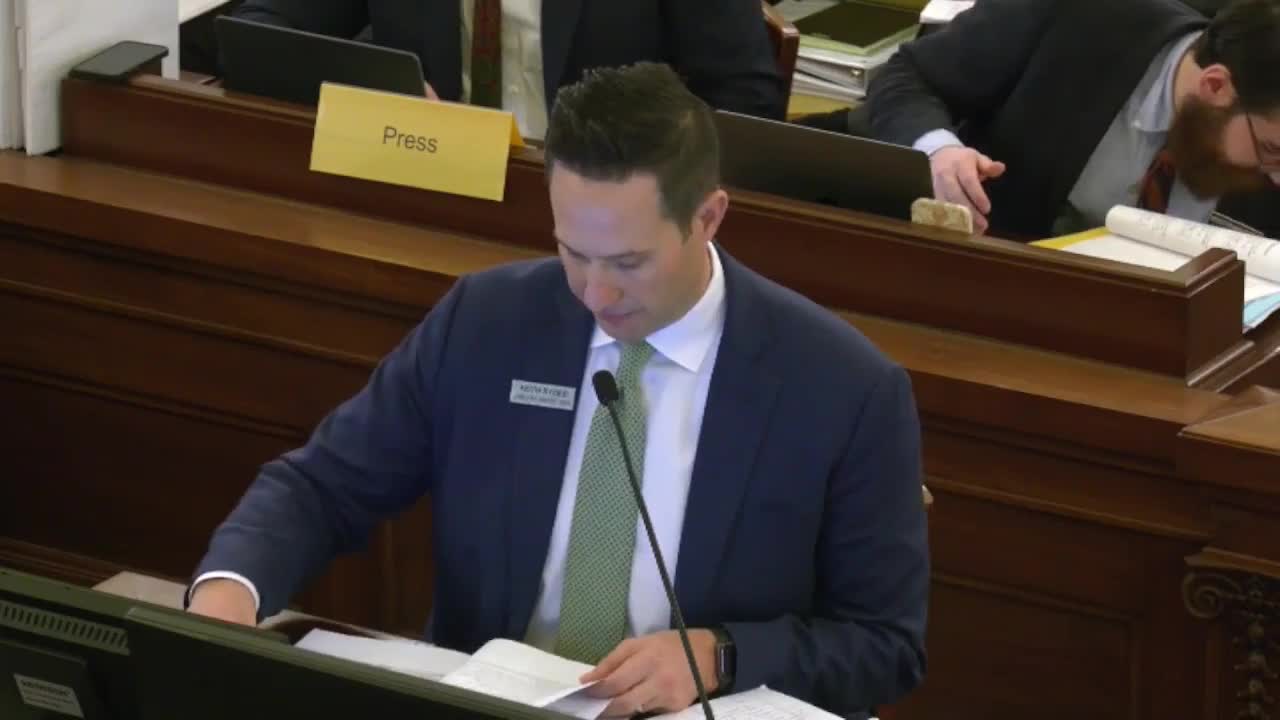
Staff analyst Mr. Bybee presented four distinct motions and the methodology used to calculate each. The motions differ in distribution and mechanics: (1) a flat $1.55 per hour per FTE approach with agency flexibility (motion led by Representative Miller; total $177,429,000 described in staff materials), (2) a $1.55 floor plus an additional $611,500 to guarantee a minimum 3% for all employees up to a salary threshold (Representative Furness’s substitute motion; total $178,040,500), (3) a merit‑based approach providing up to 4% (Senator Cook’s motion; totals cited in the packet included $180,312,100 in one presentation), and (4) the governor’s recommended 5% merit distribution (Senator Wintrow’s motion; staff number in the packet $180,653,800).
Committee debate spanned philosophical and practical points. Senator Cook and Senator Woodward argued in favor of merit‑based increases and supervisor discretion to reward higher performance. Representative Handy and others noted the management difficulty and potential fairness arguments in heavily merit‑weighted plans; Handy said there is also value in treating lower‑paid employees equally to meet inflationary pressures. Several members raised concerns about the difficulty of recomputing line items on the fly and the risk of arithmetic errors in complex motions.
Multiple roll calls were held. Representative Miller’s flat‑dollar motion, Senator Cook’s merit motion and the governor’s 5% motion were each seconded and considered; Representative Furness offered a substitute motion (motion 2) to guarantee a 3% minimum while preserving a $1.55 floor for certain salaries. On subsequent roll calls none of the motions achieved the required majority in both the House and Senate delegations in the joint committee, and the committee recessed action on CEC to a future day.
Mr. Bybee summarized the calculation approach during the discussion, explaining that the staff used a $1.55‑per‑hour calculation applied to adjusted average salaries for state employees and applied fund splits consistent with the governor’s recommendation; community colleges and other program lines used placeholders where FTP data differed.
Committee members also debated the voting procedure used in the joint panel. A 2023 letter describing a joint voting approach was located and read into the record; members disagreed over whether the letter requires a majority of members present in each chamber or a majority of the full committee membership. The chair ruled the letter controls for the day’s voting procedure and instructed staff to clarify with leadership later. Several members expressed frustration about changing or unclear procedure.
The committee ended the hearing without approving any CEC motion and directed staff to rework proposals and return at a later meeting.