Get Full Government Meeting Transcripts, Videos, & Alerts Forever!
Get email alerts on the Elections topic
No spam. Unsubscribe anytime.
Federal elections official briefs Idaho Senate on voting-system standards, HAVA grants
Summary
Don Palmer, vice chair of the U.S. Election Assistance Commission, told the Idaho Senate State Affairs Committee that the EAC’s testing, certification and grants under the Help America Vote Act support states’ voting systems, cybersecurity and poll-worker recruitment; he urged continued resources and personnel for local election offices.
Don Palmer, vice chair of the U.S. Election Assistance Commission, told the Idaho Senate State Affairs Committee on the panel’s first meeting of the 2025 session that the EAC’s testing, certification and grant programs exist to support state and local election officials and improve voting-system accuracy and security.
Palmer outlined the EAC’s role under the Help America Vote Act (HAVA), saying the agency runs voluntary voting-system testing and certification, gathers best practices, and distributes federal HAVA funds to states for equipment, cybersecurity and accessibility. “We want to make sure [voting systems] are secure, accurate, and they’re functionable,” Palmer said.
The presentation stressed three main elements: federally accredited lab testing, state review, and local logic-and-accuracy checks. Palmer described the EAC’s transition to updated Voluntary Voting System Guidelines (VVSG 2), a program to certify electronic poll books and other election-supporting technologies, and field services that investigate anomalies and perform manufacturer audits. He also described “hash verification,” a field check intended to confirm that deployed software and firmware match the versions approved in the lab.
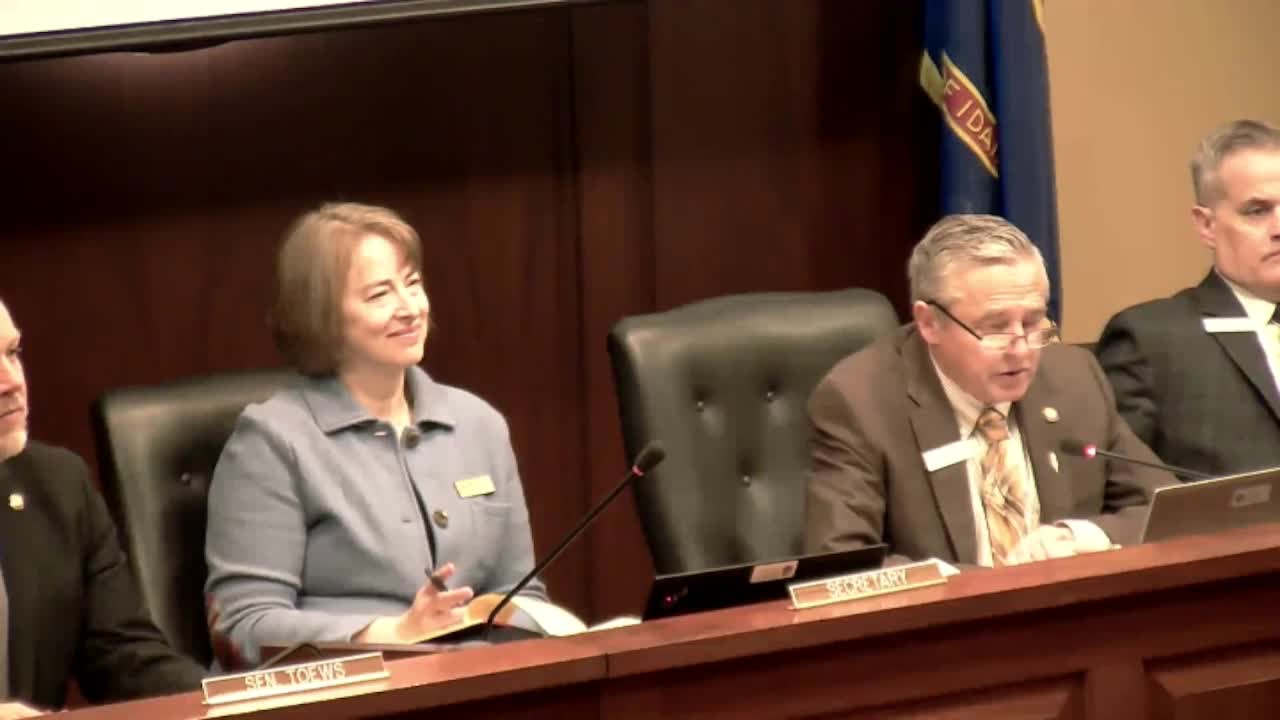
Phil McGrane, Idaho secretary of state, introduced Palmer and told the committee the EAC presentation had also been delivered to county clerks and other election officials during the state’s continuing training and Idaho Elections Conference. McGrane noted that the Idaho National Laboratory has supported cybersecurity testing of the state’s systems.
Palmer reviewed federal HAVA funding history and usage: Congress initially appropriated roughly $3 billion after the 2000 election to help states modernize voting systems, he said, and additional pandemic funds were later distributed. He told the committee that annual HAVA security-grant levels have fallen from a peak in 2020 to roughly $55 million nationally in recent years and that Idaho’s earlier allocations were in the millions; Palmer said Idaho received about $8.8 million in prior HAVA distributions and that the state received roughly $1 million in the most recent allocation, figures he described as approximate.
Committee members asked about EAC involvement after the 2020 election and about improvements Idaho could make. Palmer said the EAC engaged on multiple levels — substantive testing and public education — and has stepped up penetration testing and vulnerability-disclosure programs. “We do additional penetration testing of our all of our voting systems,” he said, noting federal labs and the EAC’s testing standards are intended to catch known vulnerabilities before systems are fielded.
On what Idaho could do to improve election operations, Palmer emphasized basic resources and staffing for local offices: “Focus on the fundamentals. Focus on the fundamentals is resources of personnel,” he said, citing voter-registration list maintenance as an example of work that requires staff time and consistent funding. He also said transitioning to new certified systems that meet VVSG 2 will be a resource-driven decision by states.
Palmer encouraged the committee to consider HAVA grants and state staffing as a partnership between federal and state governments and to make use of the EAC’s clearinghouse of best practices, training resources and data reports collected after federal elections.
The EAC presentation closed after roughly a half hour of briefing and questions; committee members thanked Palmer and McGrane for the briefing and said they would continue to coordinate with Idaho’s secretary of state and county clerks on election administration needs.