Mills County adopts Chapter 312 tax-abatement guidelines with $10 million investment threshold
Loading...
Summary
The Mills County Commissioners Court approved a framework for considering tax abatement applications under Texas Tax Code Chapter 312, setting a $10 million investment minimum and a two-full-time-employee threshold that the court may waive.
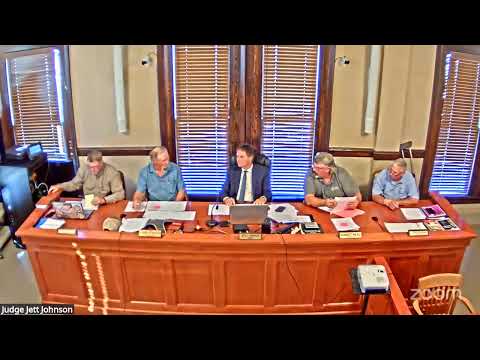
Mills County Commissioners Court on Oct. 13 voted to adopt guidelines and criteria that will govern consideration of tax abatement applications under Chapter 312 of the Texas Tax Code.
The policy establishes a $10,000,000 minimum capital-investment threshold for applications to be eligible for court consideration and sets an initial employment threshold of two permanent full-time positions; the court may waive the employment requirement on a case-by-case basis. The guidelines include a written application form intended to collect information the court will use to determine whether to set a public hearing on a reinvestment zone or to consider a tax payment agreement.
County attorney Jeff Allen, who led the presentation by phone, told commissioners the guidelines are intended as "guardrails" that make potential applicants eligible for consideration but do not require the county to grant any abatement. "Any such agreement shall be provided in accordance with procedures and criteria outlined in this document... however, nothing in these guidelines shall imply or suggest that Mills County is under any obligation to provide an abatement to any applicant," Allen read from the draft.
Allen and other speakers explained the practical next steps for any applicant: the county would first consider a reinvestment zone, which requires a special newspaper posting seven days before a hearing; if the county later proceeds to consider a tax payment agreement, additional posting of 30 days is required. Allen also said the guidelines are written to be amendable: the court may change thresholds (for instance for a data center or other large investment) by the process described in the document.
Commissioner Williams moved to adopt the guidelines; Commissioner Sullivan seconded. The motion passed. One commissioner verbally opposed during the roll call, but the court adopted the guidelines and instructed staff on the procedural next steps for any application.
Why it matters: The guidelines create a consistent review process for applicants seeking tax abatements in Mills County and set clear thresholds and administrative steps. They also preserve the commissioners court’s discretion: adoption does not obligate the county to grant abatements in any particular case.
The court discussed a handful of drafting clarifications during the meeting; Allen and county staff said they would ensure the final packet includes the most recent clarifying edits before execution. Allen noted the county’s prior use of abatements for wind projects and said the updated guidelines reflect common practice for rural counties.