Get Full Government Meeting Transcripts, Videos, & Alerts Forever!
Get email alerts on the Administrative Rules topic
No spam. Unsubscribe anytime.
DFM bureau chief briefs Senate committee on rulemaking process and temporary‑rule gap
Summary
Lauren Smizer, a bureau chief at the Division of Financial Management, explained the five‑step rulemaking process, the distinction between temporary and pending rules and why many final rules will take effect July 1, 2025; committee members asked for staff support during the upcoming review session.
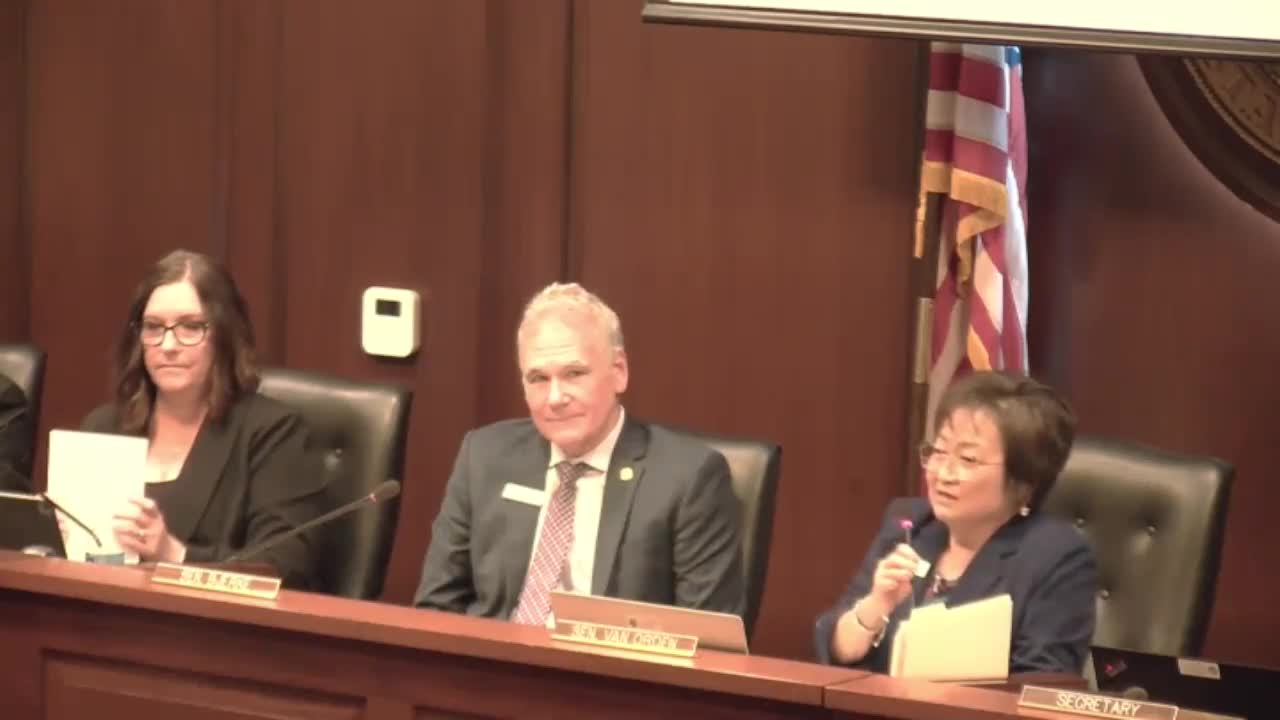
The Senate Health and Welfare Committee received an overview of the state administrative‑rulemaking process from Lauren Smizer, a bureau chief at the Division of Financial Management who is overseeing DFM’s work on rules and regulatory review. Smizer traced the hierarchy of law that governs rules, explained the difference between proposed, pending, final and temporary rules and described the review steps the committee will follow.
Smizer said the Legislature grants agencies the authority to promulgate rules, and agencies must follow the Administrative Procedures Act (Idaho Code Title 67, Chapter 52). She described a five‑step process the committee is now in at step four — the committee review phase — and said approved final rules generally will become effective July 1, 2025, unless a concurrent resolution states otherwise. She told senators that when agencies issue temporary rules, many of those have corresponding pending rules and that the temporary rule will remain in effect until the pending rule becomes a final rule on the statutory effective date.
Smizer walked the committee through practical review signals available in their rule books: an authority citation showing the statute that empowers an agency to adopt the rule; a descriptive summary of changes; fees when applicable; and statements about negative fiscal impact when an agency estimates more than $10,000. She noted the public comment period for proposed rules is at least 21 days and that agencies typically publish notices and drafts in the bulletin and on adminrules.idaho.gov.
Senators asked procedural follow‑ups about temporary rules and whether agency staff would be available during the committee's detailed review. Smizer said staff will be present to answer questions during the committee's review and offered the DFM team's contact information. She also highlighted Town Hall Idaho as an avenue the executive branch uses to post meetings and materials.
Smizer told the committee she is new to the role and praised her rules team — naming Brad Hunt (rules coordinator), Logan (rules specialist) and Margaret (support staff) — and asked legislators to reach out to the DFM rules team if they need help navigating the temporary and pending rulebooks.
The committee will begin its detailed review of the Department of Health and Welfare rule set in the next meeting; DFM staff indicated they will be available to support senators during the process.