Get Full Government Meeting Transcripts, Videos, & Alerts Forever!
Get email alerts on the Gubernatorial Appointment topic
No spam. Unsubscribe anytime.
Senate committee hears gubernatorial appointment; nominee outlines child-welfare focus and internal reforms
Summary
Alex Adams, the governor's nominee to lead Idaho Department of Health and Welfare, told the Senate Health and Welfare Committee he will prioritize child welfare, streamline agency duties and strengthen financial and integrity controls; the committee did not vote on the appointment and is expected to take it up later.
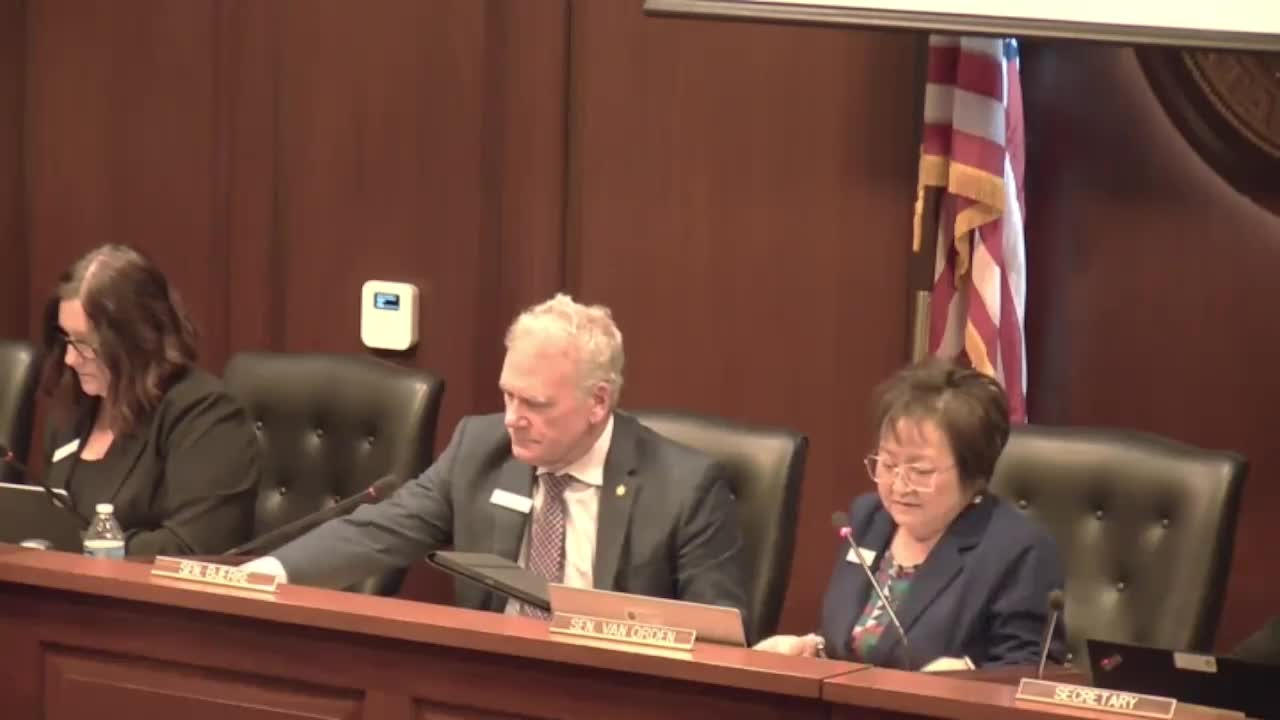
Alex Adams, the governor's nominee for director of the Idaho Department of Health and Welfare, appeared before the Senate Health and Welfare Committee to introduce himself, describe reforms he has begun since taking the post seven months ago and answer senators' questions. The committee did not vote on the appointment during the session and the chair said a vote was likely to occur the following day.
Adams told the committee his leadership priorities center on simplifying the agency’s scope and concentrating resources on child welfare. "Quality over quantity," he said, adding a second, repeated focus: "child welfare, child welfare, child welfare." He described steps already under way to reduce regulatory and statutory clutter, strengthen financial oversight and create an internal integrity office.
The nominee said the Department of Health and Welfare employs roughly 3,000 people, operates about 74 buildings in 37 locations and administers a wide range of services from Medicaid and child welfare to licensing and vital records. To address what he called mission creep, Adams said his office has removed internal rules and will propose statutory pruning. "We took 2,300 pages of internal regulations and put them in the dustbin of history," he told senators, and said staff were preparing a bill to strike about 150 statutory sections he described as obsolete or unfunded.
Adams said he has reorganized finance and oversight inside the department: a chief financial officer now reports directly to him, and he has instituted a sign‑off process he calls "One Department" that requires division, deputy and director approval for grants, sponsorships, regulations or procurements. He also announced an internal Office of Program Integrity, saying the office will conduct on‑the‑ground reviews to find and address problems early. "The budget is a law, not a suggestion," Adams said, describing a stronger budget‑first posture for the agency.
On child welfare, Adams identified measurable goals. He said the department is trying to "double the rate of foster homes relative to the number of children." He told the committee the ratio of foster‑family placements to children entering the system moved from about 0.74 to roughly 0.94 during his tenure. He said the department has waived adoption fees and has completed more than 160 adoptions since he started. Adams credited meetings with foster parents and child‑welfare stakeholders for shaping changes such as expanded after‑hours call centers and a budget request to lower staff caseloads.
Several senators raised past fiscal and program integrity problems and asked what Adams had done to prevent recurrence. Senator Lenny summarized a series of prior findings and audits — including duplicated benefit payments and a community partners grant with questioned expenditures — and asked for Adams's response. Adams said the department is executing corrective action plans inherited from the prior administration, requiring federal‑grants training for staff, updating conflict‑of‑interest disclosures and creating the Office of Program Integrity. He also said the department had created a transparency team to handle public records requests faster.
Committee members expressed support for Adams's focus on foster care; one senator, identified in the transcript as a licensed foster parent, said the changes are already noticeable. Adams told the committee other populations such as people with intellectual and developmental disabilities remain priorities but said he wants to finish the child‑welfare initiatives before shifting major attention elsewhere.
No formal vote was taken on the appointment at the hearing. The committee chair announced that, as with other gubernatorial appointments, the committee would consider the confirmation vote at a later meeting — likely the next day.
Details from the hearing are scheduled to return to the committee when members consider rules and budget matters tied to the department.