Get Full Government Meeting Transcripts, Videos, & Alerts Forever!
Get email alerts on the Government Ethics And Process topic
No spam. Unsubscribe anytime.
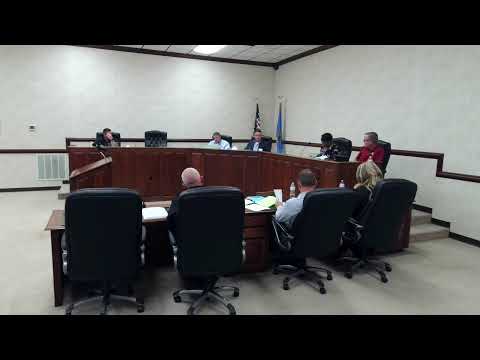
City attorney reviews Open Meetings and Open Records rules for council, warns of legal risks
Summary
Atoka's city attorney briefed the council on open-meeting and open-records obligations, emphasizing posting rules, limits on public participation, executive sessions, text-message/email discoverability and criminal penalties for willful violations.
The city attorney gave a detailed refresher on compliance with the state Open Meetings Act and the Open Records Act, telling the council he treats the area "very seriously" and warning that willful violations can void actions and carry criminal penalties.
Key points the city attorney emphasized included: regular meetings require public posting (24-hour notice for a regular meeting; 48 hours for some special meetings; emergency meetings are handled under separate rules), agenda language must be specific and reasonably calculated to inform the public, and members must avoid discussing city business privately when a quorum is present. He described the legal exposure when a quorum discusses city business outside a posted agenda and recounted a neighboring city's experience in which an unlawful meeting led to a voided personnel action.
On public comment, the attorney noted that while meetings must be open for the public to attend, the public does not have a right to participate beyond whatever rules the council sets. He advised that council members may not engage in substantive discussions with public commentators during the public-comment period without risking violations.
On executive sessions the attorney said they are limited to specific topics (employment, economic development negotiations, property acquisition, investigations/litigation) and that minutes must be kept; no final decisions can be made behind closed doors. He also warned council members that personal emails and text messages used for city business may be discoverable under open-records law and that deleting such records can violate retention statutes.
He discussed that most dash-cam and body-camera footage is discoverable and urged council members to avoid invoking official authority during traffic stops or similar encounters that could result in video release.
Why it matters: the guidance describes legal duties that constrain how council members and staff may communicate, schedule meetings, and handle records. The city attorney said the office will post notices when a quorum will attend public events where no business will be discussed in order to avoid appearance issues.
The attorney concluded by saying the council members are enrolled in additional training and offered to provide follow-up guidance; several council members thanked him for the refresher.