Get Full Government Meeting Transcripts, Videos, & Alerts Forever!
Get email alerts on the Accreditation School Improvement topic
No spam. Unsubscribe anytime.
NEASC collaborative visit scheduled; high school outlines school improvement priorities and pilot programs
Summary
Nipmuc High School staff briefed the committee on an upcoming NEASC collaborative conference visit, the school improvement plan priorities (authentic learning, career pathways, special‑education supports and belonging) and pilot tools such as an AI reflection companion and the Portrait of the Learner assessment work.
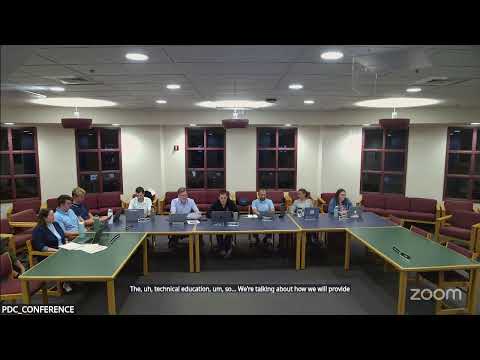
School leaders briefed the committee on an upcoming New England Association of Schools and Colleges (NEASC) collaborative conference visit and on the high school’s school improvement priorities for the next two years.
Nut graf: the school will host a six‑person NEASC team as part of its accreditation cycle; leaders are focusing improvement work on authentic learning, assessment of durable skills (the Portrait of the Learner), career‑connected pathways and refining specially designed instruction to close achievement gaps.
School leaders described the accreditation visit as part of a retooled NEASC process that places emphasis on continuous improvement. The visit will include classroom observations, meetings with teachers, students and parents and a follow‑up team visit in two years to assess progress. The school piloted a codified protocol for authentic learning through a partnership (described as Ally/Foundation work) and plans to host visiting teams to train other schools on the protocol.
Leaders described an expanded focus on assessment of durable skills using reflection‑based rubrics and an “AI reflection companion” tool intended to scaffold student reflections for teacher review. The school reported a pilot in which student self‑efficacy measures rose significantly after authentic learning experiences (a cited example moved a measure from the mid‑20s to the 70s in their internal comparison), and staff said they intend to continue scaling that approach.
Career and college opportunities were also discussed: innovation career pathways (including new health and environmental pathways), a Junior Career program with internships expanding from pilot cohorts (20 → 40) toward larger targets, and early‑college courses through external providers. The school also described deeper work on specially designed instruction (SDI) for students with disabilities, building a crosswalk of disabilities to SDI strategies and entering that work into the district’s student data platform to improve case planning.
Staff described student review processes intended to surface strengths, interests and needs in Open Architects so educators can plan supports; they said parents were asked to submit short profile descriptions to help populate each student’s review. Leaders emphasized an ongoing commitment to student belonging and wellbeing (including a Jed Foundation partnership) and said students will be included in action planning.
The committee voted to approve the school’s flexible improvement plan at the meeting. The motion was moved, seconded and approved by voice vote; the transcript records “All those in favor? Aye.” No roll‑call tally was recorded.
Ending: Staff said the NEASC visit will occur with a small visiting team and that the school will return to the committee with findings and any recommendations arising from the collaborative visit and the school improvement plan work.