Get Full Government Meeting Transcripts, Videos, & Alerts Forever!
Get email alerts on the Community Preservation topic
No spam. Unsubscribe anytime.
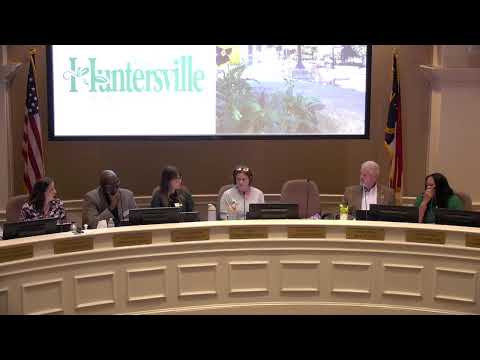
Huntersville holds public hearing on Pottstown Community Preservation Plan amid calls for faster protections
Summary
Consultants presented a draft small-area preservation plan for the Pottstown community; residents urged immediate protections including an overlay district or moratorium to prevent displacement and rapid redevelopment.
The Town Board of Huntersville on Oct. 7 received a draft Pottstown Community Preservation Plan from consultants Neighboring Concepts and heard more than a dozen public comments urging quicker, concrete protections for the historically Black neighborhood.
The draft plan, developed after roughly nine months of engagement, lays out goals and four ‘‘toolkits’’ of strategies — process and representation, regulatory tools, community-led initiatives, and priority public/nonprofit investments — designed to preserve neighborhood character, celebrate African American heritage and increase residents’ ability to remain in place.
Neighboring Concepts’ Sheldon Merrill told the board the team conducted about 10 community outreach events and “engaged about 48 different residents” while developing the plan, and described a long-range implementation timeline that includes near-, mid- and long-term actions. “We broke [the process] up into listening, community engagement and collaboration, a visioning phase, narrowing the plan, and the roadmap to implementation,” Merrill said.
Eric Orozco, an associate urban designer with Neighboring Concepts, said the plan is preservation-focused and organized around four practical toolkits. He highlighted suggested regulatory options such as overlay districts and changes to land-use standards to protect tree canopy and other neighborhood assets.
The plan proposes both town-led actions — for example, infrastructure projects and traffic calming already under study — and community-led approaches, such as exploring a community land trust to secure land and long-term affordability. “Grassroots-led nonprofit housing development” and partnering with ‘‘quarterback’’ organizations are listed as possible tools in the draft.
Residents at the hearing repeatedly urged faster action than the plan’s proposed timelines. Rachel Zwift, a Central Avenue resident, said an overlay district’s 1–2 year implementation timeline ‘‘does not fly’’ given current development pressure; she asked the board to impose a 6– to 9‑month moratorium on development in the study area while protections are created. “Pottstown does not have 1 to 2 years…The implementation time for an overlay district of 1 to 2 years does not fly. It has to happen immediately,” Zwift said.
Other commenters requested tangible, near-term steps alongside the plan. David Doctor, who described professional experience in transportation planning, opposed an illustrative connector road shown in workshop materials because of steep slopes and environmental sensitivity. Paul Miller and others asked that a large contiguous tree canopy and county-owned 31‑acre tract be conserved rather than used for new through‑streets.
Several residents asked for greater coordination among existing local groups and recommended forming a coalition or steering body to carry implementation forward. Janelle Harris, representing local organizations, said the community needs a distinct coalition and described progress by local leaders in organizing since 2022.
Board and staff discussion focused on next steps and limits of town authority: staff noted parts of the study area lie outside Huntersville’s jurisdiction, which could affect the town’s ability to fund projects for those parcels but not necessarily its ability to pursue grants or county partnerships. Planning staff and neighboring concepts said the suggested overlay district, if pursued, would require a study period and legal review; town counsel later observed whether a moratorium or text change could be used depends on the precise regulations proposed and state statutes governing zoning changes.
Town staff identified near-term items already underway that overlap the plan’s priorities: a traffic-calming program on Delwood, a downtown stormwater study that includes Pottstown, and potential Central Avenue traffic-calming work. Consultants recommended that the town and the new or existing community groups prioritize lower-effort, high-impact actions while building capacity for larger initiatives such as a community land trust.
Public commenters emphasized that the plan should not be purely aspirational. ‘‘It’s a blueprint,’’ Janelle Harris said; ‘‘now we need sustained action and follow-through from both the town and community organizations.’’
The board did not vote on the plan at the Oct. 7 hearing; the draft was entered into the record and consultants and staff said they will return with next steps, including potential studies and options for an overlay district. Several commissioners asked staff to provide follow-up on the feasibility and timing of regulatory options and on whether any short-term protections — including potential moratoria — could be legally pursued while the plan is finalized.
The town scheduled no immediate vote on regulatory changes at the Oct. 7 meeting; staff said they would analyze options and return with recommendations. In the meantime, residents and consultants emphasized capacity-building and coalition formation as necessary to convert the plan’s recommendations into funded projects and regulations.