Get Full Government Meeting Transcripts, Videos, & Alerts Forever!
Get email alerts on the Energy Policy topic
No spam. Unsubscribe anytime.
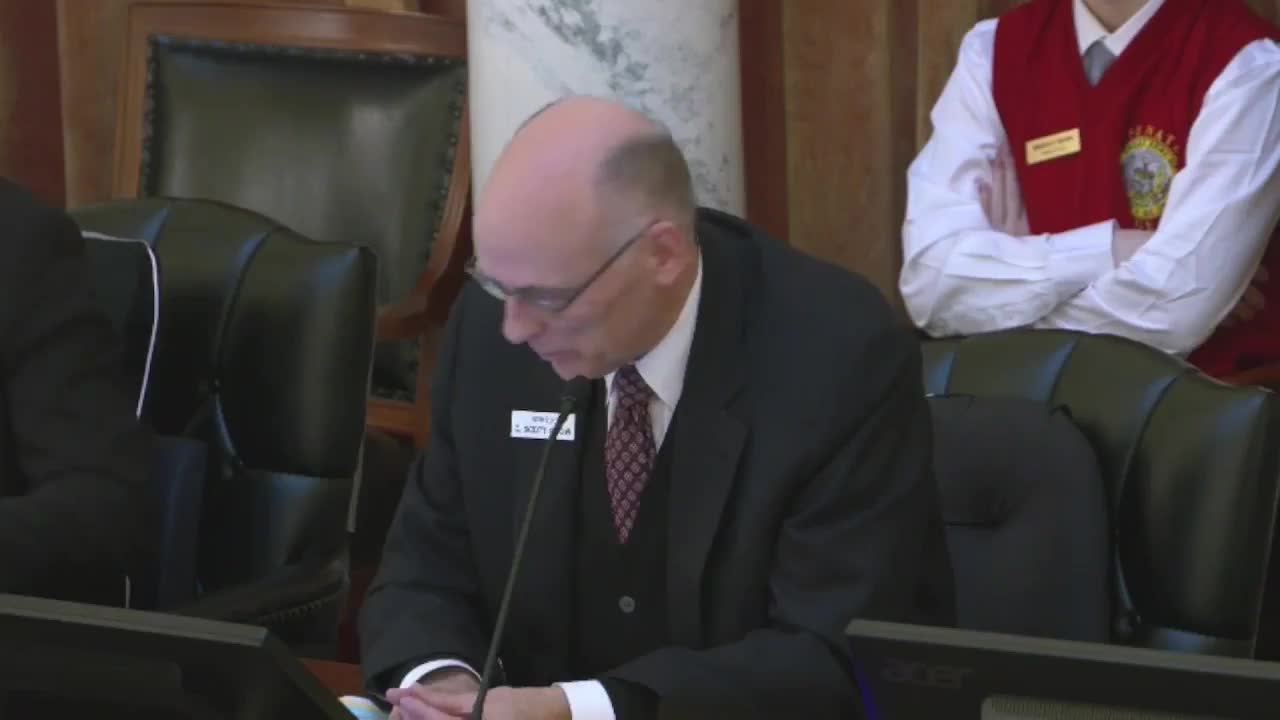
JFAC deadlocks on Office of Energy's home energy rebates and 'speed council' proposals
Summary
Committee debated OEMR proposals to administer $24.58 million in federal home energy rebates under the Inflation Reduction Act and to create a Speed Council to streamline permitting, but motions to fund the programs failed to win committee approval.
The Office of Energy and Mineral Resources asked the Joint Finance-Appropriations Committee for authority to administer the federal Home Energy Rebates Program and for funding to create a Speed Council to streamline permitting of large infrastructure projects.
Kellen McGurkin, a Legislative Services analyst, said OEMR's request included $24,579,900 in federal funds and four limited‑duration FTEs to administer the Home Energy Rebates Program created under the Inflation Reduction Act. The request included $20,000,000 in trustee/benefit funding for direct rebates to Idaho households, about $4,000,220 for third‑party implementation/contract costs, and roughly $502,000 for personnel costs. McGurkin also described a governor-proposed Speed Council funded with $481,000 from the general fund and one new FTE to coordinate permitting for critical infrastructure, with an associated public-facing project-tracking dashboard.
Supporters argued the federal funds would otherwise be reallocated to other states if Idaho declined to participate; proponents emphasized benefits to low-income households, seniors, veterans and people with disabilities. Opponents questioned readiness to administer a federal program, raised concerns about using ongoing state resources for council work that may not fit existing dedicated funds, and sought to preserve legislative-executive branch boundaries for directing agency work.
Senator Woodward moved to fund the governor's Speed Council (1 FTE and $481,000). Representative Tanner offered a separate net‑zero dedicated fund shift motion requested by the agency. Senator Ward Engelking later offered an amended substitute motion that would have added the Home Energy Rebates appropriation (four FTEs and roughly $24.58 million federal funds) in addition to the fund-shift. Representative Manohari seconded the amended substitute.
That amended substitute failed on a roll call. The committee recorded a final combined tally (across both chambers in the committee) of 9 ayes, 10 nays and 1 absent; the motion did not carry. Subsequent substitute and original motions also failed to secure the necessary majorities during the hearing; the chair indicated no funding language would move forward from the committee on these items at that time.
Analysts noted the federal rebate program includes an "exit" approach in OEMR's request so the state could stop participation without using state funds if federal requirements later changed. The committee discussion included questions about the program's administrative costs, the timeline of federal grants, and whether the Speed Council function should be supported by one-time governor funds rather than ongoing state general fund dollars.
No appropriation for the Home Energy Rebates Program or an approved Speed Council appropriation cleared the committee at this hearing.