Get Full Government Meeting Transcripts, Videos, & Alerts Forever!
Get email alerts on the Labor Budget topic
No spam. Unsubscribe anytime.
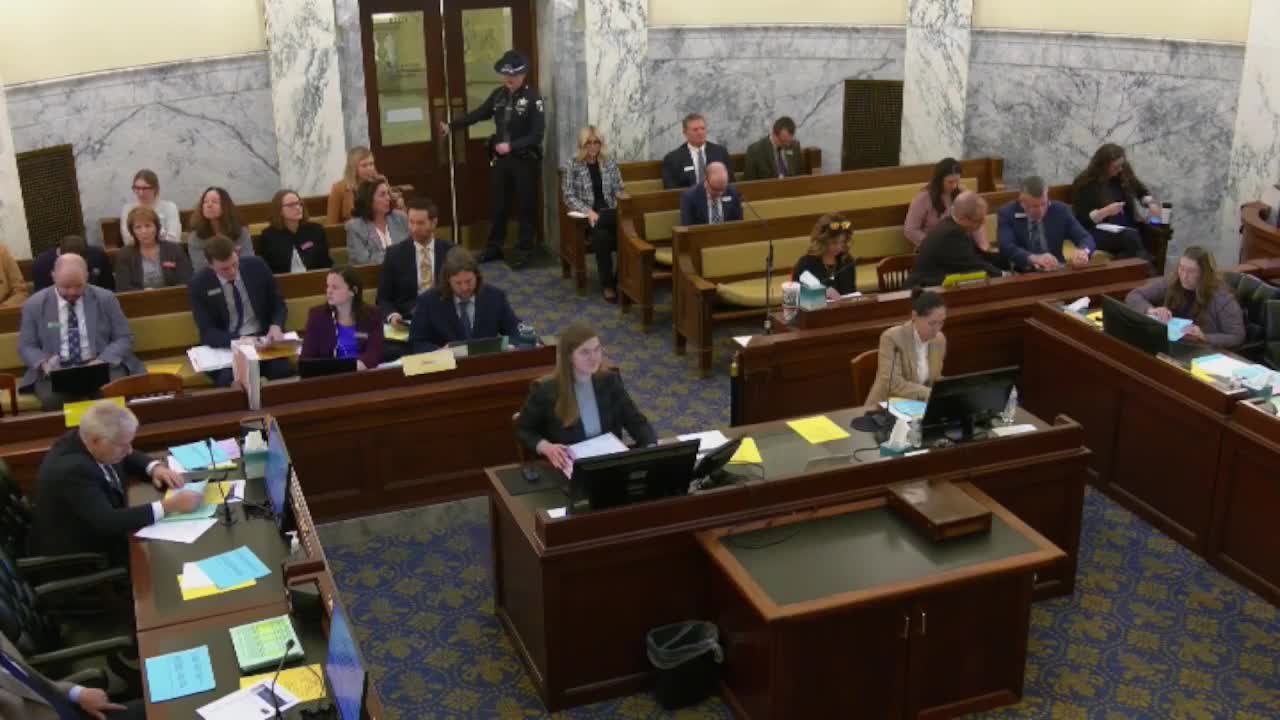
JFAC shifts Department of Labor funding; approves budget changes but report language on immigration, disability fails in House
Summary
The Joint Finance-Appropriations Committee approved a $161,000 net increase and fund-shift adjustments to the Department of Labor's FY2026 budget to realign administration costs from federal grants to a dedicated state fund.
The Joint Finance-Appropriations Committee approved adjustments to the Department of Labor's fiscal year 2026 budget to realign funding after an expected decrease in federal grant awards.
Brooke Dupree, a budget and policy analyst with the Legislative Services Office, explained the department requested $7,330,000 for unemployment insurance operations and related adjustments. Committee members approved a net increase of $161,000, driven by an additional $5,000,000 from the Employment Security Special Administration Fund and a corresponding $4,839,000 reduction in federal grant funding and 15.58 full-time‑equivalent (FTE) positions. The committee agreed the change shifts certain operations onto the department's dedicated administration fund because Idaho's recent low unemployment numbers are expected to reduce federal grant awards that support UI administration.
Senator Cook moved the budget adjustment; Representative Gallahertz seconded. The committee recorded a final tally of 14 ayes and 5 nays; the motion received a "do pass" recommendation.
Separately, two pieces of committee intent language were proposed for the Department of Labor. One would require a report analyzing illegal immigration's effect on the state's labor market; a second would ask for a review of the costs of administering disability determinations at the state level versus using federal processes. Supporters said the reports would provide data to inform future policy; opponents cautioned that the committee was directing executive-branch activity without providing funding and that disability determinations are governed by federal law and require consultation with disability stakeholders.
Senator Cook moved to adopt the language; Representative Tanner seconded. In the roll-call votes the Senate recorded 8 ayes and 2 nays while the House side recorded 4 ayes, 5 nays and 1 absent, so the language failed in committee. The chair noted the language would be sent to the House for further consideration.
Committee members asked staff to follow up on technical questions raised during the hearing, including how quickly federal grant awards respond to changes in unemployment numbers; staff offered to provide that follow-up to the committee.