Get Full Government Meeting Transcripts, Videos, & Alerts Forever!
Get email alerts on the Libraries Digital Access Dei topic
No spam. Unsubscribe anytime.
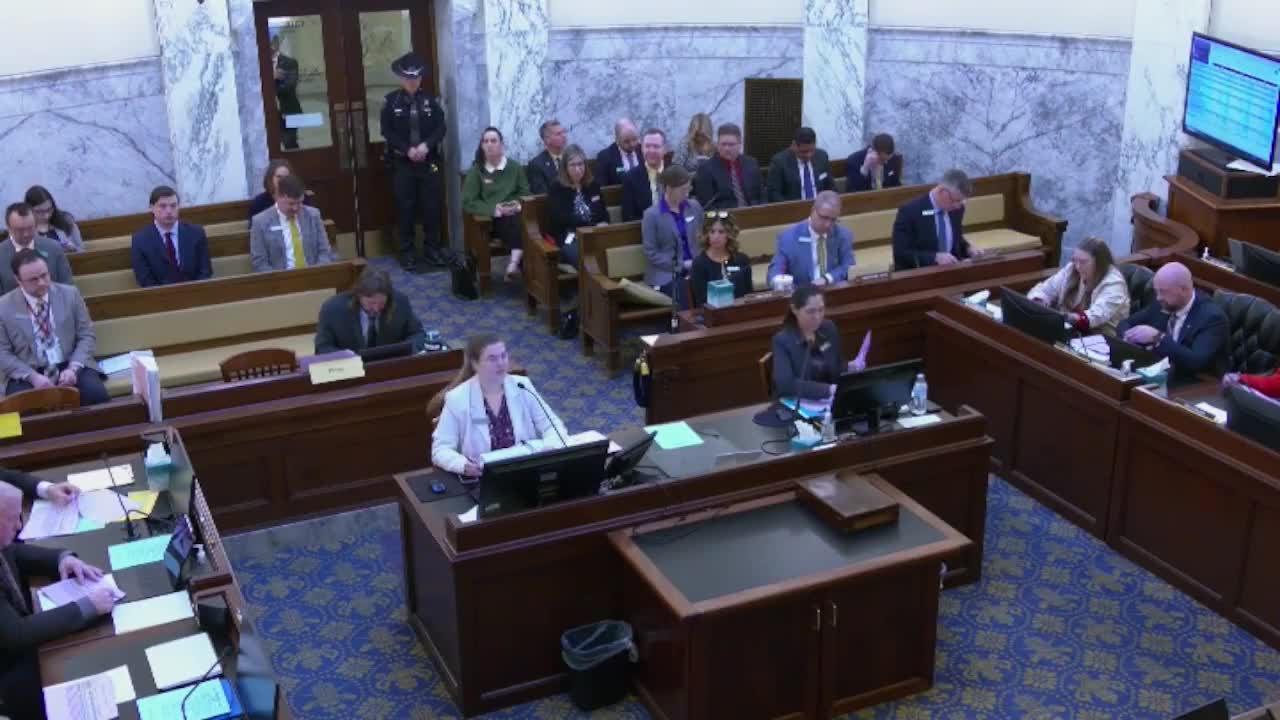
JFAC approves digital access grants for libraries, adopts restrictions on state funds for DEI activities
Summary
JFAC approved broadband reimbursement and federal digital access grants for local libraries and adopted reporting and compliance language, while also approving intent language restricting the use of state funds for what the motion calls "diversity, equity, inclusion or social justice ideology."
The Joint Finance‑Appropriations Committee considered multiple library‑related items: operating and federal grant funds for digital access programs, a request to prioritize covered populations, reappropriation of ARPA capital funds for telehealth facilities, and new intent language limiting the use of state funds for activities described in committee language.
Brooke Dupree, a Legislative Services Office analyst, summarized the Idaho Commission for Libraries’ FY2026 requests: $42,400 for broadband reimbursement to eligible libraries, $40,000 in federal subgrants to local libraries, and $2,500,000 in federal funds for the Digital Access for All Idahoans grant. Dupree also flagged an ARPA reappropriation request to support telehealth facilities in libraries.
A substitute motion that would have approved the larger $2.5 million federal grant package and included prioritization language failed on a tied/close vote; subsequent motions approved a reduced package. Representative Gallavese and others described outreach from local libraries across the state encouraging the committee to fund digital access grants for seniors, veterans, rural residents and low‑income households; Gallavese said local libraries planned classes on cybersecurity, telehealth access and basic computing for elderly patrons.
Committee members debated separate policy language. Senator Carlson proposed — and the committee approved — funding and reporting language that (1) reappropriated ARPA Capital Projects Fund monies for telehealth facility projects, (2) required the Idaho Commission for Libraries to designate an employee to confirm libraries’ compliance with specific Idaho Code sections and coordinate with the Department of Education, and (3) included explicit direction that state‑appropriated funds “not be used to support any diversity, equity, inclusion or social justice ideology in any library sponsored activities,” plus a required report to the committee by Dec. 1. Senator Wintrow objected to the DEI language and questioned its practical effect, asking whether protected groups listed in the digital access grant guidance (including veterans, elderly, people with disabilities, persons below 150% of poverty, and racial or ethnic minority groups) would still be served; proponents said prior uses of similar language did not prevent libraries from serving those populations.
The motions ultimately passed in committee with the following overall outcomes recorded on the record: the approved library funding motion was carried by a combined total of 17 ayes, 3 nays (Senate 8 aye, 2 nay; House 9 aye, 1 nay) for the digital access and general broadband reimbursement motion; other language motions (ARPA reappropriation; DEI restriction; compliance reporting) passed on subsequent roll calls. A substitute motion authorizing the full $2.5 million grant with additional federal subgrant language failed (total 9 ayes, 11 nays). The committee also approved reappropriation language for ARPA funds to support telehealth facilities in libraries.
Analysts and members said the approved digital access funds are intended for operating expenditures to expand internet access, device availability and digital literacy programming at local libraries. The committee added reporting and compliance requirements, and directed prioritization for covered populations in the approved language.
The committee’s recorded votes show a mix of support and opposition tied to differing views about the appropriate role of state oversight language and the scope of permissible library activities when state funds are used.