Get Full Government Meeting Transcripts, Videos, & Alerts Forever!
Get email alerts on the School Bond topic
No spam. Unsubscribe anytime.
Rescue Union board studies possible November 2026 bond to replace aging portables, weigh ‘signature projects’
Summary
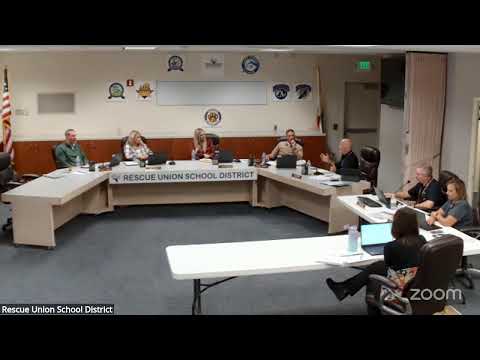
The Rescue Union Elementary School District Board on Wednesday held a study session on a possible November 2026 bond measure to replace aging portable classrooms, update campus facilities and pursue state matching funds.
The Rescue Union Elementary School District Board on Wednesday held a study session on a possible November 2026 bond measure to replace aging portable classrooms, update campus facilities and pursue state matching funds. Staff emphasized the district’s facility needs and presented options for how a bond could be structured; the board asked for more community input, an updated facilities analysis and options for outreach and consultant support.
Staff member Schumacher led the presentation, framing the discussion around “six specific questions” and saying the session was intended to gather board direction, not to reach a final vote. He told the board that the district’s 2022 facilities master plan estimated about $80 million in needs, roughly $60 million of which related to portable classrooms. Schumacher said five of the district’s seven schools are eligible for roughly $11 million in state matching funds if the district contributes about $7.5 million.
Why it matters: Board members said the condition and lifespan of portables — typically 25 to 30 years — present a recurring maintenance burden and a potential equity issue for staff and students housed in them. Several board members and staff also said a bond could be paired with “signature projects” at individual sites — visible, marquee improvements that often raise voter enthusiasm — but warned that carving funds for such projects would reduce how many portables the bond could replace.
Board members and staff described the district’s prior bond work and the limits on how bond proceeds can be spent. Staff said bonds issued in even-numbered years historically have higher passage rates, and noted that state and local conditions that led the board to pause previous plans (including COVID-era disruptions) have changed. Schumacher said the district’s current bonding capacity had been estimated previously at about $73 million; he cautioned that the district must commission up-to-date capacity and tax-impact analyses before setting an amount.
Survey results and community temperature
Staff recapped a prior community survey (about 515 respondents) that showed mixed support: earlier polling returned roughly a 55–57% positive reading on a bond concept but below a clear margin for certainty. Reasons respondents gave for opposing a bond included already-high taxes, concerns about fiscal mismanagement and affordability. Schumacher and staff told the board the district had spent roughly $35,000 on surveying in 2023 and that a full outreach/campaign could cost in the low six figures.
Board feedback and key themes
Board members who spoke said they do not perceive a clear community-wide sense of urgency for a bond in 2026 but believed a well-crafted measure could win support. Several members said signature projects — visible building improvements that communities “see every day” — tend to motivate voters and recommended exploring that approach while acknowledging it can provoke competition among campuses.
Members repeatedly stressed transparency and accountability. One board member said oversight provisions and clear, dollar-level impacts for typical homeowners would be important: “If we are imposing a tax on our constituents … full disclosure is imperative,” the member said. Staff confirmed a bond oversight committee would be required if a measure were approved and said the board could define spending limits in the bond resolution.
Next steps proposed by staff included: commissioning updated facilities and cost estimates (the 2022 plan needs updating), deciding whether to conduct a fresh community poll now or after updated facility figures are available, and vetting bond-consultant firms to support outreach and campaign planning. Staff said vendors differ in style and approach; several board members said they want careful reference checks and strong ethical assurances before hiring outside consultants.
No formal action or vote was taken. The board directed staff to continue gathering information, update the facilities master plan, assess bonding capacity and present options for a possible winter 2026 decision on whether to place a measure on the November 2026 ballot. Staff said any bond would likely be drawn in series (for example, an initial draw of roughly $20 million followed by later draws) so tax impacts appear in increments rather than at once.
Ending
Board members agreed to more community inquiry, targeted outreach to PTO/PTA and local organizations, and follow-up presentations that include clear cost-to-homeowner visuals. Staff said they expect to return with an updated facilities assessment and survey options after the holidays, and a recommendation for board consideration in early 2025 planning. The board did not set a timeline for placing a bond on the ballot and made no commitment to a specific dollar amount.