Get Full Government Meeting Transcripts, Videos, & Alerts Forever!
Get email alerts on the Insurance Market Regulation topic
No spam. Unsubscribe anytime.
Idaho Department of Insurance outlines budget priorities; highlights PBM oversight, high‑risk pool and wildfire insurance strains
Summary
At the Jan. 21 JFAC hearing, the Idaho Department of Insurance presented its FY2026 budget requests — including an actuary and staff increases — and described ongoing work implementing PBM reporting changes, managing a high‑risk reinsurance pool, and addressing wildfire‑related insurance market disruptions.
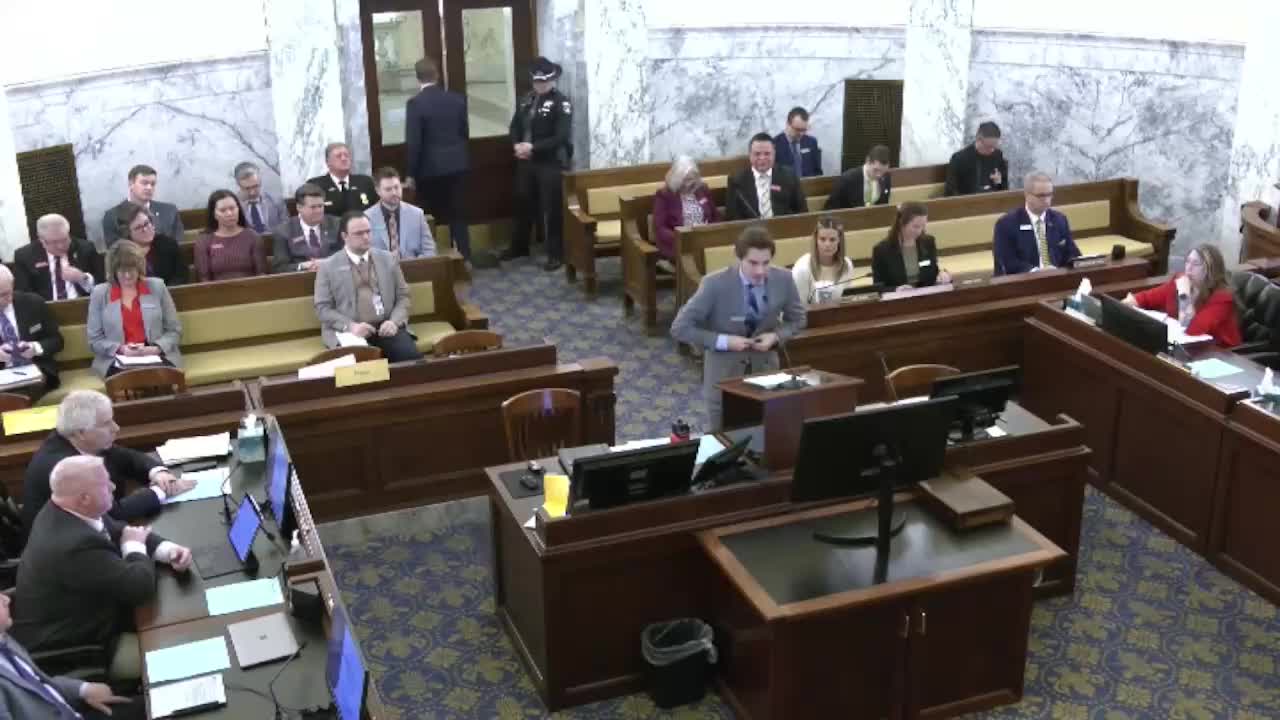
At a Jan. 21 Joint Finance‑Appropriations Committee hearing in Boise, the Idaho Department of Insurance presented its fiscal 2026 budget requests and detailed ongoing regulatory work including pharmacy benefit manager (PBM) oversight, management of a high‑risk reinsurance pool and efforts to address wildfire‑driven market disruption in homeowners insurance.
Budget analyst Noah Peterson said the department has 75.5 authorized full‑time positions: 63.5 in Insurance Regulation and 12 in the State Fire Marshal program. He summarized the agency’s two dedicated funds — the Arson, Fire and Fraud Prevention Fund (for the fire marshal) and the Insurance Administrative Fund (for licensing, examinations and investigations) — and noted premium tax revenue distributions that feed those funds and the general fund.
Peterson presented four FY2026 enhancement requests the agency submitted: a staff actuary (1 FTP, $201,900 from the insurance administrative fund, plus $3,000 one‑time for equipment); a regulatory compliance specialist (requested at $41.03 per hour, 80% of policy, pay grade O) to serve as an internal legal resource and public policy advisor; a compensation increase for the state fire marshal and deputies (ongoing $48,100 from the arson/fire fund; $38,100 salary and $10,000 variable benefits); and one‑time capital outlay of $162,200 for fire protective equipment, cameras and two medium‑duty pickup trucks (line items included $10,000 for fire turnouts, $16,200 for cameras and $136,000 for two trucks).
Director Dean Cameron described operational work the department is doing to implement last year’s PBM reform (House Bill 596). "Most [PBMs] have complied and have submitted their data," Cameron said; he added that a few PBMs have not complied and the department is working to obtain their submissions. The department hired staff to handle PBM complaints and data collection; Cameron said the workload has been substantial and that complaints cover a range of issues from dispensing fee disputes to contract and responsiveness problems. The committee was told the agency will provide a fuller report as data collection continues.
Representative Furness asked Cameron to briefly explain the 13‑32 waiver and the high‑risk pool; Cameron traced Idaho’s high‑risk pool history and described its current function as a reinsurance‑style mechanism that reinsures certain high‑cost claims by CPT code, funded in part through premium tax allocations and program design. "It acts as reinsurance," Cameron said, and he credited the waiver and the high‑risk pool with increasing carrier participation on Idaho’s exchange and helping hold down individual market rates.
Committee members raised wildfire and property insurance concerns. Cameron said national wildfire losses, inflation and reinsurance market tightening have tightened the property insurance market and contributed to nonrenewals in Idaho. He said the department is proposing legislation to create a pool to help homeowners harden homes against wildfire and to provide mechanisms that could help carriers remain in the market. Cameron said Idaho has seen growth in the surplus lines market (non‑admitted carriers) and that surplus lines policies generally carry fewer consumer protections.
Peterson reported department reversion amounts for fiscal 2024 of roughly $2.2 million split between personnel and operations (about $917,000 in personnel reversions and $1,277,000 in operating reversions). He also noted the department received a trailer appropriation to implement House Bill 596 (PBM reform): 1 FTP and $132,400.
Why it matters: The Department of Insurance’s budget items and policy work touch consumer‑facing areas — PBM oversight, premium setting and homeowner insurance availability — that can affect premiums, claim outcomes and consumer protections. Lawmakers pressed the department for more data on PBM complaints and continued oversight of wildfire‑related market changes.
Ending: The department did not receive final action on FY2026 enhancement requests at the Jan. 21 hearing. Director Cameron and staff agreed to provide additional PBM compliance and complaint data to the committee and described proposed legislation to address wildfire risk and market stability.