Get Full Government Meeting Transcripts, Videos, & Alerts Forever!
Get email alerts on the State Budget Finance topic
No spam. Unsubscribe anytime.
Idaho Department of Finance requests six examiner positions, cites rise in cyber fraud against elders
Summary
At a Jan. 21 Joint Finance-Appropriations Committee hearing, the Idaho Department of Finance requested six full‑time positions and $816,600 from state regulatory funds for fiscal 2026 to expand IT and investigative capacity; the governor recommended all but two of the requested positions.
At a Jan. 21 hearing of the Joint Finance‑Appropriations Committee in Boise, the Idaho Department of Finance presented its fiscal 2026 budget request seeking six full‑time positions and $816,600 from state regulatory funds to bolster information‑technology exam capacity and investigative staff.
The Department of Finance asked for an IT examiner and multiple financial examiner/investigator positions to support the Financial Institutions Bureau, the Consumer Finance Bureau and the Securities Bureau. Budget analyst Noah Peterson told the committee the request corresponds to the numbers on the agency’s LBB pages and the agency’s submitted slides.
The request would create: one IT examiner for the Financial Institutions Bureau at a salary budgeted at $121,300 (100% of policy, salary grade P); one additional financial examiner (non‑IT) at $121,300 (grade P); two financial investigator 3 positions focused on IT examinations (one for mortgage and credit services and one for consumer services) budgeted at $82,500 each (salary grade M); one cybersecurity‑specialized financial investigator 3 for the Securities Bureau at $82,500; and one securities bureau forensic accounting examiner at $82,500. The package also includes one‑time capital outlay for laptops, docking stations and portable field monitors recommended by the Office of Information Technology Services.
Noah Peterson, budget and policy analyst with the Legislative Services Office, told the committee the department has 72 authorized full‑time personnel and that roughly 77.8% of the agency’s fiscal 2024 expenditures were personnel costs. He identified the agency’s three dedicated funds: state regulatory funds (the primary operating source), the mortgage recovery fund and the securities investing/training fund; both the mortgage recovery fund and the securities training fund are statutorily limited to using up to $50,000 annually for administration and investor education, respectively.
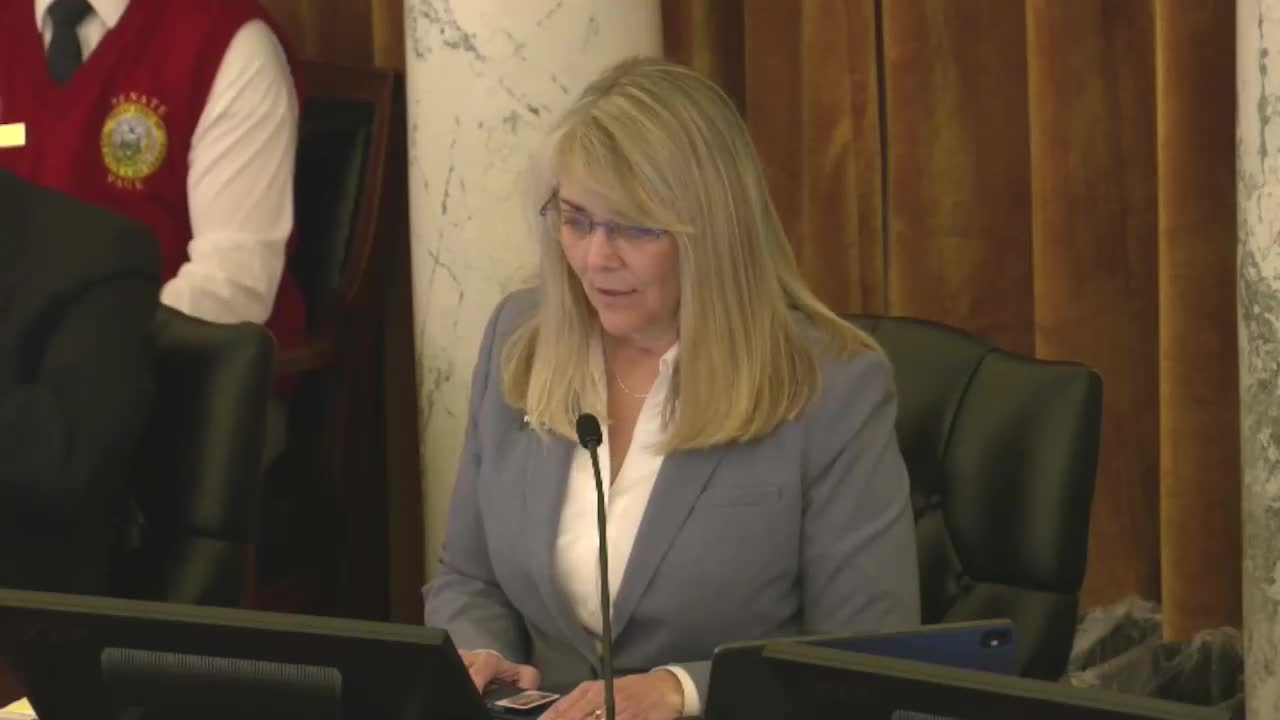
Director Patty Perkins described the operational need driving the request as a marked increase in cybercrime and fraud targeting elderly Idahoans. "There is a huge increase in cybercrime," she said. "We have a particular concern about the elderly population in the state." Perkins said the department has partnered with the Idaho State Police and other law enforcement to "follow the money," but that complex cases — especially those involving cryptocurrency or cross‑jurisdictional transfers — require specialized tools and personnel. She said the department’s current investigation staff is small and that the new positions would expand capacity to "counter the increased fraud that is occurring."
Senator Michelle Wintrow (first reference: Senator Michelle Stennett Wintrow, JFAC member) pressed the director for case and workload data; Perkins agreed to provide the committee with additional information about recent cases, workloads and outcomes. Senator Cook asked for baseline metrics the committee could use to measure return on investment and Perkins agreed to supply data for tracking outcomes if the committee approves new positions.
Peterson said the governor’s recommendation included all of the agency’s requests except one: the governor did not recommend the two financial investigator 3 positions listed as enhancement line 3 (the two IT‑focused investigator positions for the Consumer Finance Bureau). Mr. Peterson concluded his presentation and stood for questions; no formal action or vote on the request occurred at the hearing.
Why it matters: The Department’s proposal would add investigative and IT capacity aimed at preventing and investigating consumer financial fraud, including schemes targeting older Idahoans. The governor’s partial non‑recommendation (two investigator positions) leaves a difference between the agency request and the executive recommendation that JFAC must resolve during budget deliberations.
The Department will provide follow‑up materials at the committee’s request, including workload and case data to quantify the need and track outcomes if positions are funded.
Ending: The committee did not take a vote on the request at the Jan. 21 session; Director Perkins said the department supports the governor’s recommended budget and will provide supplemental data to the committee on cases and workload if requested.