Get Full Government Meeting Transcripts, Videos, & Alerts Forever!
Get email alerts on the Invasive Species Quagga Mussel topic
No spam. Unsubscribe anytime.
Idaho Agriculture Seeks Continued Funding After 2024 Quagga Mussel Response
Summary
Department of Agriculture officials told the Joint Finance-Appropriations Committee the state increased inspection, sampling and staffing in 2024 and is seeking continued general-fund and dedicated-fund support for quagga mussel detection, response and investigator retention.
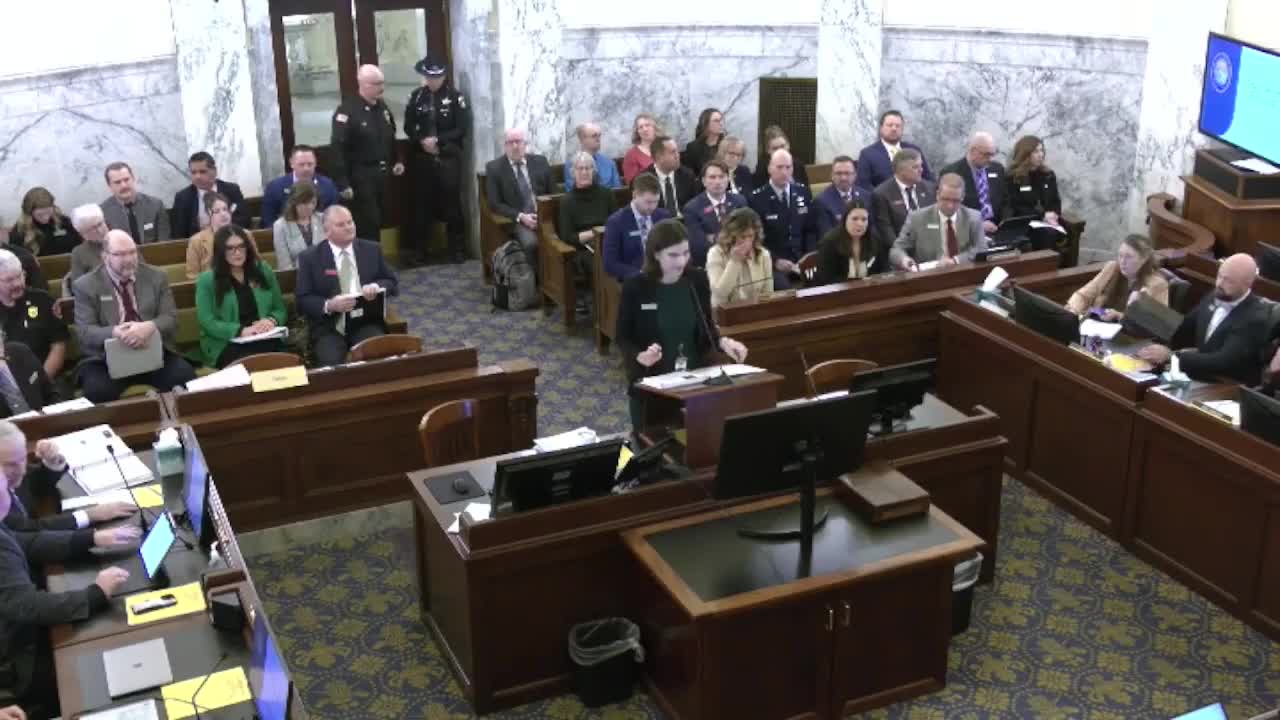
The Idaho State Department of Agriculture told the Joint Finance-Appropriations Committee on Friday that the state nearly doubled watercraft sampling and inspections statewide in 2024 and is seeking continued funding to maintain and build on those efforts.
Legislative budget analyst Frances Lippett outlined the department's budget history and the structure of its funds, and Director Chanel Tewalt described program operations and staffing needs. Lippett told the panel the department received a one-time $5 million general-fund infusion last session for quagga mussel response and an ongoing $1.5 million general-fund appropriation to help cover staffing and check-station needs. Lippett said the invasive species fund is funded primarily by a watercraft sticker fee collected by the Department of Parks and Recreation and that the $5 million cash transfer accounts for a projected decline in the fund balance in fiscal 2025.
The department asked the committee to approve a range of items in its fiscal 2026 request, including a $340,400 ongoing enhancement to create a pay structure for 53 agricultural investigators; change-in-employee-compensation requests for fresh fruit and vegetable inspectors; $1.1 million one-time authority (of which $891,000 would be replacement items such as vehicles and $214,700 IT hardware); and a fiscal 2025 deficiency-warrant request of $1,724,300 for exotic species response. Lippett said the department is authorized 231 full-time equivalents and has maintained roughly a 91% staffing rate overall.
Director Tewalt told the committee the department doubled sampling statewide last year, added three watercraft inspection stations and nearly doubled the number of watercraft inspected compared with the previous year. Tewalt said those steps included “more communication, more personnel, more stations, more statewide sampling.” She reiterated the state's decision to invest in response rather than wait for other states or the federal government to act.
Committee members asked for details on the department's vehicle replacement request. Lippett said she would provide a list; later she said the request covers about 17 vehicles, mostly pickup trucks and a couple of SUVs. The request for investigator pay was framed as a retention and professional-development measure; the department reported 27 of 53 ag-investigator positions have been filled for less than two years and only nine investigators have 10 or more years' experience.
The analyst and the director also discussed the pest-control fund and a $1.7 million balance that reflects fiscal-year 2024 costs tied to Mormon cricket treatment and monitoring. Lippett said many dedicated funds are appropriated slightly above typical revenues to provide flexibility when use and fees increase.
The department's enhancement requests and deficiency warrant were included in the governor's recommendations with adjustments to align fruit-and-vegetable inspector compensation with statewide decisions, Lippett said.
Department officials and the analyst said they would provide follow-up details requested by committee members, including the vehicle list and clarifications on certain grant line items.