Get Full Government Meeting Transcripts, Videos, & Alerts Forever!
Get email alerts on the City Manager Evaluation Policy topic
No spam. Unsubscribe anytime.
Red Bank reviews draft policy to formalize annual city manager performance evaluations
Summary
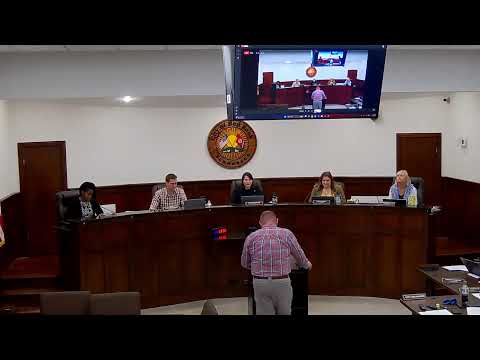
City Manager Grama presented a draft city-manager performance-assessment policy at the Red Bank City Commission work session on Oct. 7, saying the proposal is intended to set a consistent, public-facing process for annual evaluations.
City Manager Grama presented a draft city-manager performance-assessment policy at the Red Bank City Commission work session on Oct. 7, saying the proposal is intended to set a consistent, public-facing process for annual evaluations.
"The goal of performance feedback evaluation is to provide the city manager with meaningful feedback," Grama said, describing the draft as a policy-first approach influenced by ICMA guidelines and his prior experience in public-sector performance programs.
The draft would establish a formulary of evaluation criteria tied to commission goals, commission support, community relations, leadership of staff and partners, organizational management and professional development. It also assigns administrative roles: the mayor would synthesize individual commissioner inputs into an executive-summary recommendation, the city attorney was listed as a proposed third-party facilitator, and the director of human resources would be responsible for initiating the process.
Why it matters: Commissioners said a transparent, repeatable evaluation would clarify the commission’s view of the city manager’s performance and provide the public a concise, authoritative summary of the commission’s assessment. Grama warned that written evaluations create public records, so the policy needs careful wording.
Discussion highlights
Attendance and contract language: Several commissioners raised a potential conflict with the city manager’s employment contract. Commissioner (unnamed) read section 1.02(d) aloud: "Employees shall personally attend all meetings of the city commission, except meetings devoted to the subject of the employer's evaluation of employee." The group debated whether that clause obligates the manager to attend evaluations or affords the commission an option to meet without the manager present. City Attorney Stultz said the language "is intended to allow the commission the option" not to have the manager present; Grama and commission members agreed that the contract language and Tennessee law — which does not provide a broad executive-session exception for personnel matters — require careful handling so the policy does not conflict with existing terms.
Who should administer the process: The draft proposes a third-party facilitator to bring consistency; Grama suggested the city attorney in that role. Multiple commissioners recommended using the Municipal Technical Advisory Service (MTAS) and involving the city’s certified human-resources director, Director Perry, to avoid unnecessary external costs and to tap existing institutional knowledge. One commissioner voiced concern about a conflict of interest if the HR director, who reports to the city manager, administered the evaluation; commissioners suggested including the city attorney and MTAS in oversight to reduce perceived bias.
Mayor’s executive summary and vote: The draft asks the mayor to synthesize five individual commissioner inputs into a single executive summary that the commission would consider and vote on. Grama said this approach provides a clear public statement about the commission’s collective judgment. Commissioners discussed whether a formal vote adds value versus simply publishing the compiled inputs and an explanation; supporters said a vote produces a concise, community-facing record rather than five separate reports.
Timing and next steps: The draft proposes an annual timeline aligned to the commission’s retreat and the budget cycle. Commissioners noted practical timing concerns: HR Director Perry had attempted to start the 2025 evaluation Aug. 1 but the process had not been completed as of Oct. 7. Commissioners suggested one-on-one consultations with Grama between meetings, asking staff to refine language that currently overstates the manager’s role vis-à-vis the commission, and returning the draft to a future work session. Grama said some wording would need to be toned down to reflect the manager’s subordinate relationship to the commission.
Quotes (selected)
"A best practice is a third party facilitator. So a policy based third party facilitated evaluation brings consistency and professionalism to the process," Grama said.
"I think that section is intended to allow the commission the option of the city commission, not to have the commit the city manager present," City Attorney Stultz said when commissioners asked about the contract clause on attendance.
"We already have resources on hand that we should utilize," a commissioner said in urging use of HR Director Perry and MTAS rather than paying for an external consultant.
Process distinctions
Commissioners repeatedly emphasized that the policy should distinguish between three things: (1) discussion (options, concerns and early feedback); (2) direction/assignment (staff follow-up or refinement tasks); and (3) formal action (the mayor’s executive summary presented for commission consideration). Grama noted that personnel issues discovered between annual reviews should be addressed promptly and separately so they are not first raised during the annual assessment.
What remains undecided
- Whether the city attorney or MTAS will be the primary facilitator; commissioners favored a hybrid approach that uses MTAS for summary/reporting and involves the city attorney for legal review.
- The extent to which the HR director will administer the process given potential conflicts of interest.
- The final timeline for the 2025 evaluation; commissioners asked staff to propose a revised schedule and bring the draft back for further review.
Next steps
Commissioners agreed to continue one-on-one discussions with Grama and to return the draft for additional work-session review. Staff were asked to revise wording that might conflict with the existing employment contract and to propose a clear August–September timeline option that would avoid election-season compression.
Ending
The commission did not adopt the policy on Oct. 7. Members asked staff to make targeted edits, consult MTAS and the city attorney, and present a revised draft at a future work session so the body can consider a resolution to formalize the evaluation process.