Get Full Government Meeting Transcripts, Videos, & Alerts Forever!
Get email alerts on the Licensing topic
No spam. Unsubscribe anytime.
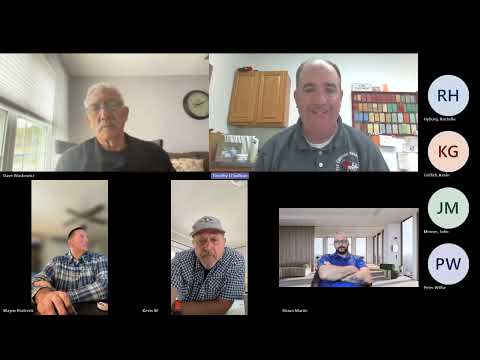
Fire Protection Sprinkler System Board denies Timothy O'Sullivan's application for Connecticut F-4 license
Summary
The Fire Protection Sprinkler System Board voted to deny an equivalency-based application from Timothy O'Sullivan of Fire Equipment Headquarters, finding his Massachusetts credentials and lack of apprenticeship completion did not meet Connecticut F‑4 requirements.
The Fire Protection Sprinkler System Board voted to deny an application from Timothy O'Sullivan of Fire Equipment Headquarters to be admitted to Connecticut's F‑4 (limited) license category on the grounds that his out-of-state credentials and lack of Connecticut apprenticeship completion did not meet the board's equivalency standard.
The decision came after O'Sullivan described his family-owned Torrington business, said one of his licensed technicians will be out on extended medical leave and argued the state and consumers would be best served if his company could retain the capacity to service local systems. “I feel that's in the state and consumers best interest to have a viable business like Fire Equipment Headquarters,” O'Sullivan told the board.
Board members and department staff said the board must follow the state's licensing standards. John Messner, a member of the board's review working group, said a business owner cannot be registered as an apprentice under Connecticut apprenticeship rules and emphasized that the working group denied the application because it lacked evidence of apprenticeship completion and the Massachusetts license presented was not equivalent to Connecticut's F‑4 scope.
At the hearing, O'Sullivan detailed COVID-era and historical company activity, his Massachusetts licensing and a range of manufacturer training and professional courses he has completed. He said his company performs kitchen hood systems, hydrostatic testing and portable fire-extinguisher services and that the business has roughly 600 local customers who could be affected while a licensed technician is out for about six months. Board members pressed whether O'Sullivan could temporarily hire a licensed F‑4 technician, restructure ownership, register a family employee as an apprentice, or pursue ratio relief through the Department of Labor or Department of Consumer Protection as interim options.
Board members also discussed pathway options: documenting out-of-state related instruction, obtaining registered-apprentice hours under supervision by a Connecticut-licensed journeyperson, or pursuing a legal appeal. Karen Lehman and other department staff explained that Connecticut allows equivalency reviews but that the application before the working group did not show the full competencies required of Connecticut's F‑4 category.
After discussion, a motion to deny the application was made and seconded; the board approved the denial by voice vote, with one member announcing an abstention because they said they had not received the supporting packet. The board subsequently approved a motion to include in the meeting record a brief substantiation of the denial — stating the working-group finding of lack of apprenticeship completion and the Massachusetts license not being equivalent to Connecticut's F‑4 — so the reasoning would be clear in the minutes.
The board advised O'Sullivan of options to pursue: (1) pursue registered-apprenticeship status under the Department of Labor, documenting on-the-job training and related instruction; (2) restructure business ownership or engage a licensed contractor to provide direct supervision; (3) seek ratio-relief relief pathways being implemented under Department of Consumer Protection guidance; or (4) appeal the board decision through the courts. O'Sullivan said he would explore those options and return with additional documentation if he reapplies.
The board's action was procedural: it did not create a limited category or alter statutory requirements. The board's staff recorded that the working group's stated reasons for denial were “lack of apprenticeship completion” and that the Massachusetts credential “was not equivalent to Connecticut's F‑4 requirements.”