Delegates debate draft home-rule petition for real‑estate transfer fee to fund housing; towns’ local control remains central concern
Loading...
Summary
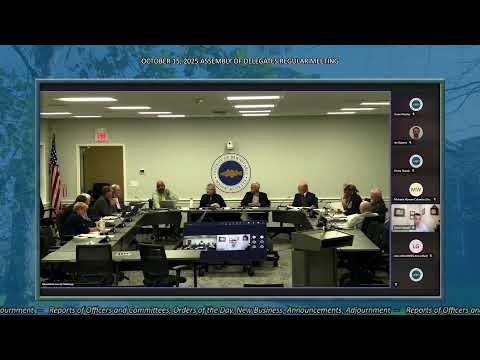
The Assembly’s Economic Affairs Committee presented a draft home‑rule petition on Oct. 15 that would let participating towns impose a real‑estate transfer fee to fund housing, with a proposed 90% local / 10% county revenue split; delegates pressed for more town input and clearer guardrails for local control.
Delegates discussed a draft home‑rule petition on Oct. 15 that would authorize participating Barnstable County towns to impose an optional real‑estate transfer fee to raise funds for housing. The economic affairs committee presented a first written draft and summary that envisages towns retaining 90% of the fee revenue for local housing purposes and directing 10% to the county for administration and regional housing initiatives.
Delegate Harder, chair of the Assembly’s Economic Affairs Committee, told the assembly the committee’s draft “envisions that participating towns would retain 90% of revenue for local housing purposes with 10% directed to the county for administration and regional housing initiatives.” The draft also contemplates an opt‑in structure and suggested a $1,000,000 minimum exemption threshold.
Delegates raised recurring issues that the committee and drafting group will need to address in the next phase of work: - Local control vs. regional administration: Multiple delegates said towns must retain decision‑making power over how funds are spent. Deputy Speaker Gessen summarized the likely path to state action and repeated that the delegation’s “first option and their first charge would always be local control period.” Delegates emphasized that towns should be able to opt in and that the county’s role should be limited and transparent. - County share and administration: Some delegates objected to a county share as high as 10% and asked for clarity that a majority of the county share would be for housing activities rather than administrative overhead. Delegate Sampson asked that the administrative portion be limited (she cited 2–3% as an example) while the remainder support countywide housing projects. - Stakeholder outreach and timing: Delegates urged broader consultation with town managers, select boards, the Association to Preserve Cape Cod (APCC), and the Chamber of Commerce before forwarding a petition to Beacon Hill. Several delegates pressed for more time to create a clear framework and recommended that the drafting group and the economic affairs committee produce a structured proposal with options before the assembly solicits town input. - Implementation mechanics: Delegates discussed technical questions about whether the county needs an ordinance to implement authority granted by the legislature and whether the state could return legislation that would be self‑executing or require county action. Deputy Speaker Gessen explained that the legislature could authorize the county to take certain actions but that implementation steps often require an ordinance or town actions depending on the content of the home‑rule authorization.
Next steps and process: The committee said it will slow the process to gather town feedback and produce a framework document. Delegate Peterson suggested the drafting group and the economic affairs committee prepare a framework that lays out the problem, alternatives, and a recommended approach for the full assembly to discuss. Clerk Fletcher advised that drafting activity should avoid creating inadvertent quorum violations under open‑meeting law and recommended routing drafts through staff to coordinate public meetings.
Why it matters: A transfer fee could provide a steady revenue stream for housing programs on the Cape; delegates estimated potential annual revenues that vary widely depending on fee design and housing market conditions. Delegates repeatedly stressed that any successful regional approach will require early and active town engagement, clear guardrails for local control, and practical spending plans for the likely revenue.