Appeals court hears challenge to Worcester's bid rejection and $3M damages award in Rivoli Construction case
Loading...
Summary
At oral argument before a three‑judge panel of the Massachusetts Appeals Court, the City of Worcester urged reversal of a trial court verdict finding bad faith in its rejection of Rivoli Construction's bid and sought a new trial on damages; Rivoli defended the verdict and the $3,000,000 lost‑profits award. The panel heard extensive argument on the
A three‑judge panel of the Massachusetts Appeals Court, led by Chief Justice Amy Blake, heard oral argument in Rivoli Construction Co. Inc. v. City of Worcester, docket no. 24P1215, over whether a trial jury properly found the city acted in bad faith when it rejected Rivoli’s bid for the Route 20 sewer extension project and whether the jury’s $3,000,000 lost‑profits award should be set aside.
The city, represented at argument by attorney Neil Peterson with co‑counsel Steven Ryan, urged the court to reverse two rulings by the trial court: (1) the refusal to instruct the jury that the awarding authority is entitled to a presumption of good faith when it rejects a bidder, and (2) denial of a new trial on damages after the jury returned $3,000,000 in lost profits. Peterson told the panel the trial court erred in concluding the presumption did not apply and argued that, had the presumption been given, “the jury would have found for the defendant.”
Why the appeal matters: the case tests the scope of municipal discretion under Massachusetts public bid law and the circumstances in which a jury may infer bad faith from an awarding authority’s investigatory process. Municipalities and bidders alike face legal uncertainty on how investigatory steps, reputational information and evaluation procedures affect liability and damages.
Peterson pressed the panel to treat the applicability of the presumption as a legal question subject to de novo review and relied on a line of administrative and judicial decisions cited in the city’s briefs. He acknowledged the city’s rejection rested on its discretionary finding that Rivoli was not a responsible bidder, and he argued Rivoli had not shown evidence of an improper ulterior motive for that decision. Peterson told the court the city’s motive was a sincere belief Rivoli could not perform responsibly.
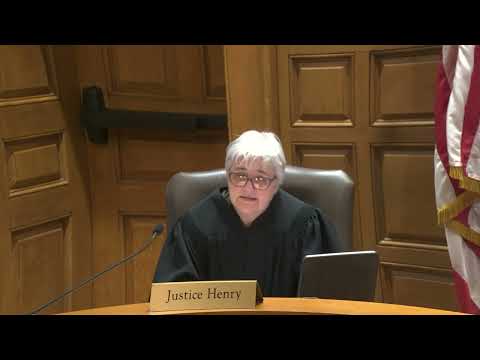
Justice Vicky Henry posed a central hypothetical underscoring the panel’s concern: if an awarding authority focused only on negative information—even after an investigation—could that immunize the authority from bad‑faith liability? Henry asked whether a process that “lasered in on everything negative” could nevertheless be insulated if the authority sincerely believed it was protecting the municipality. The city’s counsel said such conduct would give rise to an arbitrary‑and‑capricious claim, but not necessarily a bad‑faith finding absent evidence of an improper motive.
Rivoli’s attorney, David Kerrigan, urged the court to affirm the jury verdict and the trial court’s handling of the instructions. Kerrigan said the record showed more than mere unfair process and pointed to evidence the decision‑makers knew bid law required a fair, equal‑footed process and nonetheless acted in a way the jury could reasonably treat as deception or predetermination. Kerrigan summarized the legal test for bad faith, telling the panel the term “focus[es] on knowing and conscious wrongdoing.”
The parties also contested the damages award. Steven Ryan, arguing the city’s damages position, said Rivoli sought $4,600,000 in lost profits but the jury awarded $3,000,000 and the city’s expert testimony supported a substantially lower figure (counsel described an expert calculation of about $344,000, characterized in argument as approximately 2.5% profit on comparable work). Ryan urged the court to remand for a new trial on damages on the ground the $3,000,000 award lacked a rational basis in the record and rested on speculation.
Kerrigan responded that Rivoli presented project‑level evidence, including job registers and witness testimony, that could support the jury’s calculation and that financial statements relied upon by the city’s expert did not capture per‑job profitability. He told the panel there were multiple, non‑speculative ways the jury could have reached $3,000,000.
Panel members questioned counsel about technical matters of evidence and procedure, including the meaning and use of the abbreviations JMOL and JNOV, the interplay of presumptions and burdens of proof under Massachusetts civilian evidentiary standards, and the weight to be given to attorney general bid‑protest decisions versus judicial precedent. Counsel debated precedent and administrative decisions cited in briefing, including the 1939 Slocum v. Medford decision, a 2012 SJC decision in Bar v. Holliston, recent attorney general bid protest decisions (including one styled in argument as GEG Construction v. Town of Longmeadow), and this court’s prior decisions in Robin Hope Industries, Bradford & Bigelow, and Northeast Reclamation (all cited by counsel during argument).
After extended questioning and argument on both liability and damages, Chief Justice Amy Blake told counsel the matter would be taken under advisement. No decision was announced from the bench.
The appeals court’s forthcoming opinion will resolve whether the presumption of good faith should have been instructed, whether the jury’s bad‑faith finding was supported by sufficient evidence, and whether the $3,000,000 lost‑profits award must be vacated or remanded for a new trial.