Get Full Government Meeting Transcripts, Videos, & Alerts Forever!
Get email alerts on the Civil Service Appeal topic
No spam. Unsubscribe anytime.
Appeals court hears appeal after Gloucester bypass; panel takes case under advisement
Summary
The Massachusetts Appeals Court on Oct. 24 heard oral arguments in Paul DeFires’s appeal of a Civil Service Commission decision that upheld the City of Gloucester’s 2022 bypass of DeFires for a firefighter position; the court took the matter under advisement and did not issue a decision.
The Massachusetts Appeals Court on Oct. 24 heard oral arguments in Paul DeFires v. City of Gloucester, an appeal of a Civil Service Commission decision that upheld the city’s 2022 bypass of DeFires for a firefighter position. DeFires, representing himself, urged the court to reverse the commission and the Superior Court and to award relief including legal costs or a new hearing; the panel repeatedly questioned aspects of the city’s background investigation. The court took the matter under advisement and did not issue a decision.
DeFires, who identified himself as the appellant and said he was representing himself, told the panel that the City of Gloucester “withheld all of the positive information” and provided a “cherry picked negatively biased investigation report” to the appointing authority. He said the city’s investigators provided only a two-page summary from Lieutenant Detective Williams while a fuller investigation file of about 102 pages existed but was not produced to him in time to pursue follow-up evidence. “If the chief had all of the information — the good and the bad — would there still be a basis to not hire you?” a panel member asked; DeFires replied he did not believe the chief had a full review.
DeFires said he provided the Civil Service Commission with his personnel files and other materials and that one employer supplied a letter recommending him. He argued the commission’s review was undermined because the city’s investigators failed to obtain personnel files and relied on informal notes. DeFires also told the court he had incurred more than $20,000 in legal fees during earlier proceedings and that the late production of the larger investigation file left him insufficient time to follow up with witnesses before the commission hearing.
Rocco DeFilippis, assistant general counsel for the City of Gloucester, urged deference to the commission’s findings. He told the panel the commission made credibility determinations and found no evidence of improper motive by the appointing authority. DeFilippis said the commission applied the governing standard — whether the appointing authority had reasonable justification for bypass, supported by credible evidence — and that substantial evidence in the record supports the commission’s conclusions.
Both sides and several panel members focused on procedural and evidentiary questions. Panel members noted the record contains conflicting items — for example, shorthand investigator notes that said DeFires was “let go or possibly resigned” from one employer, while DeFires supplied a resignation letter and a recommending letter from another employer. One justice described the investigation as “terrible” but also stressed that reviewing courts generally defer to agency credibility findings when they are supported by the record. Counsel for the city pointed to testimony credited by the commission, including that the detectives who conducted background checks were familiar with hiring standards and that references declined to recommend DeFires for hire.
Legal standards discussed at oral argument included the “reasonable justification” test under civil service law, the preponderance-of-the-evidence standard for proving allegations, and appellate decisions the parties cited as framing the review (discussed in argument as the Sherman and Beverly lines of cases and later Massachusetts decisions involving police hiring). DeFilippis argued those precedents support upholding the commission’s factual findings; DeFires argued procedural flaws and withheld evidence made the bypass unjustified.
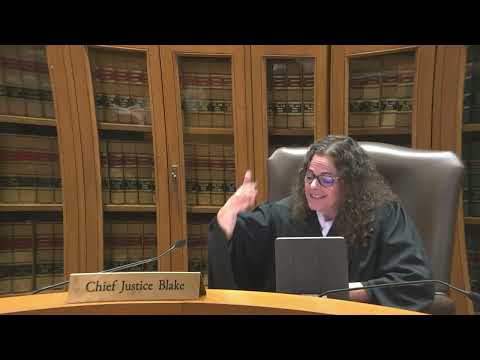
The presiding justice told the parties they would not receive a decision that day and that the court would take the matter under advisement and issue its ruling later, usually by email. The court also cautioned that it may consider only the record that was before the Superior Court and the Civil Service Commission. The bench closed oral argument by asking the city to consider how background investigations are conducted and to improve procedures regardless of the outcome.
The appeal is now under advisement. Any decision by the Appeals Court will be added to the publicly available docket for Paul DeFires v. City of Gloucester.