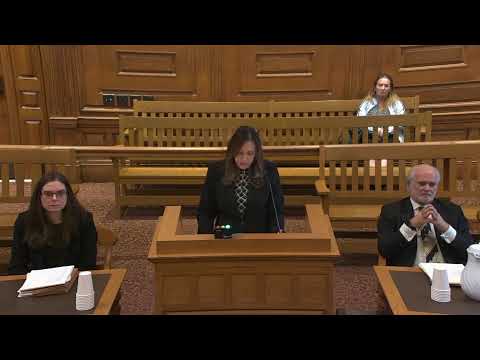
Appeals court reviews whether beneficiary waived right to buy trust property in Pecke dispute
Loading...
Summary
Counsel debated whether the trust's 45-day offer window controls and whether beneficiaries' informal agreement to "sell in the spring" amounted to a waiver of the property-option right in the wake of the decedent's death.
The Appeals Court considered Oct. 15 arguments in Jim Betty v. Pecke, No. 24P1326, a dispute among siblings over whether a beneficiary waived a trustee/beneficiary right to purchase real property from a trust after their father's death.
Isaac Perez, counsel for appellant (the son who sought to purchase the property), argued the trust required the trustee to obtain two appraisals and offer the property to the children at 95% of the average of those appraisals, and that the trustee's failure to act during the 45-day period after death reflected a decision by co-beneficiaries to defer trust administration rather than a valid waiver. Perez said the trustee relied on the family and a law firm to handle timing and that the law firm later obtained appraisals and sent option letters.
The panel focused on the clause's mechanics: whether the offer must be made within 45 days of death (and hence the 45-day period can expire) or whether, as the appellant argued, the offer requirement is the operative trigger and the 45-day clock runs only after the offer is made. The judge also asked how the provision should be enforced if multiple beneficiaries want to buy the parcel at different prices and whether the donor's intent (allowing a child to buy at a discount) can be reconciled with an open-market sale if all children express interest.
Appellees' counsel, Christopher Mingasse, urged deference to the trial court's factual findings, saying the judge carefully evaluated witness testimony and concluded the beneficiaries had, in effect, agreed to wait and later to sell on the open market; the trial court then ordered sale on the open market. Mingasse asked the Appeals Court to affirm the lower court's findings and legal conclusions.
Why it matters: the ruling will clarify how executory trust-option language is enforced, who bears responsibility for obtaining appraisals or sending option letters, and whether informal family agreements can constitute waiver when a deceased settlor's instrument prescribes specific timing and price formulas.
The panel took the matter under advisement.