
Appeals court considers claim that agents misadvised clients on underinsured motorist coverage
Get AI-powered insights, summaries, and transcripts
Subscribe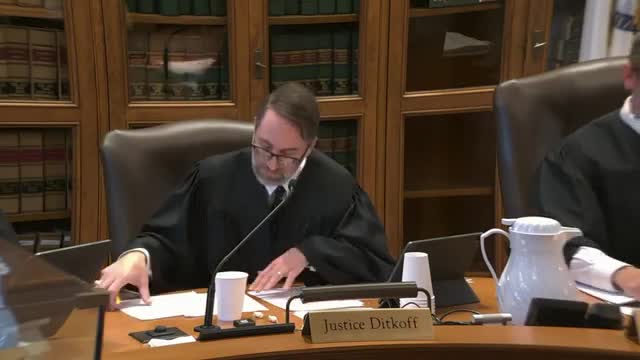
Summary
Oral argument in Nickerson Warner (25P59) centered on whether insurance agents made false or misleading representations that left the plaintiffs underinsured, whether plaintiffs timely appealed the summary judgment ruling, and whether expert testimony was required to establish the professional standard of care.
The Appeals Court on Oct. 15 heard argument in Nickerson Warner v. GB Nickerson Insurance Agency, No. 25P59, in which plaintiffs allege their insurance agents misrepresented the adequacy of underinsured motorist coverage and caused the family to carry insufficient protection when a severe injury later occurred.
Kevin Withers, counsel for the plaintiffs, said the plaintiffs were told by agents in the 1990s that their health insurance combined with $100,000 underinsured motorist coverage was sufficient. Withers described the plaintiffs' expectation that added umbrella and bodily-injury limits would produce matching underinsured protection and said the plaintiffs relied on the agency's advice when they later declined higher underinsured limits.
Counsel for the agency, Louis J. Musio, argued first that the appeal is untimely because the clerk's docket shows judgment entered July 25, 2024, and the plaintiffs did not timely file a notice of appeal. Musio also contended the complaint fails as a matter of law because it lacks expert proof of the relevant professional standard of care: "There is nothing in the record whatsoever to establish what the standard of care was with regard to the agency's duties," he told the court. Musio said the plaintiffs did not identify what would have been "adequate" coverage.
The plaintiffs' counsel responded that the clerk's July entries were ambiguous and that the October clerk's entry was the operative one for appeal timing; he also argued that the record contains allegations of affirmative, concrete statements by the agent that would support a negligent-misrepresentation or professional-negligence claim without expert evidence.
The panel questioned whether the complaint pleaded a special relationship that could create an affirmative duty to advise and whether, even if an agenthad given opinions about adequacy, plaintiffs must lay out an evidentiary baseline (what coverage would have been adequate) via expert testimony. Counsel for the plaintiffs pointed to alleged conversations in the 1990s and later years where the agency repeatedly advised the family their coverage was sufficient and to factual allegations that the plaintiffs reviewed renewal materials and relied on counsel's assurances.
Why it matters: the court's decision will clarify how claims against insurance agents for advice about coverage should be pleaded and proved (expert requirement; proof of adequacy), and it will resolve a timeliness dispute that could dispose of the appeal on jurisdictional grounds.
The panel took the case under advisement.