Appeals court reviews alimony modification and calculation of "need" in Shastri v. Shastri
Loading...
Summary
Arguments in Shastri v. Shastri focused on whether the trial court reasonably reduced alimony and how to measure "need" at the time of separation, including whether voluntary retirement contributions and other deductions should be counted as part of the marital lifestyle.
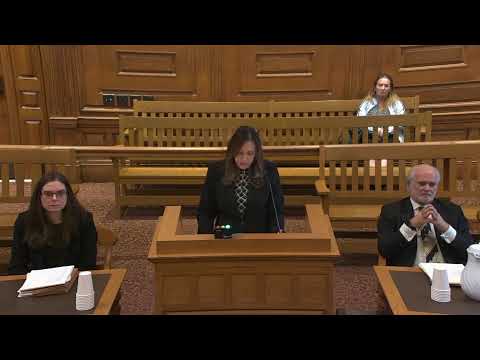
The Appeals Court heard oral argument Oct. 15 in Shastri v. Shastri, No. 24P1259, a dispute over a Probate and Family Court judge's reduction of alimony and the proper method for calculating a recipient's "need."
Michael Judge (appellantcounsel) asked the court to reverse the Middlesex Probate judge's decision, arguing the judgment "does not flow rationally from the findings" and that the trial court improperly applied discretionary adjustments rather than anchoring the award to the recipient's need at the time of separation. Judge framed alimony's purpose as "you have a, one spouse who is in need of support, and you have a supporting spouse who has the ability to pay," and said the lower court misapplied findings about expenses and voluntary deductions.
Counsel for the husband, Maureen Booth, defended the trial court's approach, saying the judge carefully examined the record and set alimony at $580 per week after reviewing the parties' expenses, contributions and evidence of discretionary spending. Booth told the panel the decision reflected review of 89 findings of fact and was within the trial judge's broad discretion.
A contested factual issue at argument was whether voluntary payroll deductions (retirement contributions, employee stock purchases, FSAs) should be treated as part of the parties' marital lifestyle when measuring "need at the time of separation." Appellants pointed to the line in the judge's findings that used the husband's reported weekly expenses as a baseline; appellees argued that for an apples-to-apples comparison the wife's current voluntary deductions should be counted as part of her lifestyle and therefore part of the need determination.
The justices questioned whether the trial court's reduction approach (characterizing the new award as approximately 20% of the income disparity) was simply a permissible exercise of discretion or, as the appellant argued, a judgment that did not properly trace to the enumerated findings about need. Counsel on both sides cited precedent such as Open Shaw, Zaleski and Di Felipe v. L. Youssef (as discussed in argument) to frame limits on judicial discretion and how courts treat voluntary, post-separation changes to income and assets.
Why it matters: the panel's ruling will influence how judges measure "need" in modification proceedings and whether components like voluntary retirement contributions or increased discretionary spending after separation can justify reducing alimony.
The court took the matter under advisement.