Get Full Government Meeting Transcripts, Videos, & Alerts Forever!
Get email alerts on the Judicial Appeals Allocation topic
No spam. Unsubscribe anytime.
Appeals court hears challenge to judgeuse of G.L. c.152 15 to apportion jury award in Ware v. Erland Construction
Summary
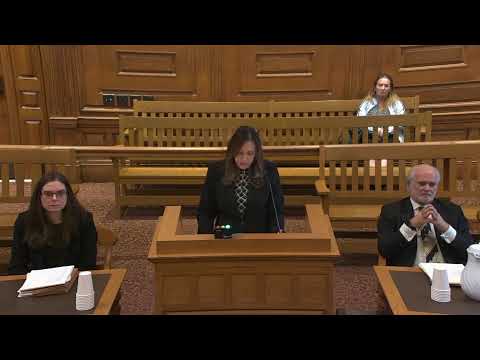
The Massachusetts Appeals Court on Oct. 15 considered whether a trial judge may use Chapter 152, Section 15, to allocate a $750,000 jury award and thereby compute a workers' compensation insurer's reimbursement in Ware v. Erland Construction Inc.
The Massachusetts Appeals Court on Oct. 15 heard arguments in Ware v. Erland Construction Inc., No. 24P1170, over whether a trial judge improperly used Chapter 152, Section 15, to apportion a $750,000 jury award and thereby determine how much a workerscompensation insurer could recover.
Attorney Chris Subcheck, arguing for the plaintiff-appellant John Ware, told the court that the right at issue is "one of the most fundamental rights in our judicial system is the right to a jury trial," and said the judge improperly substituted his own factual findings after the jury returned a single damages number. Subcheck urged that the judge's use of G.L. c.152 15 was procedurally inappropriate in a post-jury context because it allowed the judge to decide factual questions the jury had not been asked to decide.
Paul Valentino, counsel for Liberty Mutual (the workers' compensation insurer and a defendant in related proceedings), acknowledged there is no on-point appellate decision that squarely permits or forbids use of §15 following a jury verdict but argued that the statute has been applied in settlement and verdict contexts and that the judge followed the statute and case law he relied on. Valentino told the panel the court's orders laid out an apportionment formula that produced a net amount for Liberty Mutual of about $67,146.66 under one accepted allocation.
Counsel for co-defendant Peli/Sean Lee Construction (appearing as Sean Lee) focused part of argument on related post-judgment questions, including the trial court's handling of a motion for satisfaction of judgment and whether additional post-judgment interest remained payable after a tender of payment.
Across the panel, the justices probed preservation and waiver: judges asked why, if Subcheck filed the §15 petition in the trial court, he had not waived the argument that §15 is limited to settlements. Subcheck responded that the appeal targets how the statute was used and the judge's factual findings, and that any rule permitting a judge to reduce or apportion a jury verdict by substituting factual findings for those the jury should decide would violate the right to a jury trial.
The argument turned repeatedly to remedies. Subcheck said vacating the trial judge's factual findings and remanding for a jury determination (or a new trial) were appropriate where the judge substituted his judgment for the jury's. Valentino said the trial judge had followed §15 and issued a concise order applying the statutory framework and that the court could confirm the judge's allocation as a lawful exercise of discretion. Sean Lee noted related practical consequences: even if §15 were inapplicable, parties and courts still need a mechanism to compute reimbursement and allocation when both a jury award and a workers' compensation lien exist.
Why it matters: the court's decision will affect how trial courts and parties handle apportionment where a jury returns an undifferentiated damages verdict but a statutory lien or insurerreimbursement claim depends on allocation among categories such as medical expenses and pain and suffering. If appellate courts limit use of §15 to settlements, parties may need to insist on special verdicts or other trial procedures to protect jury factfinding; if courts permit §15 post-verdict, judges will retain a statutory route to compute reimbursements but face constitutional challenges about jury rights.
The Appeals Court took the case under advisement.