Get Full Government Meeting Transcripts, Videos, & Alerts Forever!
Get email alerts on the School Approvals topic
No spam. Unsubscribe anytime.
Board approves multiple cosmetology and barber school applications; most approvals require edits to agreements and contingency plans
Summary
At its Oct. 6 meeting the Cosmetology and Barber Examiners Board approved a batch of school applications and change‑of‑ownership requests, commonly requiring applicants to clarify days/hours, match state curriculum language, add synchronous backup systems for virtual instruction, or correct contingency/teach‑out plans.
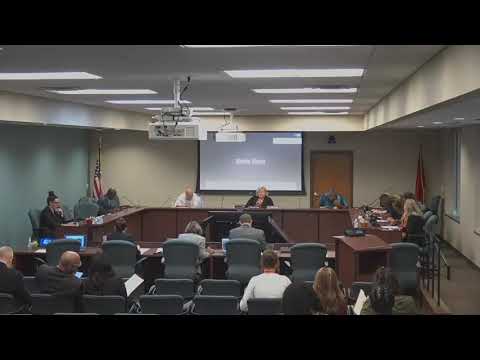
The Tennessee Cosmetology and Barber Examiners Board on Oct. 6 approved multiple school applications and change‑of‑ownership filings, granting licenses or consent with conditions in a single session that covered new schools, branches and changes of location.
The board approved applications for the following schools, with the conditions listed after each entry. All approvals were made by voice vote; where board members requested clarifications staff were directed to receive corrected documents and inspect facilities before final licensing.
Votes at a glance
- Mary Gabby Nails Academy (Smyrna) — approved with changes. The board staff asked the applicant, Maria Mora, to add days of operation (Tuesday through Saturday) to the front page of the enrollment agreement; align the curriculum exactly with state board requirements; ensure contingency plans state synchronous instructor participation for online instruction; and clean up wording about postgraduate education in the school history.
- Memphis Barber College, cosmetology branch (Memphis) — approved with changes. The applicant must standardize days/hours of operation across documents, clearly limit maximum hours per day/week to statutory caps, clarify that virtual instruction would be synchronous only for emergency closures, and correct language about instructor trainee versus junior instructor pathways.
- Golden Shears Beauty Academy (Nashville, branch) — approved with changes. The school must make its curriculum match state requirements exactly and add days/hours to the enrollment agreement where missing.
- Sheer Perfection Academy of Cosmetology and Barbering — change of ownership approved with changes. The board asked that days/hours be placed on the enrollment agreement and the student handbook curriculum be aligned.
- Urban Beauty Barber Institute (Memphis) — change of ownership approved with changes. The board required the enrollment agreement to specify weeks/months to graduate, to ensure that students receive a dated copy of any executed agreement, and to clarify scheduling details.
- Paul Mitchell (Nashville) — change of location approved. Inspectors will confirm field arrangements; papers reviewed without further changes requested at the meeting.
- Linz Academy of Barbering and Cosmetology — change of location approved with changes. The school must provide separate tracking for full‑ and part‑time students and document synchronous participation and backup timekeeping for online theory content.
- Empower Health and Beauty Academy (Antioch, barber program) — approved with minor edits. The board asked the applicant to correct a chart of theory/practical hours and to improve the floor‑plan clarity for field inspection.
- Posh Beauty and Barber Academy (new apprenticeship school) — approved as an apprenticeship program pending final enrollment/administrative paperwork; staff asked schools to add a clear backup for timekeeping and contingency (teach‑out) arrangements.
Common fixes requested
Across applications board staff repeatedly asked schools to:
- Put days of operation and daily start/end times on the enrollment agreement front page so students see them immediately. - Make curricular language in catalogs and enrollment agreements match the state curriculum verbatim where required by board rules. - Replace vague or asynchronous language in contingency/independent‑study protocols with explicit synchronous instructor participation and list backup timekeeping (for example, recordings or a second log system such as Microsoft Teams or recorded Zoom sessions) so hours are verifiable if the primary system fails. - Clarify instructor training pathways (distinguishing a 300‑hour instructor‑trainee course from a junior‑instructor work pathway of one year or longer). - Supply a teach‑out/contingency plan listing specific partner schools or locations students could be transferred to in the event of a permanent closure.
How approvals were recorded
Most approvals were made by motion and voice vote with staff directed to receive revised documents, perform field inspections and complete licensing once the clarifications were filed. In the case of Mary Gabby Nails Academy the motion was made by Monica Lemons and seconded by Perry Baldwin; similar motions for other schools were recorded by voice without named roll‑call tallies.
Why it matters
The board’s routine approvals keep a pipeline of licensed education and apprenticeships open across Tennessee cities, affecting where people can train and how quickly new stylists can enter the workforce. The consistent itemization of fixes signals stricter document compliance and closer scrutiny of online/contingency language going forward.
Ending note
Applicants approved with conditions will submit corrected paperwork to board staff; staff will arrange field inspections and finalize licensing when documents meet board requirements.