Get Full Government Meeting Transcripts, Videos, & Alerts Forever!
Get email alerts on the Distance Education topic
No spam. Unsubscribe anytime.
Cosmetology board defers decision on asynchronous distance education, asks Georgia Career Institute for detailed data
Summary
After a lengthy presentation and debate, the Tennessee Cosmetology and Barber Examiners Board voted to request redacted outcome and technical data from Georgia Career Institute and other institutions before considering approval of asynchronous distance education; the institute will return in December.
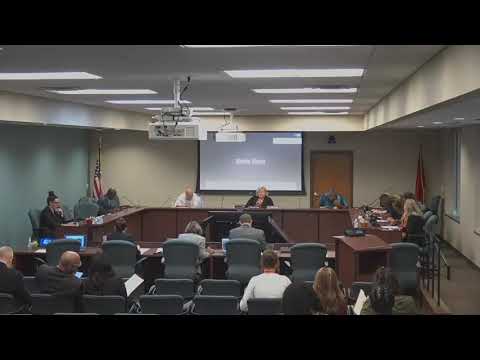
The Tennessee Cosmetology and Barber Examiners Board on Oct. 6 deferred a decision on a request by Georgia Career Institute to allow asynchronous (self‑paced) delivery of cosmetology theory, voting to ask GCI for detailed, redacted outcome and technical data and to return to the board in December.
Board members said they welcomed the institute’s proposal but were not ready to approve asynchronous delivery without evidence that it preserves academic integrity and public safety. Lauren Davis, chief operating officer of Georgia Career Institute, told the board that the proposal includes safeguards and said, “All final exams would be completed in person under the direct supervision of [an] instructor,” and that the learning-management and time‑clock technology “tracks and verifies actual seat time.”
The motion to request more data passed after more than three hours of presentations and questions. The board asked GCI and partner vendors to submit redacted examples of student engagement and attendance logs, pass/fail and completion rates for students taught with asynchronous methods in other states, documentation of backup timekeeping, evidence of safeguards against automated or AI‑assisted cheating (including “safe exam” browser usage and multifactor authentication), how accommodations for students with disabilities would be provided, and any accreditation or U.S. Department of Education determinations that bear on eligibility for federal student aid.
Milady’s director, Karina Santoro, answered technical questions about the learning platform and said the vendor can prevent simultaneous logins and track IP addresses and can enable multifactor authentication. “The system can also track users using their IP address so that you can really see is someone logging in from a different location than where they exist,” Santoro said.
Board members raised multiple concerns during the exchange. Chair Becky Russell said she was not rule‑out hostile to the idea but that “the more that I dig, the more questions that I have.” Members repeatedly asked how asynchronous delivery would be policed against AI screen‑management tools and chatbots, how student identity would be established, and whether administrative burdens created by distance education (for example, verifying hours and responding to anomalous reports) would be sustainable for smaller schools.
Catherine Brody, legal counsel for GCI, told the board the institution had included asynchronous delivery in a prior application that was approved in 2020 and urged the board to treat the request consistently and to rely on a process that would allow institutions to demonstrate safeguards rather than adopt a blanket prohibition. Brody said the board should develop clear rules if it decides to allow asynchronous delivery.
After discussion the board approved a motion to request the follow‑up materials and to have GCI present the requested documentation at the board’s December meeting. The board emphasized it would consider posted outcomes and the specific technical safeguards before any formal change in policy.
What the board asked for
The board’s written request (summarized at the meeting) asked for: pass/fail and completion rates for asynchronous students in other states; sample, redacted minutes and engagement logs (time clock, activity logs, student activity reports); documentation showing how the platform detects simultaneous logins, IP information, and whether multifactor authentication is available; confirmation that high‑stakes testing (final/state exam preparation) will be proctored in person; evidence of backup timekeeping (recordings, alternate logs) and contingency/teach‑out plans; documentation how Title IV/federal aid eligibility and accreditors (Council on Occupational Education, U.S. Department of Education) treat asynchronous clock‑hour programs; and accessibility/ADA accommodations practices and outcomes.
What happens next
The board’s motion requires GCI to submit the requested materials in advance of the December meeting and to present them in person or virtually. The board signaled it could write rule language next year specifying how any permitted asynchronous delivery would work, including required safeguards, reporting, and outcome thresholds.
Why it matters
If the board approves asynchronous theory delivery for clock‑hour cosmetology programs, the change would affect how students are taught, how schools manage attendance and records, and how regulators measure and enforce public‑safety standards for a hands‑on profession. Several members stressed that any policy must protect consumers, maintain educational rigor, and preserve enforceable oversight of hours and competencies.
Ending note
Board members and GCI representatives agreed to work on the list of requested data. The board will revisit the matter at its December meeting after members have reviewed the submitted documentation and had time to discuss potential rule language.