Get Full Government Meeting Transcripts, Videos, & Alerts Forever!
Get email alerts on the Parks And Recreation topic
No spam. Unsubscribe anytime.
Community board parks committee advances district budget priorities, pushes irrigation and playground upgrades
Summary
The Manhattan City community board parks committee compiled a list of capital and expense priorities for the District Needs Statement for FY27, emphasizing permanent irrigation, playground repairs, dog-run improvements, bench maintenance, rat-proof trash bins and drainage fixes near LaGuardia Place.
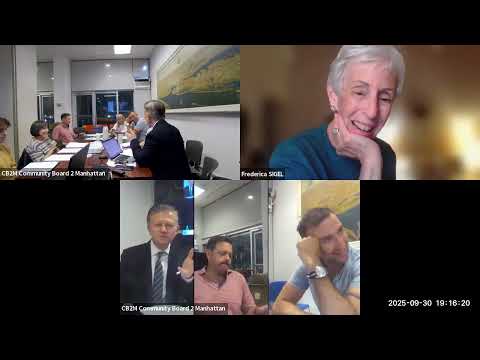
At a Tuesday meeting, the Manhattan City community board parks committee reviewed its draft District Needs Statement and agreed to press the city for funding for park irrigation, playground upgrades and other maintenance and safety projects ahead of the fiscal year 2027 budget cycle.
The committee said permanent water access for small parks and pocket sites is a top capital priority, arguing that reliable irrigation would improve volunteer maintenance and plant survival. Committee members also prioritized upgrades to several playgrounds, added fencing at a small “time/landscape” site, investigations into new dog runs with grass, installation of rat-resistant trash containers and a study of drainage at the LaGuardia Place/Morton Williams sidewalk that frequently ponds and freezes.
The District Needs Statement (DNS) is a charter-mandated annual submission community boards send to the city listing capital and expense priorities for the coming fiscal year. The committee said the board will refine the list with Parks Department staff and submit it as part of the FY27 process, which begins July 1, 2026.
Committee members said Parks Department staff provided a list of sites that could benefit from irrigation meters and frost‑free spigots. The members named several small parks and pocket sites in the committee notes as examples to include under a single categorical request for site irrigation so the city can consider a consolidated capital allocation rather than separate requests for each site.
The committee discussed playground upgrades and safety repairs, including work requested for Mineta Playground, Downing Street Playground and Vesuvio (listed in committee notes). Members said Downing Street Playground has become lightly screened and draws people with substance‑use issues in ways that make neighbors uncomfortable; the committee discussed options such as removing screening vegetation or redesigning the site to increase sight lines and safety.
On dog runs, the committee heard from a Parks representative (cited in committee notes) and from Will Parson of Washington Square Park about replacing gravel dog‑run surfaces with turf or other drainage solutions. The committee asked staff to include an expense request to study possible new dog‑run locations and to investigate dog-run upgrades (including grass/turf options) in the district.
Members again raised the recurring need for rat‑resistant trash containers and park benches with proper foundations and maintenance funding for pocket parks along Sixth Avenue and other small open spaces. The committee agreed to include a request to evaluate and upgrade trash and recycling containerization and collection schedules where needed.
Jeffrey (committee member) described an ongoing ponding and ice hazard on the sidewalk in front of Morton Williams and LaGuardia Corner Gardens, saying previous attempts to resolve the drainage were constrained by narrow sidewalks and mixed jurisdictional responsibility (city/DOT, property owners, NYU). The committee agreed to include a request to DOT (through the DNS process) asking for an evaluation and, if feasible, sidewalk resurfacing/regrading to eliminate the ponding.
Cost and technical constraints were discussed. A staff speaker noted that adding permanent irrigation to many small triangular parks requires meters, frost‑free valves and remote readers; the committee heard a historical example that a single meter installation cost about $4,000 in 1982, underscoring that an irrigation program would be a nontrivial capital ask. Committee members said they would work with Parks Department staff to refine the scope and priority order and asked staff to circulate a revised list before finalizing the board’s submission.
No formal vote was recorded at the meeting; members agreed to proceed by consensus to compile and submit the DNS requests and to continue coordinating with Parks Department staff on feasibility and site lists.
The committee also discussed several lower‑priority or exploratory requests to include in the DNS or follow‑up work: a study to identify alternative skateboard/skate-sport space, modest public‑art requests tied to specific sites, funding to support gardeners/maintenance staffing, and continued dialogue with the Washington Square Park conservancy on dog‑run upgrades and additional PEP officer coverage funded through conservancy commitments.
The committee chair closed by asking members to send additional site ideas when they encounter maintenance or safety concerns while walking the district; staff will consolidate the final list and circulate it prior to submission.