Get Full Government Meeting Transcripts, Videos, & Alerts Forever!
Get email alerts on the Boards And Commissions Session topic
No spam. Unsubscribe anytime.
Harrisburg holds policy work session on boards and commissions; committees report vacancies, roles and early priorities
Summary
City-run policy session on Sept. 30 brought representatives from the audit committee, Citizens Law Enforcement Advisory Committee, Environmental Advisory Council, Redevelopment Authority/land bank, HARB, parking authority, planning commission, zoning hearing board and Capital Region Water to brief council on functions, membership and current gaps.
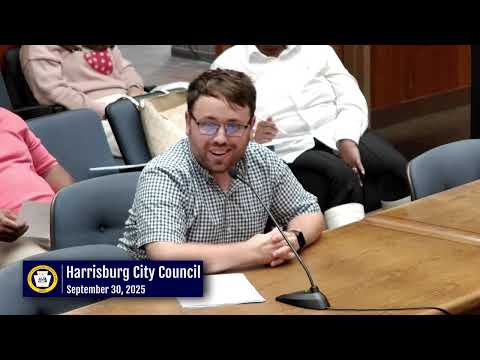
HARRISBURG — City officials and volunteer leaders briefed Harrisburg City Council at a Sept. 30 policy work session on the purpose, membership and immediate needs of city-affiliated boards, commissions and authorities.
The session’s stated goal was to give council a shared understanding of each body’s function, membership status, public meeting cadence and reporting relationships so council and the public can identify vacancies and opportunities for citizen engagement.
Key takeaways - Audit Committee: Austin Cheers, who identified himself as the audit committee chair, said the five-member committee provides independent oversight of the city’s financial reporting, internal controls and the work of independent auditors. The audit committee holds quarterly meetings and requires one member with a CPA designation; the committee reported one vacancy and noted it was wrapping up its review of the 2022 audit while staff were working on 2023.
- Citizens Law Enforcement Advisory Committee (CLEAC): Mitchie “Coach” Walker, CLEAC chair, described CLEAC as a nine-member citizen advisory body intended to be a liaison between residents and the Harrisburg Bureau of Police. Walker said seven of nine seats had been appointed and two remaining seats required council approval; the committee meets monthly and will issue an annual report and policy recommendations to the mayor and council. Council members praised the new board as an early step toward building community–police relations.
- Environmental Advisory Council (EAC): Pamela Parson and others told council the EAC had not met since reappointments and that three mayoral appointments remained outstanding. The council explained the EAC’s role in education, grant review and liaising with the city sustainability coordinator and urged the administration to connect the EAC with the city’s sustainability staff so the group can resume meetings and produce requested reports.
- Harrisburg Redevelopment Authority (HRA) and Land Bank: Brian Davis, HRA executive director, described both bodies’ roles in blight elimination, property acquisition and neighborhood stabilization. He said the HRA has five seats (three filled, two vacant) and the seven-member land bank adds two mayoral appointees. Davis cited ongoing projects — pocket parks, assembly for redevelopment and an involvement in the Governor Square receiver process — and described how the HRA and land bank assemble parcels and work with federal and state funding sources on large redevelopment and flood mitigation projects.
- Historic Architectural Review Board (HARB): Trina Gribble, HARB chair, described HARB’s advisory role over six municipal historic districts and said HARB reviews exterior changes visible from the public right-of-way, demolition, signs and materials using the Secretary of the Interior’s standards. HARB reported five members and two vacancies; Gribble asked for improved staffing support, digital meeting packets and outreach to help applicants understand guidelines.
- Parking Authority: Chairman Verma McKissick summarized the authority’s limited current role after the post‑bankruptcy transfer of most downtown parking operations to a third-party concessionaire and the Pennsylvania Economic Development Finance Agency. McKissick said HPA now serves primarily as an oversight entity and that its historical revenue role has been diminished by the transfer agreements.
- Planning Commission: Sean O’Toole said the planning commission is a seven-member advisory board that reviews comprehensive plan amendments, subdivisions and land-development plans under the Pennsylvania Municipalities Planning Code. O’Toole said the commission currently has all seven seats filled.
- Zoning Hearing Board: A member of the zoning hearing board explained its quasi‑judicial role in hearing variance and special-exception applications, noted minutes are transcribed by a court stenographer and reminded residents decisions may be appealed to Dauphin County Court of Common Pleas. The board said it currently has three members and one alternate appointment structure, and warned tie votes result in denial.
- Capital Region Water: CEO Charlotte Katzenmeyer and board representatives said the authority provides drinking-water, wastewater and stormwater services and is governed by a five-member volunteer board whose members are nominated by the mayor and confirmed by council. The board meets monthly and files audits and compliance reports with the state Department of Environmental Protection and the U.S. Environmental Protection Agency.
Formal reports and next steps Council members asked each board to provide the following, when available: (1) current membership lists and term expiration dates; (2) public meeting schedules and instructions for how residents can attend; and (3) copies or links to annual reports or recent activity reports that the committees supply to the mayor or council. Multiple boards said staffing contact and better distribution of meeting materials (electronic packets, QR codes and published property lists) would increase public participation.
Quotes - “We act as an intermediary between the city and the independent auditors,” Audit Committee Chair Austin Cheers said of the committee’s role. - “We are trying to build relationships,” CLEAC Chair Mitchie Walker said, summarizing the committee’s plan to foster non-enforcement community interactions with officers. - “We have never met since my appointment,” Pamela Parson said of the EAC, urging a city liaison to resume communication.
Ending Council closed the policy session after public comment and directed the clerk’s office and administration to post the session materials. Council members asked the administration to provide regular updates on vacancies and to publish meeting schedules, contact information and, where relevant, property lists that authorities maintain.