Get Full Government Meeting Transcripts, Videos, & Alerts Forever!
Get email alerts on the Partisan School Board Elections topic
No spam. Unsubscribe anytime.
Committee hears hours of testimony on bill to require party labels on school board ballots
Summary
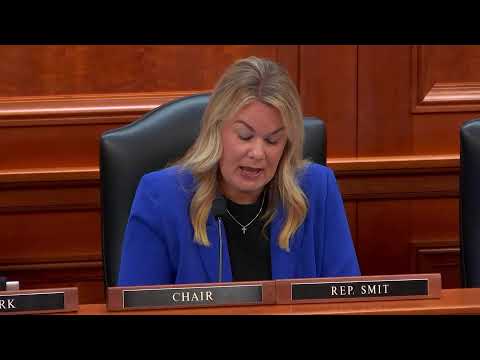
Lansing — The Michigan House Committee on Election Integrity on Wednesday heard more than an hour of testimony for and against House Bill 45 88, a proposal to require or allow candidates for local school boards to run with a partisan label on the ballot.
Lansing — The Michigan House Committee on Election Integrity on Wednesday heard more than an hour of testimony for and against House Bill 45 88, a proposal to require or allow candidates for local school boards to run with a partisan label on the ballot.
Representative Wolford, the bill’s sponsor in the committee hearing, said the change would give voters “a clear signal” about candidates’ values and increase turnout. “Make them openly partisan so that candidates must declare whether they're a Republican or a Democrat or otherwise,” Representative Wolford said, arguing that party labels reduce the need for voters to “play a detective.”
Supporters, including Greg Keller, treasurer of Heartland Consolidated Schools’ board, told the committee the measure would boost participation and transparency. “Local school board races historically suffer from low voter participation,” Keller said. He recounted his own 2022 tie, which was resolved by drawing lots before a canvass and said clearer labels would help voters engage further down the ballot.
Opponents included the American Civil Liberties Union of Michigan and statewide school board organizations. Kazuaki (legislative director, ACLU of Michigan) testified that HB 45 88 “is a potential threat to the principles of equity and democratic participation and good governance on public education.” The witness cited research linking partisan school board elections with lower likelihood of nonwhite candidates winning and other negative outcomes described in academic studies.
Jennifer Smith, director of government relations for the Michigan Association of School Boards, said most school board members do not view themselves as political actors and warned that labeling candidates could change how trustees vote. “They see themselves as school board members. They don't want to have to put a designation after their name and suddenly feel that that's the way that they have to vote and behave,” Smith said. She and other opponents also raised logistical concerns, including higher campaign costs and the possibility of primaries for seats that have been nonpartisan.
Sherry Ritchie of Pure Integrity Michigan Elections (PIME) and other supporters said partisan labels would increase voter turnout in down‑ballot races and help voters make more informed choices. Testimony differed on how common partisan school board elections are: Keller and Representative Wolford cited nine states that allow or require them, while the ACLU witness said four states require partisan school board elections and five others allow them in some areas.
Opponents also raised legal and participation consequences. The ACLU witness cited the federal Hatch Act and a Department of Defense memorandum, noting that some federal employees and active‑duty service members could be barred from candidacy if school board races became partisan. The ACLU testimony warned closed primaries in Michigan could limit choices for many voters because participants would be restricted to candidates from a single party in a partisan primary.
Local board members who testified said partisan ballots risk importing divisive statewide politics to school board meetings. Katie Kavanaugh, trustee on the Okemos Public Schools board, said trustees “sit together as a team, putting the interest of our students and staff first,” and that making candidacies partisan would “drag partisan politics… to the board table.” Kavanaugh also asked the committee to focus on other pressing matters such as school funding and school safety; she told the committee Okemos has experienced multiple “swatting” incidents in recent years, including one the day before the hearing.
Committee members asked multiple witnesses about duties of trustees and whether partisan labels would change how boards govern. Several representatives said they were considering the tradeoffs between transparency and preserving a nonpartisan approach that encourages consensus; others queried whether moving some contests into partisan primaries could shift the decisive election to lower‑turnout August primaries.
The hearing record shows a wide split between witnesses who framed the bill as a transparency and turnout reform and those who called it a potential threat to minority representation, recruitment of qualified candidates and nonpartisan board functioning. The committee did not take a final vote on HB 45 88 during the public testimony segment; the chair read additional submitted comments and moved on to other bills on the agenda.
Votes on separate bills were taken later in the session; those items are summarized in a separate committee roundup.