Get Full Government Meeting Transcripts, Videos, & Alerts Forever!
Get email alerts on the Food Insecurity Report topic
No spam. Unsubscribe anytime.
Capital Area Food Bank: nearly half of Prince George's County residents reported food insecurity in 2025, report says
Summary
At a committee briefing Oct. 2, the Capital Area Food Bank presented its 2025 hunger report, reporting 49% of Prince George's County residents were food insecure in the survey period and urging protections for SNAP and Medicaid, workforce upskilling and expansion of programs such as food-as-medicine.
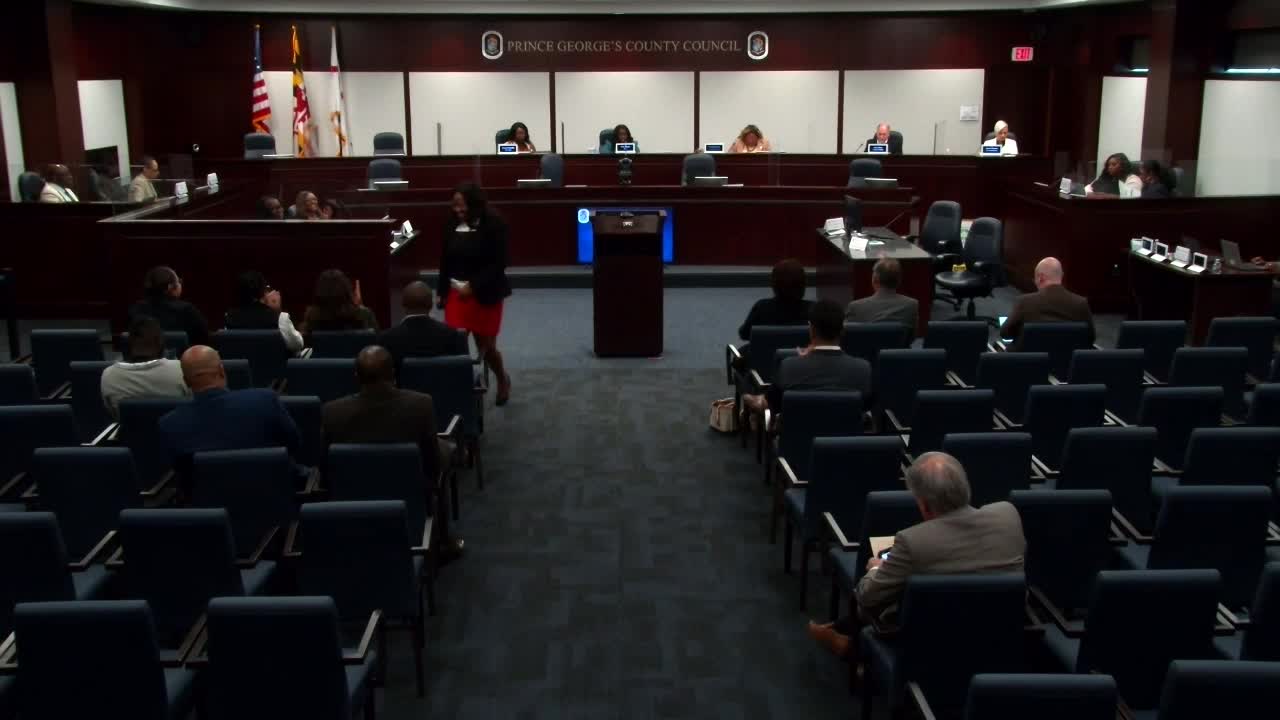
The Capital Area Food Bank told the Prince George's County Council Human Services and Public Safety Committee on Oct. 2 that its 2025 hunger report finds deep and widespread food insecurity across the Washington, D.C., metro area and that 49% of county residents fell into food insecurity during the survey period.
Joseph Tang Yaw, director of advocacy and public policy for the Capital Area Food Bank, said the organization used the U.S. Department of Agriculture's definition of food insecurity. At the regional level he said 36% of households in the D.C.-Maryland-Virginia region were food insecure; the bank's analysis identified more than 800,000 people in the lowest level of food security, meaning households skipping meals or going whole days without food.
Tang Yaw said the county-level figure was 49% this year and 50% the previous year, a difference he described as statistically insignificant. He said three in five of those identified as food insecure were classified as "very low food security." The report's field survey was conducted in May and June and Tang Yaw said that timing affected results: when the survey was conducted about 20,000 people had lost federal paychecks, a figure he said has since grown to an estimated 100,000 or more.
The food bank and its county partner network of about 120 community-based organizations distribute roughly 17,000,000 pounds of food in Prince George's County, Tang Yaw said; he told the committee that the food bank's distributions reach only a portion of the county's food-insecure population and that additional interventions are needed.
Tang Yaw listed three central recommendations: work with the state to shield families from SNAP and Medicaid cuts as federal and state changes are implemented; expand programs and training that help residents earn higher wages and "upskill" for better jobs; and adopt programs such as the Food as Medicine initiative, which the food bank and the committee have previously discussed, to improve health outcomes and reduce health-care costs.
Committee members asked for updated, district-level data as conditions evolve. Council member Watson requested more localized maps and recurring updates (the presenter said his analytics team can provide district-level breakdowns). Vice chair Oriada thanked a committee colleague for advocacy on local food-network capacity and emphasized the need for county-level investment.
Tang Yaw also described household financial behavior driven by inflation: increased use of buy-now-pay-later plans, more credit-card delinquencies (he reported a 9% delinquency rate in Prince George's County and a 41% jump in delinquency over two years) and declines in residents' self-reported financial conditions. He said these trends make it harder for families to afford groceries and other necessities.