Get Full Government Meeting Transcripts, Videos, & Alerts Forever!
Get email alerts on the Capital Improvements Cip Fire Equipment topic
No spam. Unsubscribe anytime.
Alton CIP committee recommends 2026–31 plan after heated debate over ladder truck, engine schedule and bonding
Summary
The Alton Town Capital Improvements Committee voted 6–0 to recommend the 2026–2031 CIP plan to the Planning Board after extended discussion about replacing a ladder truck, refurbishing a heavy rescue vehicle and re-timing highway equipment purchases to avoid large clustered expenditures and tax spikes.
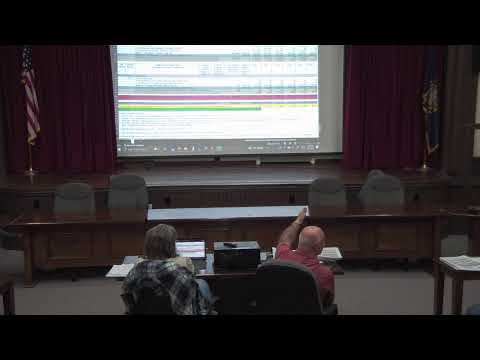
Alton — The Alton Town Capital Improvements Committee voted unanimously Tuesday to send the proposed 2026–2031 capital improvements plan to the Planning Board after a three-hour review that centered on the fire department’s equipment schedule, whether to fund a new ladder truck through a bond or the CIP, and several large highway equipment requests.
The committee’s final motion — to recommend the six-year CIP to the Planning Board — passed with all committee members present voting in favor. Committee Chair Frank Rich said the vote followed “a lot of conversation” and several suggested changes to timing and reserve contributions meant to smooth the plan’s tax impact.
Why it matters: Committee members said a cluster of high‑cost fire and highway items in 2029–2031 would produce steep negative balances in capital reserve projections and could sharply raise the town’s CIP portion of the tax rate if left unchanged. Committee members debated pushing replacement dates, increasing annual set‑aside amounts moderately and whether some large expenses (notably work on a fire station and a high‑cost ladder truck) should be financed by bond and warrant article rather than the CIP reserve approach.
The discussion and recommended edits
Jesse McArthur, who assisted the committee with the CIP spreadsheet, explained the town’s current practice of recording a project’s expected year and gross cost without amortizing every item across all years. “We’ve never provided visibility on this plan like that because it really depends on the year,” McArthur said. He said showing each piece amortized annually would add substantial work and reduce flexibility the highway and fire departments need to respond to changing equipment life spans.
Committee members repeatedly flagged the fire department schedule. The plan included: a ladder truck with an estimated replacement cost around $1.8 million; an engine line item of about $884,000 that the committee said had already been purchased and needed date and status updates; a heavy rescue refurbishment estimated at $500,000; and several other engines and apparatus scheduled within a narrow window. After reviewing the summary totals, members noted a multi‑million‑dollar funding gap in 2029–2031 for fire equipment.
“...if we’re gonna spend the appropriate money for a central fire station renovation, we should be thinking about not patching this with a CIP,” Chair Frank Rich said during the meeting, arguing that major building projects and major apparatus buys may be better handled by bond and warrant articles so voters decide on the long‑term financing. Rich also urged the committee to consult with department heads on whether some vehicles can reasonably be deferred to smooth the schedule.
Several members pressed the fire chief’s choices — for example, whether the town needs a brand‑new tandem‑axle ladder truck when neighboring mutual‑aid towns may have apparatus that can respond. Committee members emphasized that mutual‑aid responses are not guaranteed and that Alton’s road geometry favors single‑axle apparatus in some areas, a limitation that complicates the ladder‑truck question.
The committee proposed several edits aimed at reducing short‑term spikes: remove the ladder truck from the CIP schedule (with the option to fund it via bond/warrant), push some engines and other major fire purchases later by a few years (subject to department head approval), and move selected highway purchases (roller, backhoe, 10‑wheel truck) to later years or to rental solutions in the short term.
The highway department and other line items
Committee members also reviewed highway equipment and capital reserve balances. The highway capital reserve balance referenced during the meeting was about $284,830 (as of July 31 in the materials), and the fire department CRF balance was discussed after corrections to the worksheet as approximately $1,127,000 in reserve. Several highway vehicles were flagged for near‑term replacement or for having frequent shop time; members discussed renting equipment short term and shifting purchase years to reduce concentrated expenditure years.
Other items reviewed included dock/retaining‑wall work at Alton Bay, bridge replacements (estimates in the several‑hundred‑thousand‑dollar range), building‑maintenance lines and smaller departmental requests. The committee debated whether landfill‑closure expenses should be treated as an annual operating expense rather than a CIP reserve and ultimately removed the recurring reserve line for landfill closure from the CIP worksheet.
Tax impact and valuation context
Committee members noted that assessed values had increased since last year and discussed how valuation growth can offset some CIP pressure. The packet lists a town assessed value of roughly $2.257 billion as of Sept. 1, 2025; committee members said that higher valuations reduce the per‑thousand tax effect of CIP appropriations, but they also cautioned that equipment costs are rising and multi‑million‑dollar purchases remain significant local decisions.
The committee ran scenarios in the worksheet — increasing annual contributions to capital reserves modestly and moving the timing of expensive items — and concluded that with the ladder truck removed and several engine purchases pushed back, the plan became materially easier to fund without a large single‑year tax increase.
Quotes and attributions
Jesse McArthur, staff assisting the CIP, said the town’s approach to the spreadsheet favors flexibility: “If we start adding those individual dollar amounts...this would become a monumental task for Jessica.”
Chair Frank Rich summarized the committee’s view on major building projects and large apparatus: “If we’re gonna spend the appropriate money for a central fire station renovation, we should be thinking about not patching this with a CIP. We should be going out for a bond issue.”
What the committee decided and next steps
After the line‑by‑line review and several agreed changes to timing and reserve contributions, the committee voted to recommend the 2026–2031 CIP plan, as amended, to the Planning Board. The committee also directed staff to: (1) flag items that need department head confirmation before timing changes are finalized; (2) update dates and status for equipment already purchased; and (3) prepare a concise comparison of this draft CIP vs. last year’s plan to share publicly.
The committee’s recommendation now goes to the Planning Board as the next formal step in the town’s CIP review process. Several members said they expect additional discussions with the Selectmen and department heads about whether specific items (notably the ladder truck and potential fire station work) should be funded by bond warrant articles rather than ongoing CIP reserves.
Ending
The committee closed the meeting after taking the recommendation vote and asking staff to circulate updated worksheets and a short memo describing the changes the committee adopted. The Planning Board will receive the recommended CIP and determine whether to forward a final plan to the Selectmen and town meeting process.