Get Full Government Meeting Transcripts, Videos, & Alerts Forever!
Get email alerts on the Zoning Bnb topic
No spam. Unsubscribe anytime.
Opelika residents and innkeepers urge council to reject new bed‑and‑breakfast restrictions
Summary
The City Council heard public comment and reviewed two competing drafts of a bed‑and‑breakfast zoning ordinance; local innkeepers asked the council to reject both amendments and consider the original institutional zoning request.
The Opelika City Council on Oct. 7 heard competing drafts of a proposed bed‑and‑breakfast zoning amendment and public comment from two local innkeepers who asked council members to vote down both versions.
City Attorney Guy Gunner outlined differences between the two drafts, describing one as a "more restrictive" version that would require the property owner to live on the premises and limit guest lodging to the principal dwelling unit, and another, "less restrictive" draft that would allow an owner to live anywhere inside the city limits while requiring the innkeeper or operator to be on call within city limits during guest occupancy.
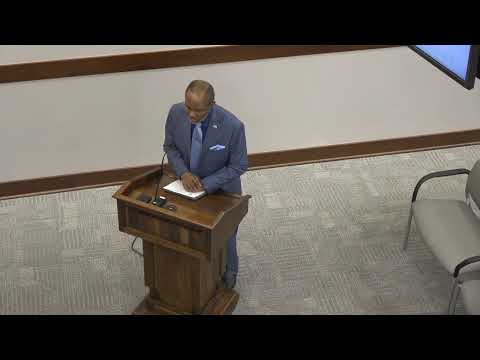
The matter drew comment from Heritage House co‑owner and innkeeper Leif Espland, who said he was speaking on behalf of Opelika’s only bed‑and‑breakfast and asked council to reject both proposed amendments. "The most pressing one in the immediate for us is the provision ... that the owner or operator ... be located physically within the city limits when any guest is actually in residence," Espland said, adding that an assistant innkeeper who helps the business lives in a neighboring county. He also objected to restrictions on accessory units, the 29‑day stay limit as written, and a six‑room cap in one draft, saying the state law permits up to 10 units and that limits could hamper future expansion.
Allison Kovac, owner of the Renfrew House on North Tenth Street, urged council to return to the planning department’s original recommendation to rezone a single property to an institutional classification rather than adopt either amendment. Kovac said the property was historically granted the right to operate as an inn and requested that the council not impose new restrictions that would burden existing, invested businesses. "I am also asking for you to vote down both proposed amendments," she said, and asked the council to consider the planning department's earlier institutional zoning recommendation.
Gunner summarized key use‑standard provisions included in the more restrictive draft: inspection requirements by the Opelika Fire Department, a prohibition on guest rooms containing cooking facilities, parking requirements (one on‑site space per guest room), a guest registry, and a minimum booking age of 19. He also noted the drafts differ sharply on outdoor events: the more restrictive draft would limit outdoor events (for example, capping events at 10 per year and up to 200 guests), while the less restrictive draft places fewer limits and defers to building‑code compliance for room counts.
The council opened and closed public hearings on the two proposed amendments and then placed both ordinances on the agenda for first reading later in the meeting. The transcript records introductions for the two ordinance drafts (the more restrictive and the less restrictive versions), but no final adoption occurred on Oct. 7.
Why this matters: The ordinances would define how bed‑and‑breakfast properties operate inside Opelika, affecting existing innkeepers' operations and any future property conversions or expansions. Innkeepers said some provisions — particularly residency and room caps — could force current operators to change practices or prevent planned growth.
The ordinance texts reviewed by the council contain differing limits on guest rooms, owner/operator residency, allowable events, and enforcement steps. Council members did not vote to adopt either version on Oct. 7; both remain at the first‑reading stage pending further council action.
Looking ahead: Council members asked questions and received neighbor and innkeeper testimony; the matter is expected to return for further discussion and possible amendment before any final vote is taken.