Get Full Government Meeting Transcripts, Videos, & Alerts Forever!
Get email alerts on the Open Public Meetings Act topic
No spam. Unsubscribe anytime.
Prosecuting attorney briefs Thurston County advisory committee on Open Public Meetings Act risks and email etiquette
Summary
Seth Dickey of the Thurston County Prosecuting Attorney's Office provided the required training on the Open Public Meetings Act, warning that actions taken in violation can be void, discussing fines and attorney-fee exposure, and emphasizing serial-meeting risks and the common-sense rule: don't 'reply all.'
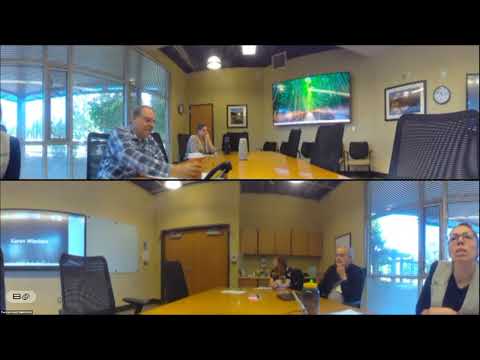
Seth Dickey of the Thurston County Prosecuting Attorney’s Office delivered the required Open Public Meetings Act training to the Solid Waste Advisory Committee, explaining what constitutes a meeting, the penalties for noncompliance and practical steps to avoid inadvertent violations.
Dickey told the committee the law is codified in the Revised Code of Washington at chapter 42.30 and read the statute’s policy language about the public’s right to be informed. He warned that “any action that is taken at a meeting which fails to comply with the OPMA, is null and void,” and added that individual members can face fines (he described $500 for a first violation and $1,000 for subsequent violations) and agencies can be ordered to pay attorney fees to successful plaintiffs.
Dickey outlined the broad definition of “action” under the statute — not only votes but deliberations, receipt of public testimony, discussions and other forms of consideration — and cautioned committee members about “serial meetings,” where email chains, texts or other staggered communications can amount to a meeting if they result in a quorum forming a consensus outside public notice. He discussed case law showing how courts analyze awareness among members and the content that can convert passive receipt of information into an actionable deliberation.
Practical guidance included using one‑way communications from staff to distribute meeting materials, replying only to staff (not to other members), employing clerks or third parties to distribute documents, and avoiding substantive discussions during site tours. When asked for a simple rule, Dickey stressed: “Don’t hit the reply all button.”
Dickey said the OPMA also interacts with other statutes and local rules; he noted examples where longer notice periods may apply (for example, sanitary regulations may require longer notice under specific statutes). He offered to provide attendance certificates that satisfy the statutory training requirement for members who need documentation.