Get Full Government Meeting Transcripts, Videos, & Alerts Forever!
Get email alerts on the Comprehensive Plan Housing topic
No spam. Unsubscribe anytime.
Planning staff outlines housing strategy and seeks more time to finalize comprehensive plan amendments
Summary
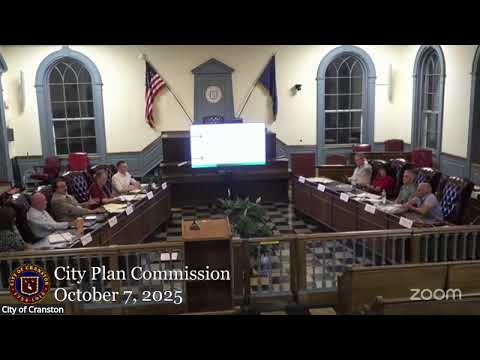
Staff presented a progress report on the city's comprehensive plan housing element, outlined strategies to meet the state's 20‑year housing target, and the commission voted to continue the public hearing to Nov. 4 for more work on mapping, ordinance schedules and numeric justifications.
Planning staff provided an update on work toward comprehensive plan amendments and the housing element, including draft housing production targets, proposed strategies and a schedule for ordinance changes. Staff said they aim to submit a draft housing element to the state's planning review and present a refined draft to the commission in November.
Staff described three principal strategies to meet the state's 20‑year housing target: 1) transit‑supportive areas (Warwick Avenue, Broad Street, Elmwood Avenue) where mid‑rise housing could be appropriate; 2) neighborhood mixed use to allow modest residential development in commercial areas (an example cited was the recent Knightsville rezoning); and 3) unrealized growth through infill, ADUs and adaptive reuse. Staff emphasized the need to reconcile paragraph differences between subdivision and zoning regulations about usable area and noted concerns about existing unpermitted ADUs that may require inspection before being counted as permanent housing.
Staff discussed numeric assumptions, including a working 2030/2046 target derived from statewide population projections and local assumptions. Staff noted a backlog of approved units that staff assumed would come online (several projects already approved at various stages) and described potential yield assumptions for rezones, lot splits, ADUs and redevelopment sites. Commissioners questioned the assumptions' sensitivity to changing population trends and whether the city might over‑allocate land for housing at the expense of commercial and industrial opportunities. Staff said the plan will include mapping of where housing growth is and is not desired and a schedule of ordinance revisions needed to implement the housing strategies.
The commission voted to continue the comprehensive plan amendment public hearing to Nov. 4 to allow staff to circulate refined maps and ordinance text for review. Staff also announced the city had been selected to receive technical assistance from a state cohort program to support housing planning work over the coming year.